Grains
Rolled oats
Rolled oats are oat grains flattened into flakes and are a wholegrain product. You can use them for porridge, muesli or baking. They are known for their fibre, including beta-glucans.
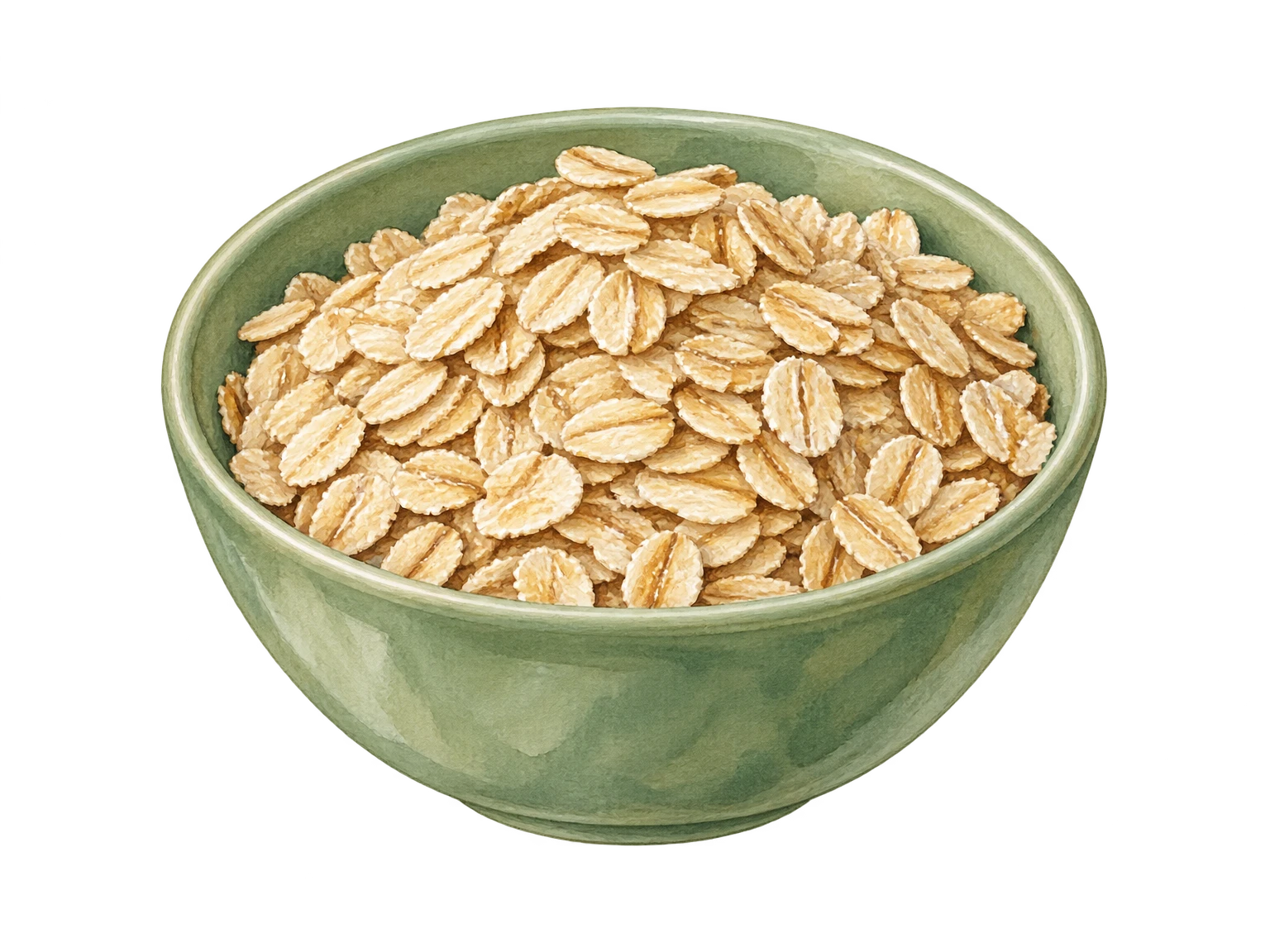
To make rolled oats, oat grains are usually steamed and then flattened. Larger flakes are made from whole kernels, while finer flakes can be made from kernels cut before rolling. Both retain the components of the whole grain. You can cook rolled oats with milk, plant-based drinks or water, soak them overnight, or add them to muesli, bread and other baked foods. Alongside starch, they contain protein, fat and fibre. The nutrient amounts in the composition table are listed per 100 g of dry, unprepared rolled oats.
What are rolled oats?
Oat flakes are usually made by steaming and rolling oat grains. Coarser flakes are made from whole grains; finer flakes may be made from grains that have been cut first. Both types contain the components of the whole grain.
How to use them and what they contain
You can cook rolled oats with milk, a plant-based drink or water to make porridge, soak them overnight, or use them in muesli and baking. They contain starch, protein, fat and fibre, including beta-glucans. Nutrient amounts refer to 100 g of dry, unprepared oat flakes.
Nutrients
- Dietary fibre11.2 gper 100 g[9]
- Calcium52 mgper 100 g[9]
- Iron3.8 mgper 100 g[9]
- Magnesium101 mgper 100 g[9]
- Phosphorus390 mgper 100 g[9]
- Potassium362 mgper 100 g[9]
- Zinc2.6 mgper 100 g[9]
- Copper0.35 mgper 100 g[9]
- Iodine0.5 µgper 100 g[9]
- Vitamin A0 µgper 100 g[9]
- Vitamin E0.42 mgper 100 g[9]
- Vitamin D0 µgper 100 g[9]
- Vitamin C0 mgper 100 g[9]
- Vitamin B60.1 mgper 100 g[9]
- Vitamin B120 µgper 100 g[9]
- Vitamin K2 µgper 100 g[9]
- Folate32 µgper 100 g[9]
Safety information
Side effect
Bloating after a rapid dietary change
Increasing fibre intake quickly can cause gas and bloating, particularly if you have irritable bowel syndrome. Increase the amount gradually if symptoms occur. How often oat flakes themselves cause these symptoms is not well established. [1]
Contraindication
Avoid if you have a confirmed oat allergy
If you have a confirmed oat allergy, avoid oat flakes, including gluten-free varieties. Food allergies can cause severe reactions; reliable figures for the frequency of oat-specific reactions are unavailable. [2]
Caution
Choose gluten-free-labelled oats if you have coeliac disease
If you have coeliac disease, use only oat flakes explicitly labelled gluten-free: ordinary products may be contaminated with wheat, barley or rye. Not everyone tolerates gluten-free oats either. Discuss their introduction and any symptoms with your clinician or dietitian. [3][4]
Interaction
Consider substantial dietary changes when taking levothyroxine
If you take levothyroxine tablets, a substantially higher-fibre diet may affect absorption. An interaction specifically with ordinary oat flakes has not been directly established. Follow your dosing instructions and discuss major dietary changes or unstable thyroid results with your prescriber; do not adjust the dose yourself. [5]
Caution
Follow your individual diet plan for bowel narrowing
If you are being treated for bowel narrowing, a risk of bowel obstruction or a condition requiring a prescribed low-fibre diet, oat flakes may be unsuitable. Follow your individual diet plan rather than general advice to increase fibre. [6]
Upper level
No established universal daily maximum
No universal safe daily maximum for oat flakes was identified in the reviewed sources. This does not mean that unlimited amounts are safe. Older quantity recommendations for people with coeliac disease are not current universal safety limits either. [7]
Caution · Pregnant women
Suitable as a food during pregnancy
Ordinary oat flakes can form part of a balanced diet during pregnancy. No routine pregnancy-specific contraindication was identified; existing allergies and coeliac disease still matter. This statement does not apply to concentrated oat extracts. [8]
Frequently asked questions
Are rolled oats a wholegrain food?
Yes. Rolled oats are a wholegrain product.
How are rolled oats made?
Oat grains are usually steamed and rolled into flakes. Finer flakes may be made from cut oat grains.
Do rolled oats contain fibre?
Yes. Rolled oats contain fibre, including beta-glucans; the listed amount is 11.2 g per 100 g.
What are the nutrition values for rolled oats based on?
The nutrition values are for 100 g of dry, unprepared rolled oats.
Sources
- 01National Institute of Diabetes and Digestive and Kidney DiseasesEating, Diet, & Nutrition for Irritable Bowel SyndromeOpen source
- 02European Food Safety AuthorityFood allergensOpen source
- 03National Institute of Diabetes and Digestive and Kidney DiseasesEating, Diet, & Nutrition for Celiac DiseaseOpen source
- 042017Safety of Adding Oats to a Gluten-Free Diet for Patients With Celiac Disease: Systematic Review and Meta-analysis of Clinical and Observational StudiesPubMed 28431885Open source
- 05Levothyroxine Interactions with Food and Dietary Supplements–A Systematic ReviewOpen source
- 06Royal Devon NHSDietary advice for bowel obstructionsOpen source
- 07Health Canada · 2015Celiac Disease and Gluten-Free Claims on Uncontaminated OatsOpen source
- 08NHSHave a healthy diet in pregnancyOpen source
- 09ANSES – French Agency for Food, Environmental and Occupational Health & Safety – Ciqual French food composition table · 2025Oat flakes (CIQUAL 32140)Open source