Minerals
Iron
Iron is an essential trace element and a component of haemoglobin, which transports oxygen in the blood.
Iron is a mineral your body needs from your diet. As a trace element, it is required in small amounts. It forms part of haemoglobin in red blood cells and myoglobin, which binds oxygen in muscles. Food contains iron in two main forms: haem iron and non-haem iron. Haem iron is generally absorbed more readily, while vitamin C can improve non-haem iron absorption. Iron is not a food itself but a nutrient found in foods.
Iron is an essential trace element: your body needs small amounts from your diet. It forms part of haemoglobin in red blood cells, which transports oxygen in the blood. In muscles, it is a component of myoglobin, which binds oxygen.
What iron does in your body
Iron contributes to the normal formation of red blood cells and haemoglobin, and to normal oxygen transport. It also supports normal energy-yielding metabolism, immune system function and cognitive function. Iron has a role in cell division and contributes to the reduction of tiredness and fatigue.
These functions are authorised EU health claims under Regulation (EU) No 432/2012. To use them, a food must qualify as at least a source of iron. They do not mean that extra iron provides more energy, better cognitive performance or stronger immunity when iron status is already adequate.
Haem iron, non-haem iron and absorption
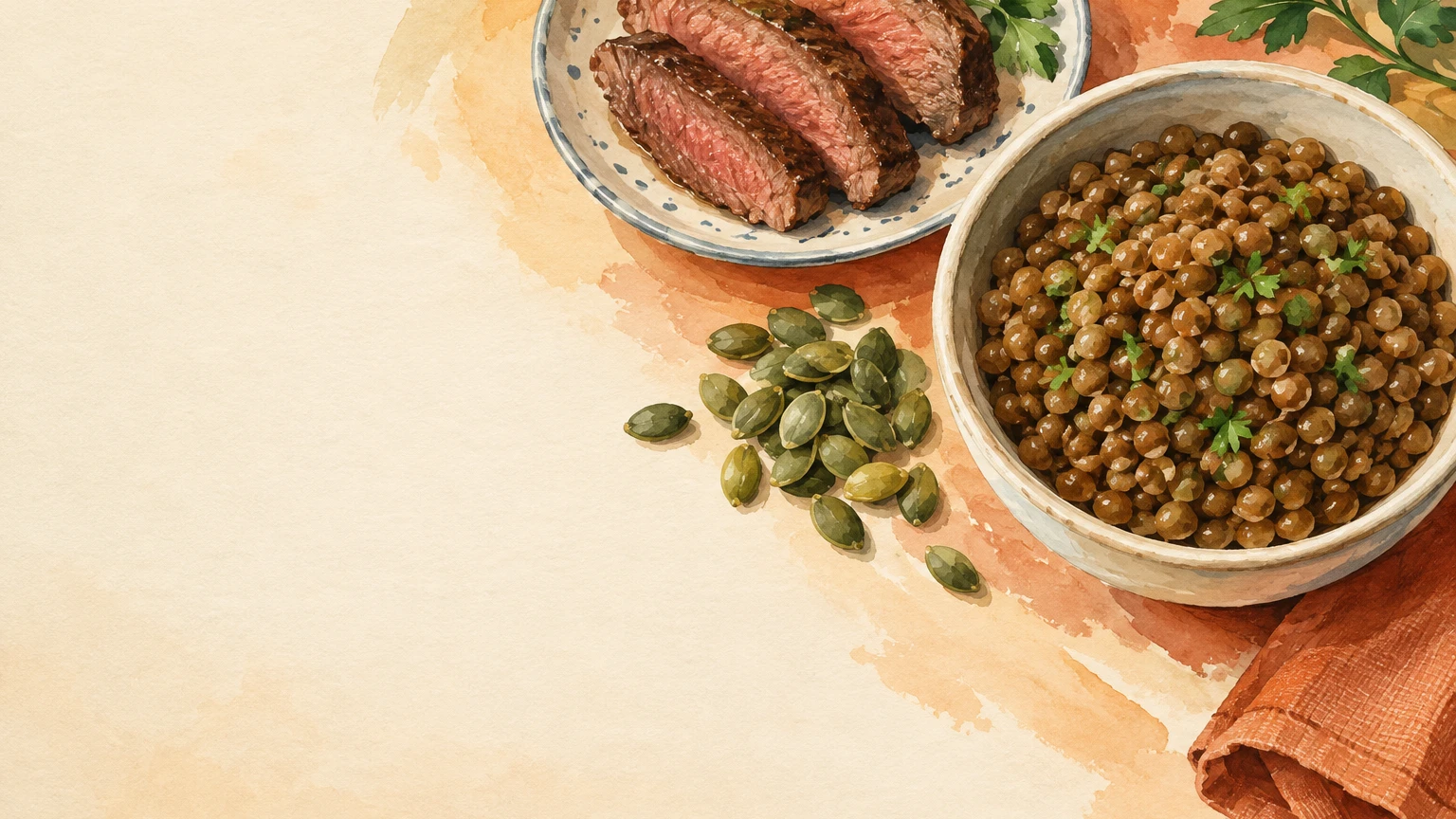
Plant foods contain non-haem iron. Meat, poultry and seafood contain both haem and non-haem iron. Haem iron is generally absorbed more readily. How much iron your body absorbs also depends on your iron stores and the composition of the meal.
Vitamin C enhances non-haem iron absorption, so you can combine plant sources of iron with vitamin-C-containing foods in the same meal. Phytate and certain polyphenols can reduce absorption from a meal. This does not automatically mean that the foods containing them cause long-term iron deficiency or should be avoided.
Iron deficiency can occur without anaemia
Iron stores can be depleted while haemoglobin remains within the normal range. Normal haemoglobin alone therefore does not rule out iron deficiency. Ferritin helps assess iron stores, but inflammation can raise its concentration. Results need to be interpreted in their clinical context; evidence for some diagnostic cut-offs is limited.
Feeling tired is not automatically a reason to take iron. A systematic review found moderate-certainty evidence of a modest reduction in self-reported fatigue in adults with confirmed iron deficiency without anaemia. This does not establish a benefit for every cause of tiredness. Have persistent fatigue assessed. Anaemia also does not automatically mean iron deficiency.
Using iron supplements safely
In 2024, EFSA established a safe level of total iron intake of 40 mg daily from food and supplements for adults, including during pregnancy and breastfeeding. This is neither an intake target nor a tolerable upper intake level (UL): the evidence was insufficient to establish a UL. Higher intakes do not automatically indicate harm, but this value cannot quantify their risk. Medically supervised iron treatment is excluded.
Oral iron supplements can cause nausea, abdominal discomfort, constipation or diarrhoea. They can also interact with medicines such as levothyroxine, certain antibiotics and levodopa. Ask a doctor or pharmacist to review the combination and any necessary spacing between doses.
How nutrition works
Statements & evidence
Iron contributes to normal cognitive development of children [6]
This separate children’s-development claim was authorised by Regulation (EU) No 957/2010. The food must qualify as at least a source of iron; the claim is not a general recommendation for children to take iron supplements.
Dietary iron occurs as haem and non-haem iron. Haem iron is generally more readily absorbed. [7]
Plant foods contain non-haem iron. Meat, poultry and seafood contain both forms. Absorption also depends on your iron stores and the composition of the meal.
Vitamin C enhances the absorption of non-haem iron. [7][1]
You can combine plant sources of iron with vitamin-C-containing foods in the same meal. This is information about iron absorption, not an additional authorised health claim for iron; the corresponding EU claim concerns vitamin C.
Phytate and certain polyphenols can reduce non-haem iron absorption from a meal. [7]
Effects on absorption from individual meals are well established. They do not automatically show that these foods cause long-term iron deficiency or should be avoided. The effects are attenuated within a mixed diet.
EFSA’s adult population reference intakes are 11 mg of iron per day for men and postmenopausal women, and 16 mg per day for premenopausal women. [8]
Menstrual iron losses contribute to the higher reference value. These values concern total dietary intake and are not individual prescriptions for supplement doses.
Iron deficiency can occur before anaemia develops. [7]
Iron stores can be depleted while haemoglobin remains within the normal range. Iron-deficiency anaemia is a later stage; a normal haemoglobin result alone does not rule out iron deficiency.
Ferritin is used to assess iron stores, but inflammation can raise its concentration. [9][7]
WHO recommends accounting for inflammation when interpreting results. Ferritin should be assessed in its clinical context: a normal or raised result during inflammation does not reliably rule out iron deficiency. Evidence for some diagnostic cut-offs is limited.
In 2024, EFSA established a safe level of total iron intake of 40 mg per day for adults, but could not establish a tolerable upper intake level (UL). [10][7]
The level covers food and supplements and also applies during pregnancy and breastfeeding. It is not an intake target or a supplement recommendation. Higher intakes do not automatically indicate harm, but this level cannot quantify their risk. High-dose supplements can cause gastrointestinal adverse effects. The level does not apply to medically supervised treatment of iron-deficiency anaemia.
Safety information
Upper level · Adults
Safe intake level is not an upper limit
EFSA identifies 40 mg of iron daily from food and supplements as a safe intake level for adults, including pregnancy and breastfeeding. This is neither an intake target nor a tolerable upper intake level (UL): evidence was insufficient to establish a UL. Exceeding it does not automatically mean harm, and medically supervised iron treatment is explicitly excluded. [12]
Upper level
Age-specific safe intake levels
EFSA gives these safe daily levels from food and supplements combined for children and adolescents: ages 1–3, 10 mg; 4–6, 15 mg; 7–10, 20 mg; 11–14, 30 mg; and 15–17, 35 mg. For infants aged 4–11 months, 5 mg daily applies only to supplements and fortified foods, excluding infant and follow-on formula. These values are not recommended intakes or ULs. [12][13]
Side effect
Digestive side effects of oral iron
Oral iron preparations can cause nausea, vomiting, abdominal discomfort, heartburn, constipation or diarrhoea. Randomised trials in adults show more gastrointestinal side effects with ferrous sulfate than with placebo. If symptoms are troublesome, discuss your treatment rather than changing the dose yourself. [14][15]
Caution
Distinguish dark stools from warning signs
Darker stools are common and usually harmless when taking oral iron. However, seek medical assessment for black, tar-like stools, visible blood or associated illness rather than assuming iron is responsible. [15]
Caution
Overdose is especially dangerous for children
An acute overdose of iron products can cause severe, potentially fatal poisoning, especially in children. Keep them out of children's reach. If an overdose is suspected, contact your local poison centre or emergency service immediately; do not wait for symptoms. [16][10]
Contraindication
Avoid self-supplementation with iron overload
People with hereditary haemochromatosis should avoid iron supplements. Other iron-overload conditions, haemosiderosis or repeated blood transfusions also require medical assessment before supplementation. Iron accumulation can damage organs, particularly the liver. [16][17][10]
Caution
Not every anaemia needs iron
Anaemia does not automatically mean iron deficiency. Establish the cause before taking iron to treat it. Thalassaemia, sickle cell disease and other anaemias need individual medical assessment; these diagnoses do not automatically rule out supervised treatment of confirmed iron deficiency. [17]
Caution
Individual assessment with digestive disease
If you have stomach ulcers, inflammatory bowel disease, other bowel problems or previous stomach surgery, discuss oral iron with your care team first. This does not automatically make every form of iron treatment unsuitable. [17]
Interaction
Separate oral iron from levothyroxine
Oral iron can reduce levothyroxine absorption and effectiveness. NIH ODS cites tablet labelling recommending at least four hours' separation. Ask a pharmacist to confirm the schedule for your products. [7]
Interaction
Interactions with certain antibiotics
Oral iron can interact with certain tetracycline and fluoroquinolone antibiotics, including doxycycline, oxytetracycline and ciprofloxacin. Ask for medicine-specific spacing instructions; one universal interval does not apply to every antibiotic. [18]
Interaction
Levodopa absorption may be reduced
Oral iron supplements can reduce levodopa absorption and potentially weaken its effect. If you take levodopa, have the combination and dosing schedule reviewed before starting iron. [7]
Interaction
Acid-suppressing medicines may reduce iron absorption
Proton pump inhibitors such as omeprazole can reduce iron absorption by lowering stomach acidity. People with iron deficiency may therefore respond less well to oral supplements. Discuss an inadequate response with your care team rather than stopping the acid-suppressing medicine yourself. [7]
Interaction
Review other medicines and mineral supplements
Oral iron requires an interaction review with medicines including certain HIV treatments, bisphosphonates, eltrombopag, mycophenolate, penicillamine, trientine and antacids. Calcium, magnesium and zinc supplements may also matter. Ask for an individual dosing schedule and check other iron-containing products to avoid unintended duplicate dosing. [18]
Side effect
Intravenous iron can cause serious allergic reactions
All intravenous iron preparations can cause serious, potentially fatal hypersensitivity reactions. Administration requires trained staff, resuscitation facilities and observation during treatment and for at least 30 minutes afterwards. Previous tolerance or a test dose does not rule out the risk. This warning concerns intravenous medicines, not iron in food. [19]
Contraindication
Report allergy history before intravenous iron
Intravenous iron is contraindicated with hypersensitivity to its ingredients or known serious hypersensitivity to other parenteral iron products. Severe asthma, eczema, other allergies and certain immune or inflammatory conditions can increase reaction risk. Tell your care team before administration. [19]
Side effect
Ferric carboxymaltose can lower blood phosphate
Intravenous ferric carboxymaltose can cause hypophosphataemia. Persistent symptomatic low phosphate can lead to osteomalacia and fractures; the frequency of these bone complications is uncertain. Phosphate monitoring is important with repeated high doses, long-term treatment or risk factors such as vitamin D deficiency, malabsorption, inflammatory bowel disease or osteoporosis. [20]
Caution
Possible additional infection risk with intravenous iron
A systematic review of randomised trials found a modest relative increase in infections with intravenous iron compared with oral iron or no iron. Different infection definitions limit interpretation. The care team should consider this finding in the benefit–risk assessment; it should not be extended to iron in food. [21]
Caution · Pregnant women
Intravenous iron in pregnancy requires benefit–risk assessment
EMA advises using intravenous iron in pregnancy only when clearly necessary, following careful benefit–risk assessment and confined to the second or third trimester. This restriction concerns intravenous medicines, not iron in food or all oral iron preparations. [19]
Frequently asked questions
How much iron do I need each day?
EFSA’s population reference intake is 11 mg of iron daily for adult men and postmenopausal women, and 16 mg for premenopausal women. These values concern total dietary intake, not recommended supplement doses.
How can I improve iron absorption from plant foods?
Combine plant sources of iron with foods containing vitamin C in the same meal. Vitamin C enhances absorption of non-haem iron, the form found in plant foods.
Can I have iron deficiency even if my haemoglobin is normal?
Yes, iron stores can be depleted before anaemia develops. Normal haemoglobin alone does not rule out iron deficiency; ferritin helps assess iron stores but needs to be interpreted with possible inflammation in mind.
Should I take iron if I often feel tired?
Not automatically: iron supplements may modestly reduce self-reported fatigue in adults with confirmed iron deficiency without anaemia. This does not establish a benefit for every cause of tiredness; have persistent fatigue assessed rather than starting iron on your own.
What side effects can iron supplements cause?
Oral iron supplements can cause nausea, abdominal discomfort, constipation or diarrhoea. Darker stools are common and usually harmless, but black, tar-like or bloody stools need medical assessment.
More entries
Calcium
Calcium is an essential mineral. It provides structure to bones and teeth and contributes to normal muscle function, nerve transmission and blood clotting.
Iodine
Iodine is an essential trace mineral. Your body needs it to make thyroid hormones, which help regulate metabolism and support growth and development.
Selenium
Selenium is an essential trace element. Your body needs small amounts to make selenium-containing proteins involved in thyroid hormone metabolism and protection against oxidative damage.
Zinc
Zinc is an essential trace element that you obtain through your diet. It has important roles in enzymes and other proteins.
Magnesium
Magnesium is an essential mineral. Your body needs it for energy metabolism, normal muscle and nerve function, and bone structure, among other roles.
Potassium
Potassium is an essential mineral and electrolyte. It supports normal nerve and muscle function and helps regulate the distribution of fluid in the body.



Sources
- 01European Commission · 2012Commission Regulation (EU) No 432/2012 establishing a list of permitted health claims made on foods, other than those referring to the reduction of disease risk and to children's development and healthOpen source
- 02EFSA JournalIron related health claimsOpen source
- 03Cochrane Database of Systematic Reviews · 2016Daily iron supplementation for improving anaemia, iron status and health in menstruating womenOpen source
- 042018Efficacy of iron supplementation on fatigue and physical capacity in non-anaemic iron-deficient adults: a systematic review of randomised controlled trialsOpen source
- 052023Effects of iron supplementation on cognitive development in school-age children: Systematic review and meta-analysisOpen source
- 06European Commission · 2010Commission Regulation (EU) No 957/2010 of 22 October 2010 on the authorisation and refusal of authorisation of certain health claims made on foods and referring to the reduction of disease risk and to children's development and healthOpen source
- 07National Institutes of Health, Office of Dietary SupplementsIron - Health Professional Fact SheetOpen source
- 08EFSA Journal · 2015Scientific Opinion on Dietary Reference Values for ironEFSA Panel on Dietetic Products, Nutrition and Allergies (NDA)DOI 10.2903/j.efsa.2015.4254
- 09World Health OrganizationWHO guideline on use of ferritin concentrations to assess iron status in individuals and populations — executive summaryOpen source
- 10European Food Safety Authority · 2024Scientific opinion on the tolerable upper intake level for ironOpen source
- 11European Parliament and Council of the European Union · 2011Regulation (EU) No 1169/2011 on the provision of food information to consumersOpen source
- 12EFSA Journal · 2024Scientific opinion on the tolerable upper intake level for ironEFSA Panel on Nutrition, Novel Foods and Food Allergens (NDA)DOI 10.2903/j.efsa.2024.8819
- 13European Food Safety AuthoritySummary tables of tolerable upper intake levels for vitamins and minerals, version 8Open source
- 14PLOS ONE · 2015Ferrous sulfate supplementation causes significant gastrointestinal side-effects in adults: a systematic review and meta-analysisPubMed 25700159Open source
- 15NHSSide effects of ferrous sulfateOpen source
- 16National Institutes of Health, Office of Dietary SupplementsIron — Fact Sheet for ConsumersOpen source
- 17NHSWho can and cannot take ferrous sulfateOpen source
- 18NHSTaking ferrous sulfate with other medicines and herbal supplementsOpen source
- 19European Medicines Agency · 2013New recommendations to manage risk of allergic reactions with intravenous iron-containing medicinesOpen source
- 20Medicines and Healthcare products Regulatory Agency · 2020Ferric carboxymaltose (Ferinject): risk of symptomatic hypophosphataemia leading to osteomalacia and fracturesOpen source
- 21JAMA Network Open · 2021Risk of Infection Associated With Administration of Intravenous Iron: A Systematic Review and Meta-analysisOpen source
- 22Deutsche Gesellschaft für ErnährungEisenOpen source
- 23National Center for Biotechnology InformationIron | Fe (Element) - PubChemOpen source
- 242022Systematic review and meta-analysis of intravenous iron therapy for adults with non-anaemic iron deficiency: An abridged Cochrane reviewOpen source