Minerals
Potassium
Potassium is an essential mineral and electrolyte. It supports normal nerve and muscle function and helps regulate the distribution of fluid in the body.
Your body needs potassium for functions including nerve impulse transmission and muscle contraction. It is present as the positively charged potassium ion (K⁺), the main positively charged ion inside cells. Potassium is a chemical element, not a food or botanical preparation. You obtain potassium from plant and animal foods, including vegetables, potatoes, pulses, fruit and dairy products. Potassium salts such as potassium chloride may also be used in supplements and salt substitutes; these are compounds that supply potassium, rather than synonyms for the nutrient itself. If you have impaired kidney function or take medicines that raise potassium levels, seek medical advice before using potassium supplements or potassium-containing salt substitutes.
Potassium: important for nerves, muscles and blood pressure
Potassium is an essential mineral and electrolyte: your body depends on obtaining it through your diet. In the body, it is present as the positively charged potassium ion (K⁺), the main positively charged ion inside your cells. It helps regulate the distribution of fluid, among other functions.
Potassium contributes to normal functioning of the nervous system, normal muscle function and the maintenance of normal blood pressure. It participates in nerve-impulse transmission and muscle contraction. These three health claims are authorised under Regulation (EU) No 432/2012 for foods that meet at least the conditions for the claim ‘source of potassium’. They do not mean that extra potassium improves concentration or strength, prevents exercise cramps or treats high blood pressure.
Potassium in your diet
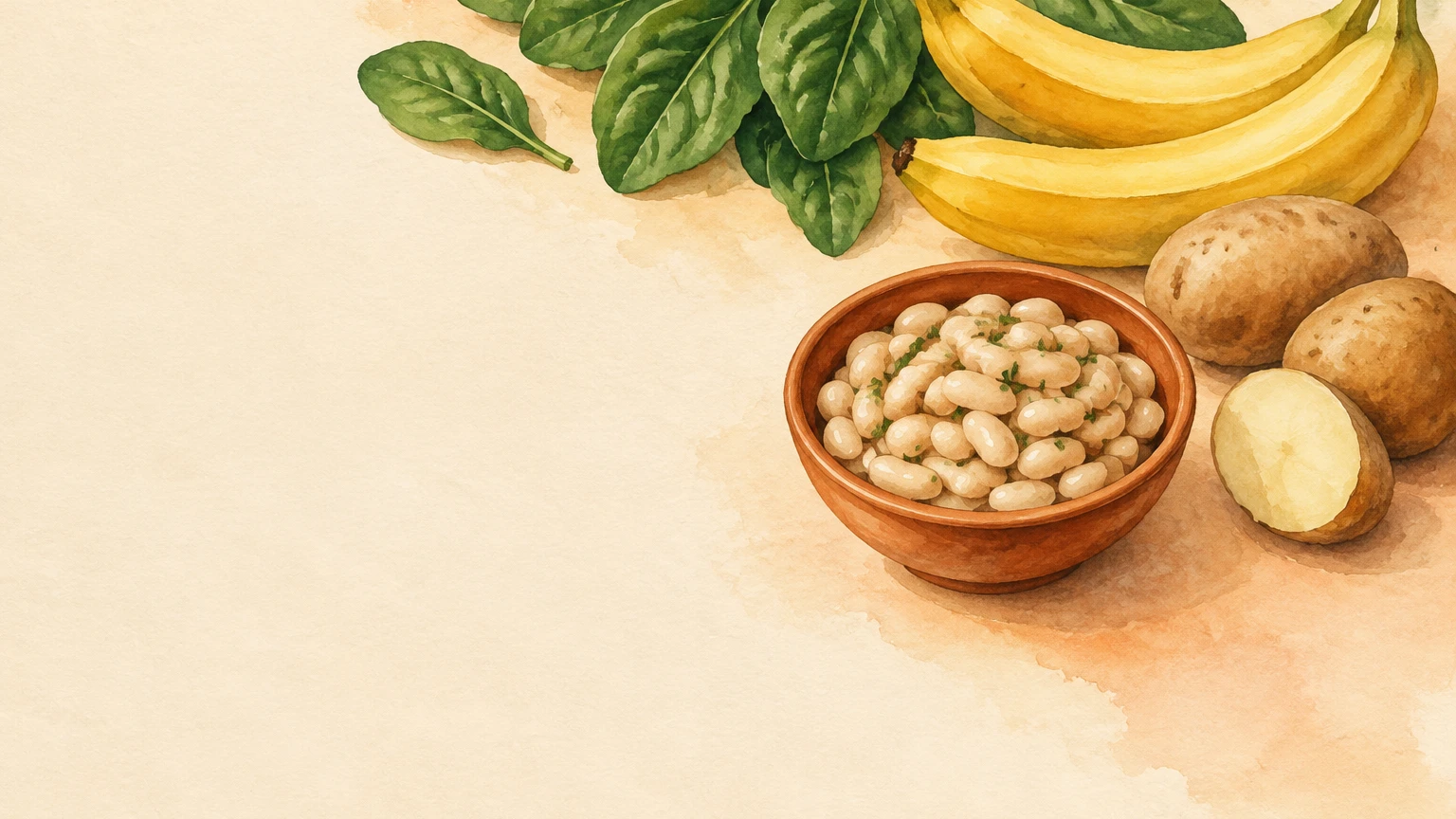
Potassium occurs in many plant and animal foods, including vegetables, potatoes, pulses, fruit, wholegrain foods and dairy products. The amount varies between foods. Not every product in these groups automatically meets the legal conditions for the claim ‘source of potassium’. The fact that potassium is essential does not mean that you need a supplement.
Low dietary intake is not the same as low blood potassium
Low potassium intake alone rarely causes low blood potassium, also called hypokalaemia. Diarrhoea, vomiting and certain medicines can contribute. Loop and thiazide diuretics, for example, can increase potassium loss. Your blood potassium level cannot be reliably inferred from your diet alone; whether you need additional potassium should depend on blood results and your treatment.
Distinguishing foods, supplements and salt substitutes
For healthy people with normal kidney function, potassium from ordinary amounts of food is generally not a safety concern. Potassium salts such as potassium chloride also supply potassium in supplements and salt substitutes. Risks associated with these products should not be applied indiscriminately to foods. EFSA has not established a tolerable upper intake level because the evidence is insufficient — this does not mean that any amount is safe.
WHO’s recommendation on lower-sodium, potassium-containing salt substitutes does not apply to children, pregnant women or people with impaired potassium excretion. Evidence is insufficient for a general recommendation in children and pregnancy. This does not imply avoiding ordinary potassium-containing foods.
How nutrition works
Statements & evidence
Potassium contributes to the maintenance of normal blood pressure [1]
This authorised EU health claim may only be used for foods that meet at least the conditions for the nutrition claim ‘source of potassium’. It does not mean that potassium supplements treat high blood pressure.
Potassium is an essential mineral that you need to obtain through your diet. [6]
‘Essential’ means that your body depends on an external supply. This does not mean that you need a supplement.
Potassium occurs in many food groups, including potatoes and other starchy roots and tubers, vegetables, fruit, wholegrain foods and dairy products. [6]
EFSA identifies these food groups as dietary sources of potassium. Amounts vary between foods; the list does not mean that every product meets the legal conditions for the claim ‘source of potassium’.
EFSA sets an Adequate Intake for potassium of 3,500 mg per day for adults, including during pregnancy, and 4,000 mg per day during lactation. [3]
These reference values concern total daily intake, not supplement doses. The Adequate Intake (AI) is not a precisely determined individual requirement: EFSA could not establish an Average Requirement or a Population Reference Intake.
Low dietary potassium intake is not the same as a low blood potassium level. Low intake alone rarely causes hypokalaemia. [2]
Diarrhoea, vomiting and certain medicines can contribute to low blood potassium. Your blood potassium level cannot be reliably inferred from your diet alone.
In people with impaired kidney function or taking certain medicines, potassium supplements and potassium-containing salt substitutes can increase the risk of excessively high blood potassium. [7][2][3]
These medicines include ACE inhibitors and potassium-sparing diuretics. If this applies to you, discuss the use of these products with your healthcare professional. A Tolerable Upper Intake Level (UL) has not been established because the data are insufficient; this does not mean that unlimited amounts are safe.
Safety information
Caution
Potassium from food is generally well tolerated
For healthy people with normal kidney function, potassium from ordinary amounts of food is generally not a safety concern. Risks from high-dose preparations or potassium-containing salt substitutes should not be applied indiscriminately to foods. [2]
Upper level
BfR proposed maximum for supplements
BfR recommends a maximum of 500 mg potassium per recommended daily dose of an individual food supplement. This is a proposed product limit, not a limit for the whole diet or a guarantee of individual safety. [9]
Side effect
Excess potassium in the blood can be dangerous
Very large amounts from supplements or potassium-containing salt substitutes can cause hyperkalaemia, especially when potassium excretion is impaired. It may initially cause no symptoms; severe cases can cause muscle weakness and life-threatening heart rhythm disturbances. [2]
Caution
Seek individual advice if potassium excretion is impaired
With impaired kidney function, potassium can accumulate in the blood even at intakes considered adequate for other people. Adrenal insufficiency, type 1 diabetes, heart failure or liver disease can also increase risk. Seek clinical advice before adding supplements or salt substitutes; potassium-rich foods do not automatically need to be restricted. [2]
Contraindication
Do not self-supplement with existing hyperkalaemia
If your blood potassium is already elevated, do not add potassium supplements or potassium-containing salt substitutes without clinical guidance. Existing hyperkalaemia is a contraindication for the potassium medicine cited here; dietary advice needs to be individualised. [10]
Interaction
Interactions with medicines that raise potassium
ACE inhibitors, angiotensin receptor blockers, aliskiren and potassium-sparing medicines such as spironolactone, eplerenone or finerenone can increase hyperkalaemia risk when combined with extra potassium. Other medicines, including NSAIDs, can also be relevant. Have supplements and salt substitutes reviewed beforehand; blood monitoring may be needed. The cited potassium chloride label specifically contraindicates concurrent amiloride or triamterene. [11][12][10]
Interaction
Some diuretics lower potassium levels
Loop and thiazide diuretics can increase potassium loss and cause low blood potassium. Whether you need additional potassium should depend on blood results and your treatment, rather than automatic self-supplementation. [2]
Side effect
Oral potassium salts can cause digestive symptoms
Oral potassium salt preparations can cause nausea, vomiting, wind, abdominal discomfort or diarrhoea. This concerns preparations and is not a general warning about potassium-rich foods. Frequency cannot be reliably estimated from the cited reports. [11]
Side effect
Some solid potassium chloride medicines can injure the digestive tract
Solid oral potassium chloride medicines can cause ulcers or narrowing in the digestive tract; bleeding, obstruction and perforation are possible serious consequences. If you develop severe abdominal pain, severe vomiting, abdominal swelling or gastrointestinal bleeding while taking the preparation, stop it and seek urgent medical assessment. This warning does not apply to ordinary foods. [11]
Caution
Caution with swallowing difficulties or delayed stomach emptying
With swallowing difficulties, gastroparesis or markedly delayed passage, solid potassium chloride medicines may be unsuitable because they remain in contact with the lining for longer. Ask the prescriber to choose a suitable formulation; a liquid form may be considered. [11]
Caution
Potassium-containing salt substitutes are not suitable for everyone
WHO's recommendation on lower-sodium, potassium-containing salt substitutes does not apply to children, pregnant women or people with impaired potassium excretion. Evidence is insufficient for a general recommendation in children and pregnancy; impaired excretion creates a hyperkalaemia risk. This does not imply avoiding ordinary potassium-containing foods. [13]
Found in
Frequently asked questions
What does your body need potassium for?
Potassium contributes to normal nerve and muscle function and the maintenance of normal blood pressure. This does not mean that extra potassium improves performance or treats high blood pressure.
Which foods contain potassium?
Potassium is found in vegetables, potatoes, pulses, fruit, wholegrain foods and dairy products, among other foods. The amount varies between foods.
How much potassium do you need each day?
EFSA sets an Adequate Intake of 3,500 mg potassium per day for adults, including during pregnancy, and 4,000 mg during lactation. These values refer to total daily intake, not supplement doses, and are neither precise individual requirements nor upper safety limits.
Are potassium supplements and potassium-containing salt substitutes safe for everyone?
No: with impaired kidney function or certain medicines, such as ACE inhibitors and potassium-sparing diuretics, these products can increase the risk of dangerously high blood potassium. If this applies to you, seek medical advice before using them. The absence of an established tolerable upper intake level does not mean that any amount is safe.
Does eating too little potassium automatically mean low blood potassium?
No: low potassium intake alone rarely causes low blood potassium, also called hypokalaemia. Diarrhoea, vomiting and certain medicines can contribute; your blood potassium level cannot be reliably inferred from your diet alone.
More entries
Magnesium
Magnesium is an essential mineral. Your body needs it for energy metabolism, normal muscle and nerve function, and bone structure, among other roles.

Sources
- 01European Commission · 2012Commission Regulation (EU) No 432/2012 establishing a list of permitted health claims made on foods, other than those referring to the reduction of disease risk and to children's development and healthOpen source
- 02National Institutes of Health, Office of Dietary SupplementsPotassium - Health Professional Fact SheetOpen source
- 03EFSA Journal · 2016Dietary reference values for potassiumOpen source
- 04BMJ · 2013Effect of increased potassium intake on cardiovascular risk factors and disease: systematic review and meta-analysesOpen source
- 052020Potassium Intake and Blood Pressure: A Dose-Response Meta-Analysis of Randomized Controlled TrialsOpen source
- 06European Food Safety Authority · 2016Dietary reference values: advice on potassiumOpen source
- 07Scientific Committee on Food; EFSA Scientific Panel on Dietetic Products, Nutrition and Allergies · 2006Tolerable Upper Intake Levels for Vitamins and MineralsOpen source
- 08European Parliament and Council of the European Union · 2011Regulation (EU) No 1169/2011 on the provision of food information to consumersOpen source
- 09German Federal Institute for Risk AssessmentProposed maximum levels for the addition of potassium to foods including food supplementsOpen source
- 10European Medicines AgencySibnayal (potassium citrate/potassium hydrogen carbonate): EU product informationOpen source
- 11DailyMed, US National Library of MedicineDailyMed — Potassium chloride tablet, film coated, extended release: prescribing informationOpen source
- 12European Medicines AgencyKerendia (finerenone): EU product informationOpen source
- 13World Health OrganizationUse of lower-sodium salt substitutes: Recommendation and supporting informationOpen source
- 14U.S. Department of Agriculture, Agricultural Research Service – FoodData Central · 2019Bananas, raw (FDC ID 173944, SR Legacy)Open source
- 152021Effect of Acid or Base Interventions on Bone Health: A Systematic Review, Meta-Analysis, and Meta-RegressionOpen source
- 162016Meta-Analysis of Potassium Intake and the Risk of StrokeVinceti et al.PubMed 27792643Open source
- 17EFSA Journal · 2005Opinion of the Scientific Panel on Dietetic Products, Nutrition and Allergies on a request from the Commission related to the Tolerable Upper Intake Level of PotassiumEFSA Panel on Dietetic Products, Nutrition and Allergies (NDA)DOI 10.2903/j.efsa.2005.193
- 18Royal Society of ChemistryPotassium - Element information, properties and usesOpen source
- 192015The effect of supplementation with alkaline potassium salts on bone metabolism: a meta-analysisPubMed 25572045Open source