Fruits
Blueberries
Blueberries are small blue berries with a sweet to slightly tart flavour. Known for their fibre and natural plant pigments, they can be eaten fresh or added to cereals and baked dishes.
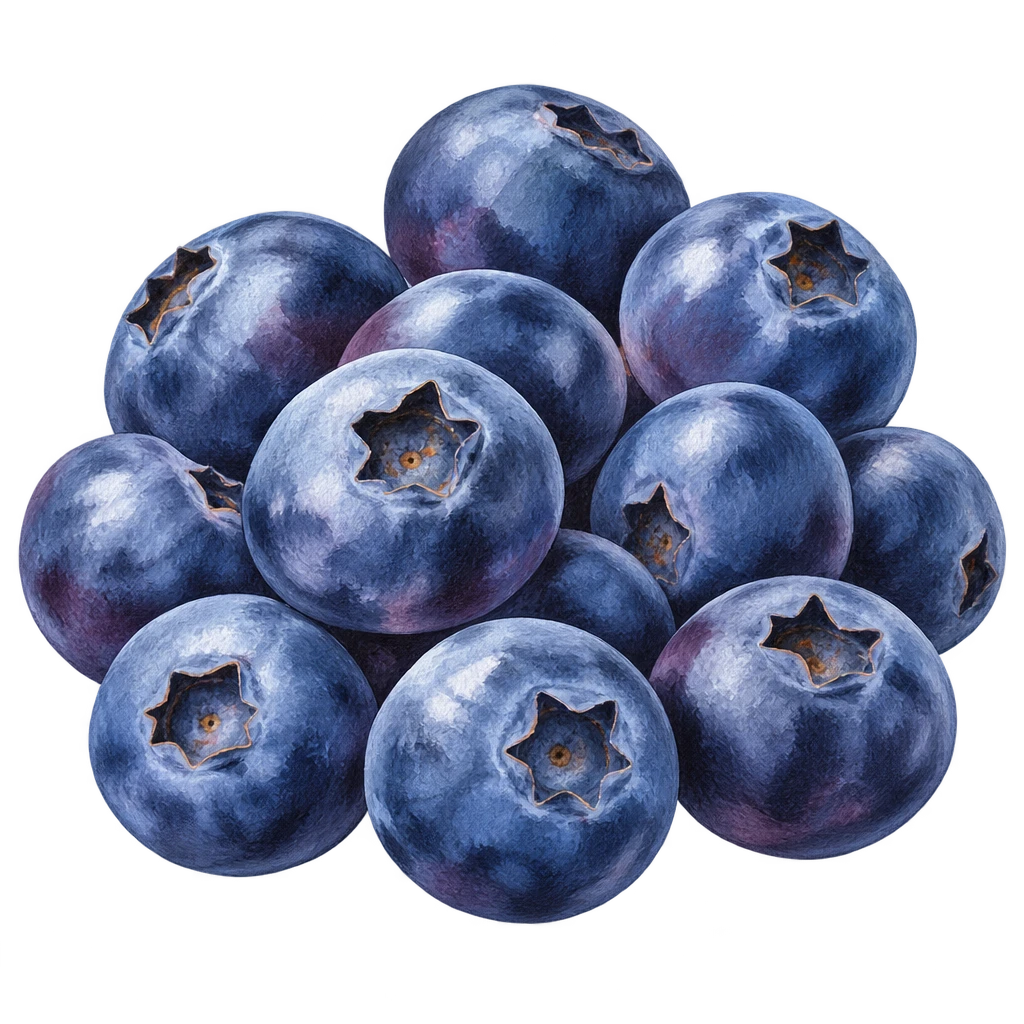
This entry covers cultivated blueberries and wild European bilberries. Both belong to the genus Vaccinium, but they are botanically distinct: cultivated blueberries often derive from Vaccinium corymbosum, while European bilberries are Vaccinium myrtillus. You can use them fresh or frozen in yoghurt, porridge, compotes and cakes. Their fibre and natural plant pigments are notable aspects of their composition. Nutrient amounts are listed per 100 g in the nutrition table, with a source reference.
What are blueberries?
Blueberries are small, blue berries with a sweet to slightly tart flavour. The name covers both cultivated blueberries and the smaller European wild bilberries. They belong to the genus Vaccinium, but are not the same species: cultivated blueberries often derive from Vaccinium corymbosum, while wild bilberries are Vaccinium myrtillus.
How to enjoy them
You can use blueberries fresh or frozen, for example in yoghurt or porridge, or in compote and cakes. Their fibre and natural plant pigments are among the aspects of their nutritional composition that may be of interest. The nutrient amounts are shown per 100 g in the nutrition table.
Nutrients
- Protein0.87 gper 100 g[3]
- Dietary fibre2.4 gper 100 g[3]
- Calcium6 mgper 100 g[3]
- Iron0.28 mgper 100 g[3]
- Magnesium6 mgper 100 g[3]
- Phosphorus12 mgper 100 g[3]
- Potassium77 mgper 100 g[3]
- Zinc0.16 mgper 100 g[3]
- Copper0.057 mgper 100 g[3]
- Iodine0.5 µgper 100 g[3]
- Vitamin A2.67 µgper 100 g[3]
- Vitamin E0.57 mgper 100 g[3]
- Vitamin D0 µgper 100 g[3]
- Vitamin C9.7 mgper 100 g[3]
- Vitamin B1 (thiamin)0.037 mgper 100 g[3]
- Vitamin B2 (Riboflavin)0.041 mgper 100 g[3]
- Niacin (Vitamin B3)0.42 mgper 100 g[3]
- Vitamin B60.052 mgper 100 g[3]
- Vitamin B120 µgper 100 g[3]
- Vitamin K19.3 µgper 100 g[3]
- Folate6 µgper 100 g[3]
Safety information
Caution
Cut up for babies and young children
Whole blueberries can be a choking hazard for babies and young children. Cut them into quarters before serving and always supervise children while they eat. [1]
Caution
Heat frozen blueberries thoroughly
Frozen berries can carry viruses that cause illness; freezing does not reliably destroy them. Heat frozen blueberries thoroughly to around 90 °C before eating, particularly when serving older people or people with weakened immune systems. Thawing alone is not enough. [2]
Frequently asked questions
What are blueberries?
Blueberries are small, blue berries with a sweet to slightly tart flavour.
How can I eat blueberries?
You can eat blueberries fresh, add them to cereal or use them in baked dishes.
How much fibre do blueberries contain?
Blueberries contain 2.4 g of fibre per 100 g.
More entries
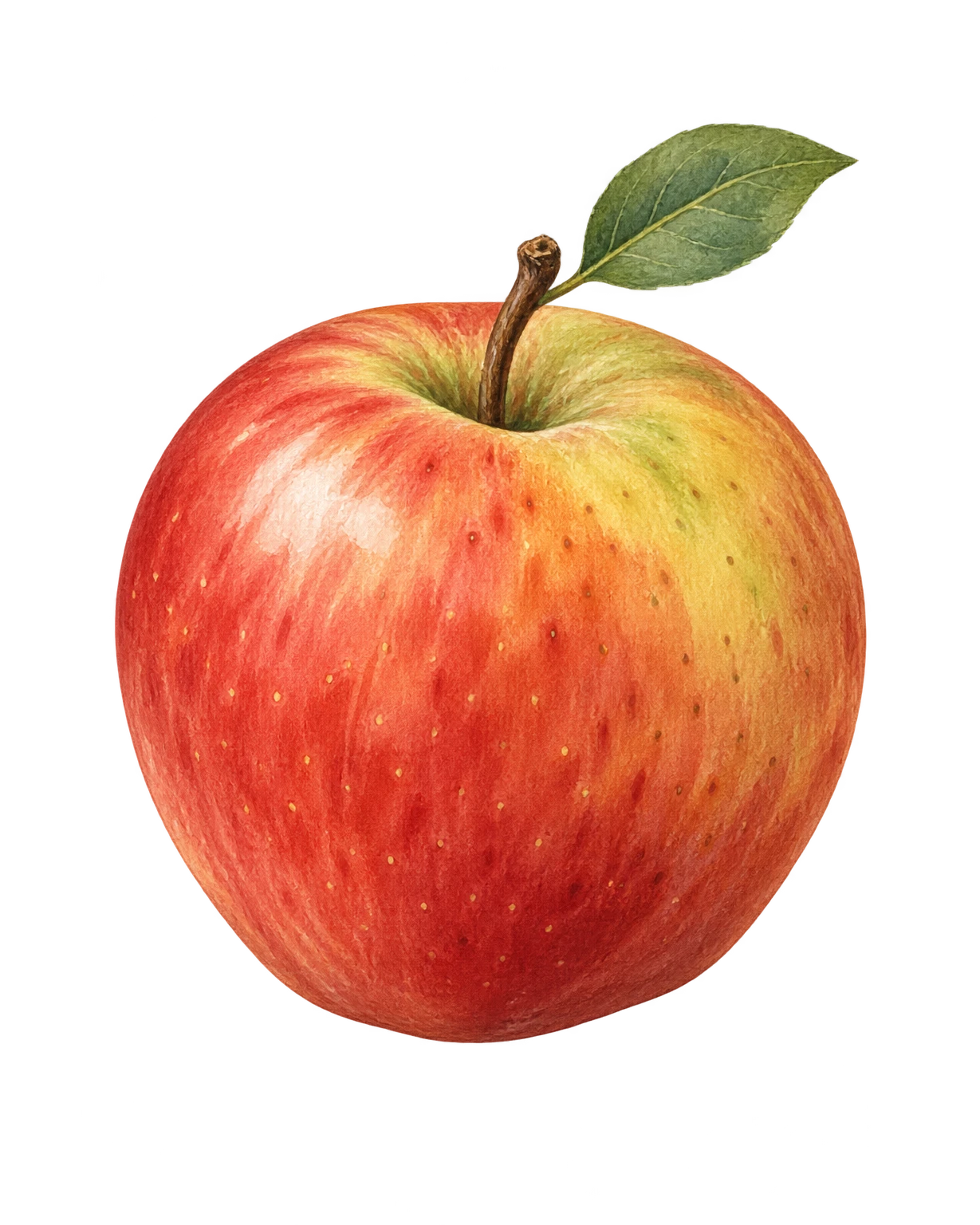
Apples
Apples are pome fruits with crisp to soft flesh and a sweet to tart flavour. They can be enjoyed raw, cooked or baked.
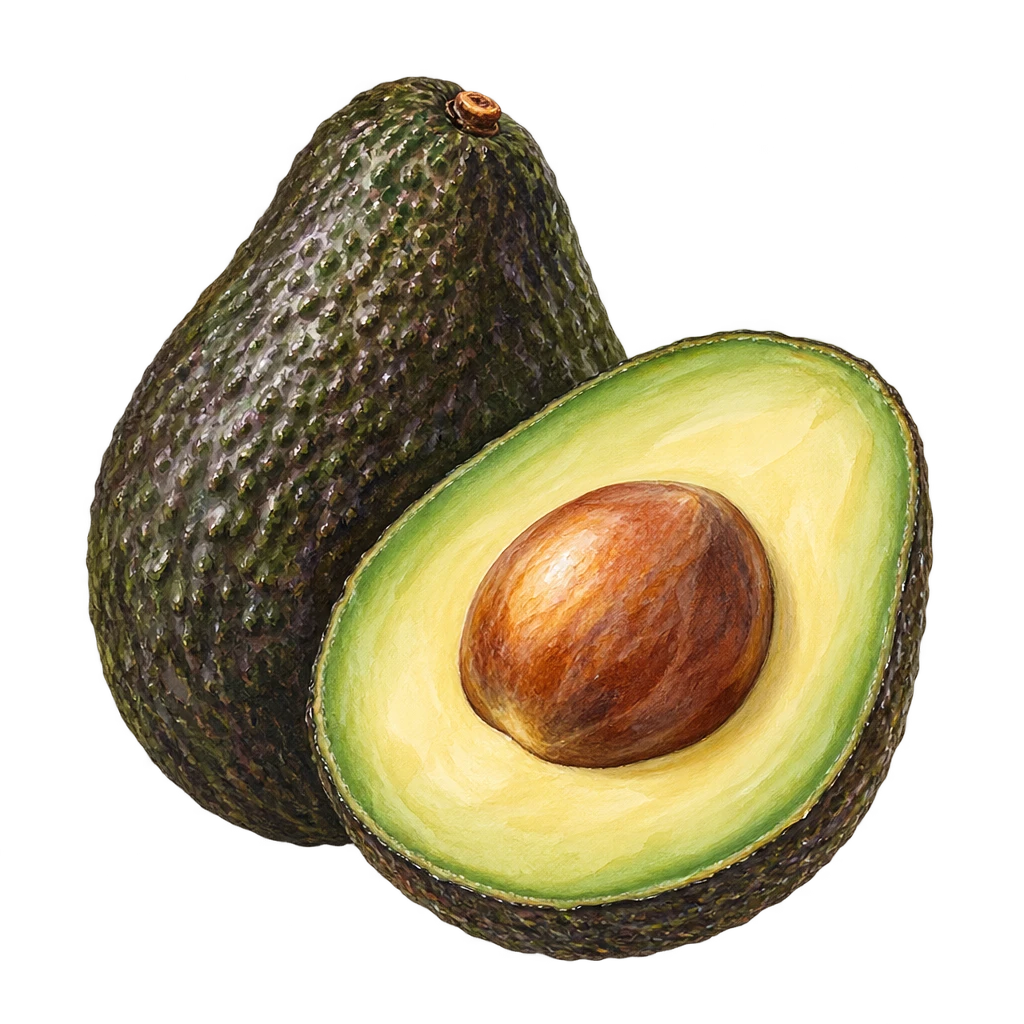
Avocado
Avocado is a fruit with creamy, mild-tasting flesh. It is known for its fat content, predominantly monounsaturated fats, and its fibre.
Orange
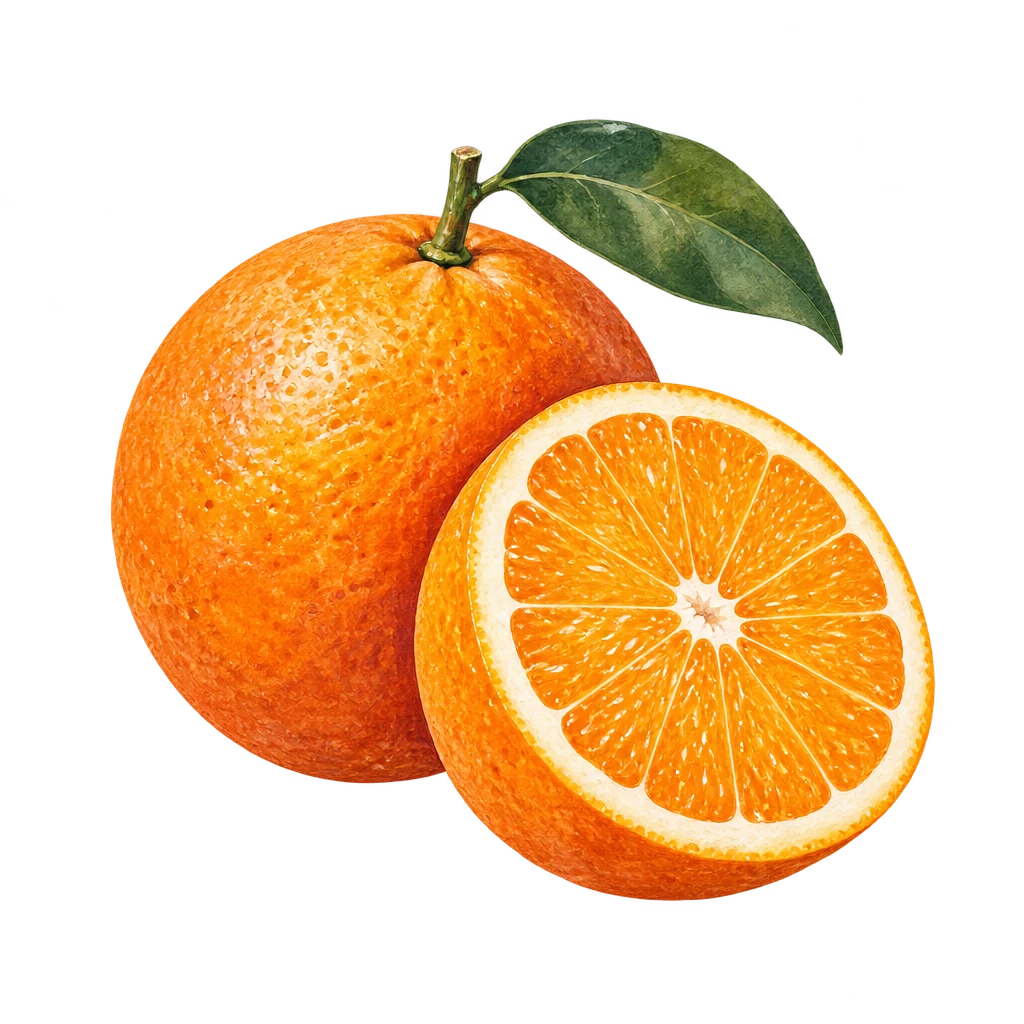
The orange is a juicy citrus fruit with a sweet to slightly tart flavour. It is usually eaten fresh or squeezed for juice and is particularly known for its vitamin C content.
Banana
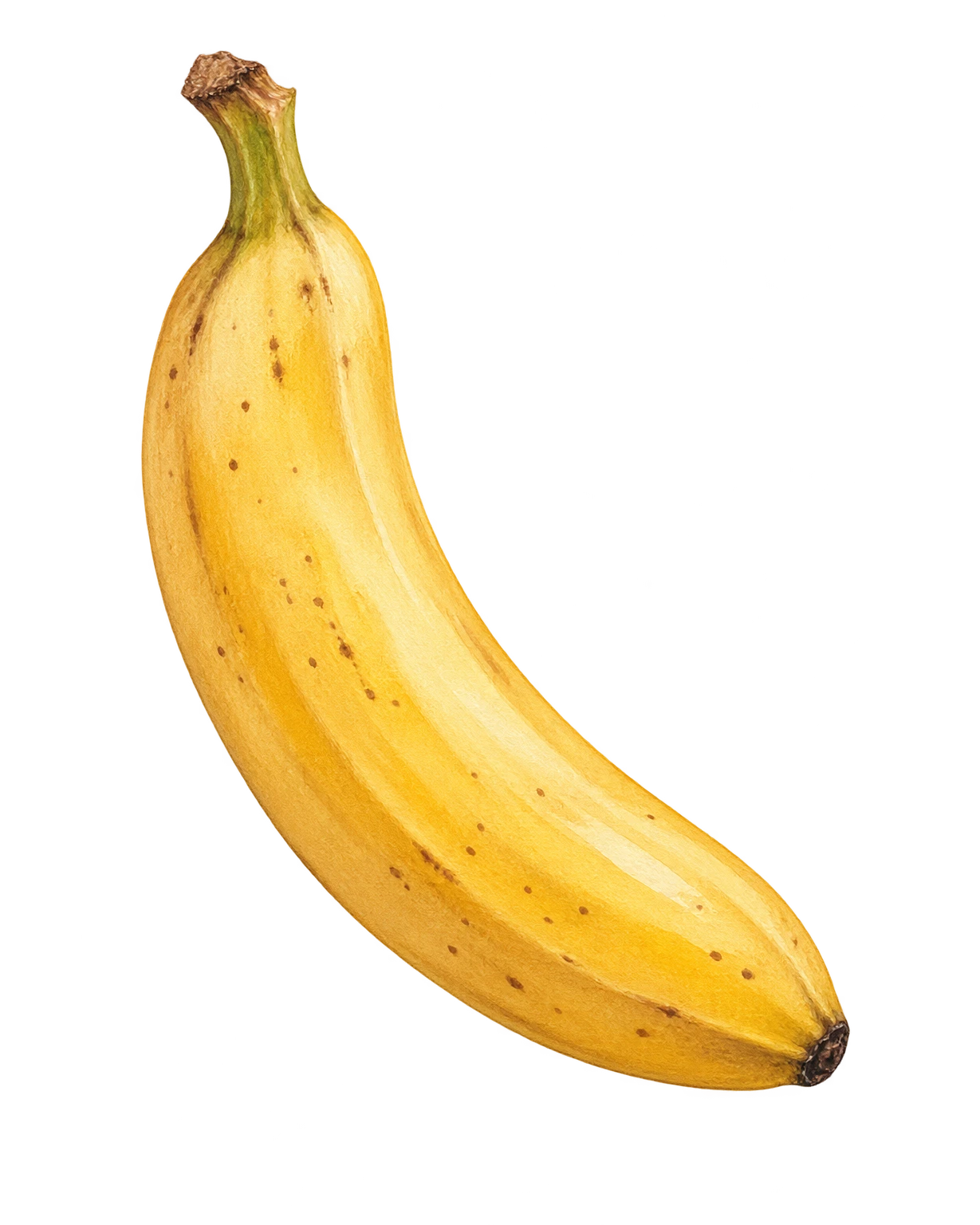
A banana is the edible fruit of a plant in the genus Musa. It belongs to the fruit food group and is usually eaten fresh.
Sources
- 01NHSPreparing food safely for babiesOpen source
- 02Bundesinstitut für Risikobewertung (BfR)Deep frozen berries are better thoroughly cooked before consumptionOpen source
- 03ANSES – French Agency for Food, Environmental and Occupational Health & Safety – Ciqual French food composition table · 2025Blueberry, raw (CIQUAL 13028)Open source