Fruits
Apples
Apples are pome fruits with crisp to soft flesh and a sweet to tart flavour. They can be enjoyed raw, cooked or baked.
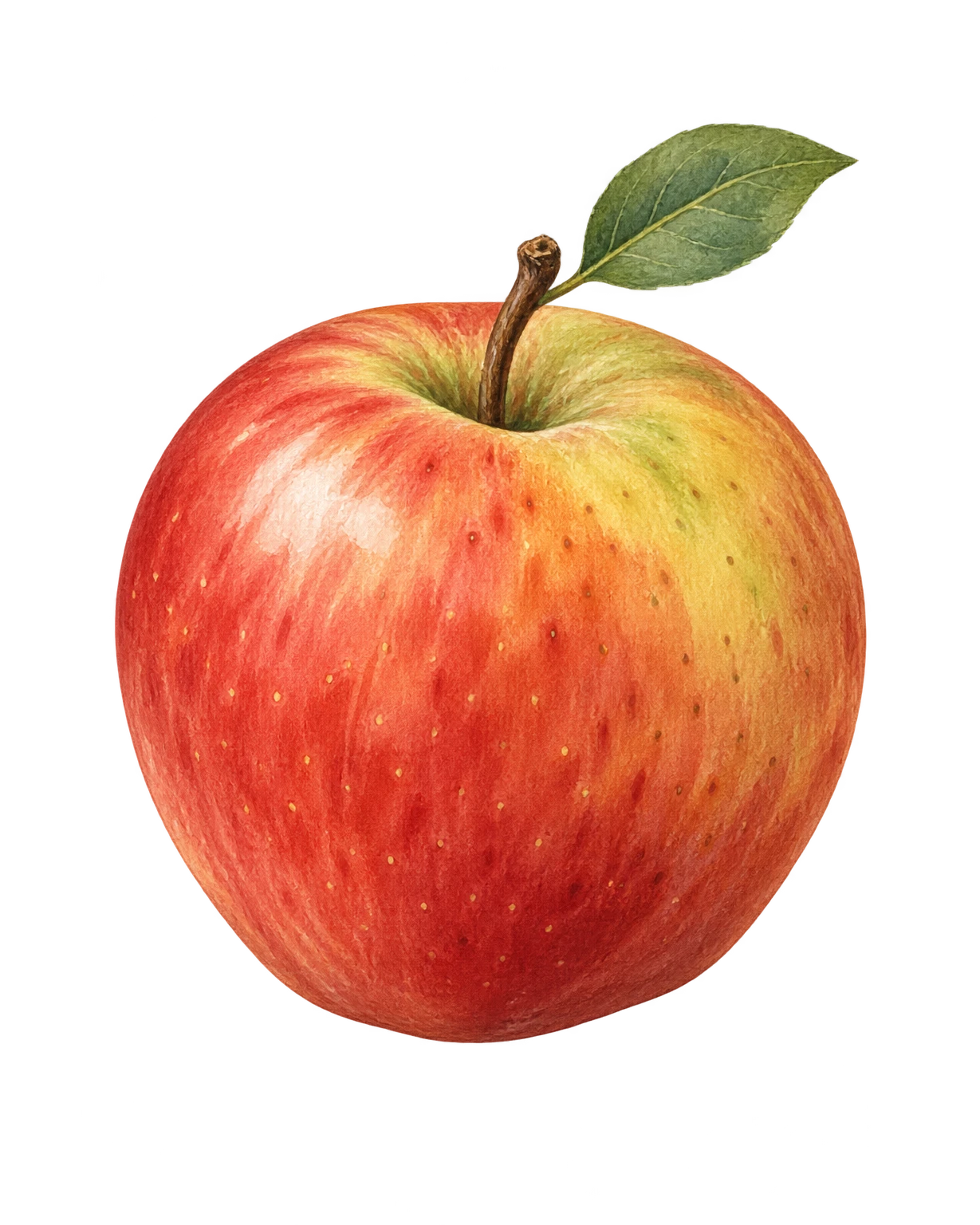
Apples are the fruits of the cultivated apple tree. Their colour, flavour and firmness vary by variety. You can eat them with the skin after washing, or use them in compotes, apple sauce and savoury dishes. Nutritionally, they are known for their water content, carbohydrates and fibre, including pectin. Nutrient amounts are listed per 100 g, with a source reference.
Apples are the fruit of the cultivated apple tree (Malus domestica) and belong to the rose family. They are pome fruits; depending on the variety, their flesh ranges from crisp to soft and their flavour from sweet to tart.
Ways to enjoy apples
Wash apples before eating or preparing them. Enjoy them raw, with or without the skin, or cooked and baked. They can be used in dishes such as compote, apple purée and savoury meals.
Nutrients in apples
Apples contain water, carbohydrates and dietary fibre, including pectin. The nutrient amounts per 100 g are shown in the composition section.
Nutrients
- Protein0.25 gper 100 g[9]
- Omega-3 fatty acids0.005 gper 100 g[9]
- Dietary fibre1.4 gper 100 g[9]
- Calcium5.34 mgper 100 g[9]
- Iron0.099 mgper 100 g[9]
- Magnesium6.47 mgper 100 g[9]
- Phosphorus11.4 mgper 100 g[9]
- Potassium119 mgper 100 g[9]
- Zinc0.031 mgper 100 g[9]
- Copper0.041 mgper 100 g[9]
- Iodine0.37 µgper 100 g[9]
- Vitamin A1.78 µgper 100 g[9]
- Vitamin E0.19 mgper 100 g[9]
- Vitamin D0 µgper 100 g[9]
- Vitamin C4.6 mgper 100 g[9]
- Vitamin B60.044 mgper 100 g[9]
- Vitamin B120 µgper 100 g[9]
- Vitamin K1.78 µgper 100 g[9]
- Folate3 µgper 100 g[9]
Safety information
Contraindication
Apple allergy and pollen-food syndrome
If you have pollen-food syndrome, raw apples can cause itching or swelling in the mouth. Cooked apples are often tolerated in this syndrome, but are not safe for every apple allergy. Avoid forms that trigger reactions, and do not test your tolerance after a severe reaction without specialist advice. Sudden tongue or throat swelling, breathing difficulty or collapse require immediate emergency help. [1][2]
Side effect
Digestive symptoms in susceptible people
Apples, apple sauce and apple juice may cause bloating, abdominal discomfort or diarrhoea in people with IBS or fructose malabsorption. Tolerance varies, including with the amount consumed. IBS alone does not require permanent avoidance; a low-FODMAP diet should involve professional guidance and gradual reintroduction. [3]
Contraindication
Avoid with hereditary fructose intolerance
If you have diagnosed hereditary fructose intolerance, avoid apples and apple juice as part of your prescribed metabolic diet. Fructose can cause hypoglycaemia and liver or kidney damage in this rare disorder. It is different from the more common condition of fructose malabsorption. [4]
Caution
Hard apple pieces are a choking hazard for young children
Hard raw apple pieces are a choking hazard for infants and young children. Adapt texture, size and shape to your child's eating abilities, for example by cooking the apple until soft. Keep your child seated upright and supervise eating. [7]
Caution
Wash apples before eating or juicing
Wash apples under running water before eating or preparation, even if you will peel them afterwards. Do not use rotten fruit for juicing. [8]
Frequently asked questions
How can I eat apples?
You can enjoy apples raw, cooked or baked.
What do apples taste like?
Their flavour ranges from sweet to tart, and their flesh can be crisp to soft.
How much dietary fibre do apples contain?
Apples contain 1.4 g of dietary fibre per 100 g.
Should I eat apple seeds?
You should not deliberately eat or grind apple seeds.
More entries
Orange
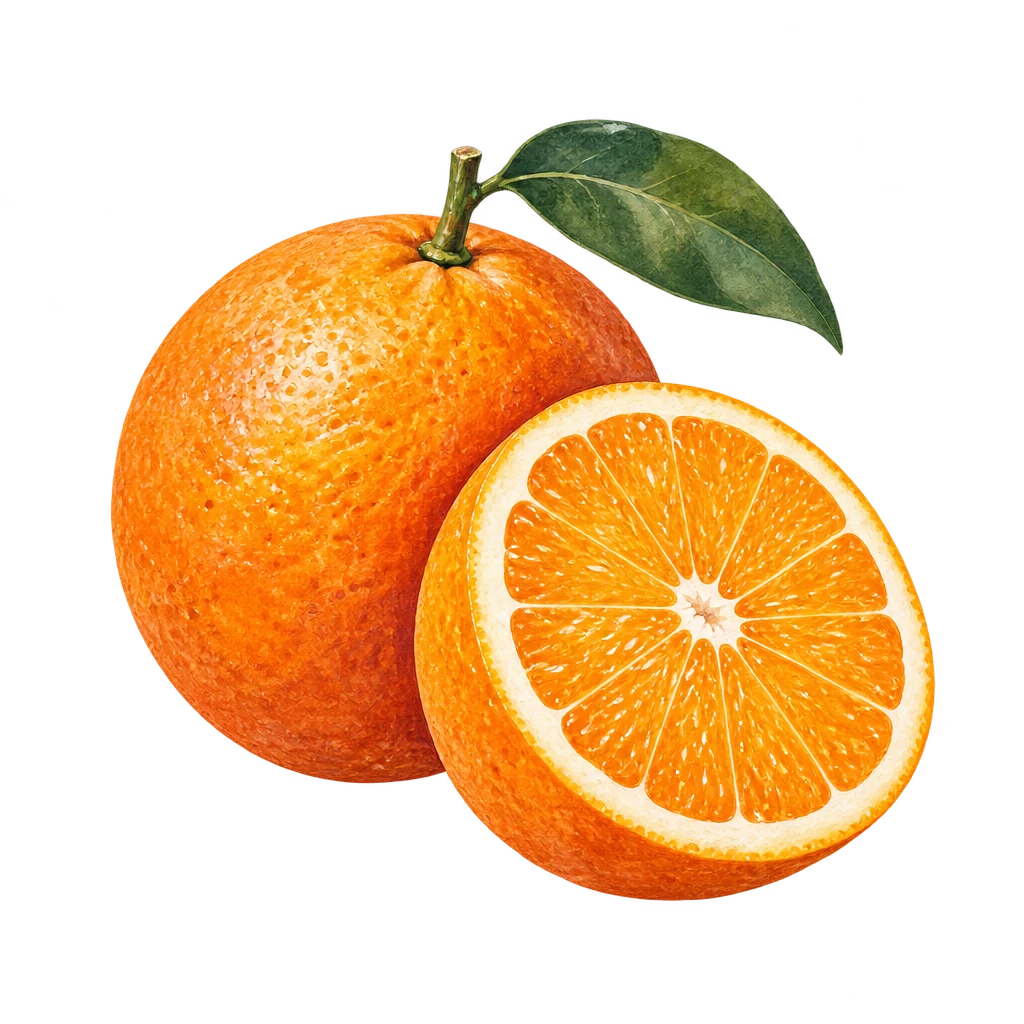
The orange is a juicy citrus fruit with a sweet to slightly tart flavour. It is usually eaten fresh or squeezed for juice and is particularly known for its vitamin C content.
Banana
A banana is the edible fruit of a plant in the genus Musa. It belongs to the fruit food group and is usually eaten fresh.

Sources
- 01North West Allergy NetworkOral Allergy Syndrome (Food Pollen Syndrome)Open source
- 02NHSFood allergyOpen source
- 03MedlinePlus, US National Library of MedicineLow FODMAP diet: MedlinePlus Medical EncyclopediaOpen source
- 04MedlinePlus, US National Library of MedicineHereditary fructose intolerance: MedlinePlus GeneticsOpen source
- 05US Food and Drug AdministrationNatural Toxins in FoodOpen source
- 06EFSA Journal · 2019Evaluation of the health risks related to the presence of cyanogenic glycosides in foods other than raw apricot kernelsDOI 10.2903/j.efsa.2019.5662
- 07US Centers for Disease Control and PreventionChoking HazardsOpen source
- 08US Food and Drug AdministrationWhat You Need to Know About Juice SafetyOpen source
- 09ANSES – French Agency for Food, Environmental and Occupational Health & Safety – Ciqual French food composition table · 2025Apple, flesh and skin, raw (CIQUAL 13039)Open source