
How nutrition works
Glycaemic control
How diet can influence blood glucose after eating.
Blood glucose rises to different degrees after a meal. Fibre and the type of carbohydrate play a role. Here you find the evidence – with evidence level and sources.
Nutrients & foods
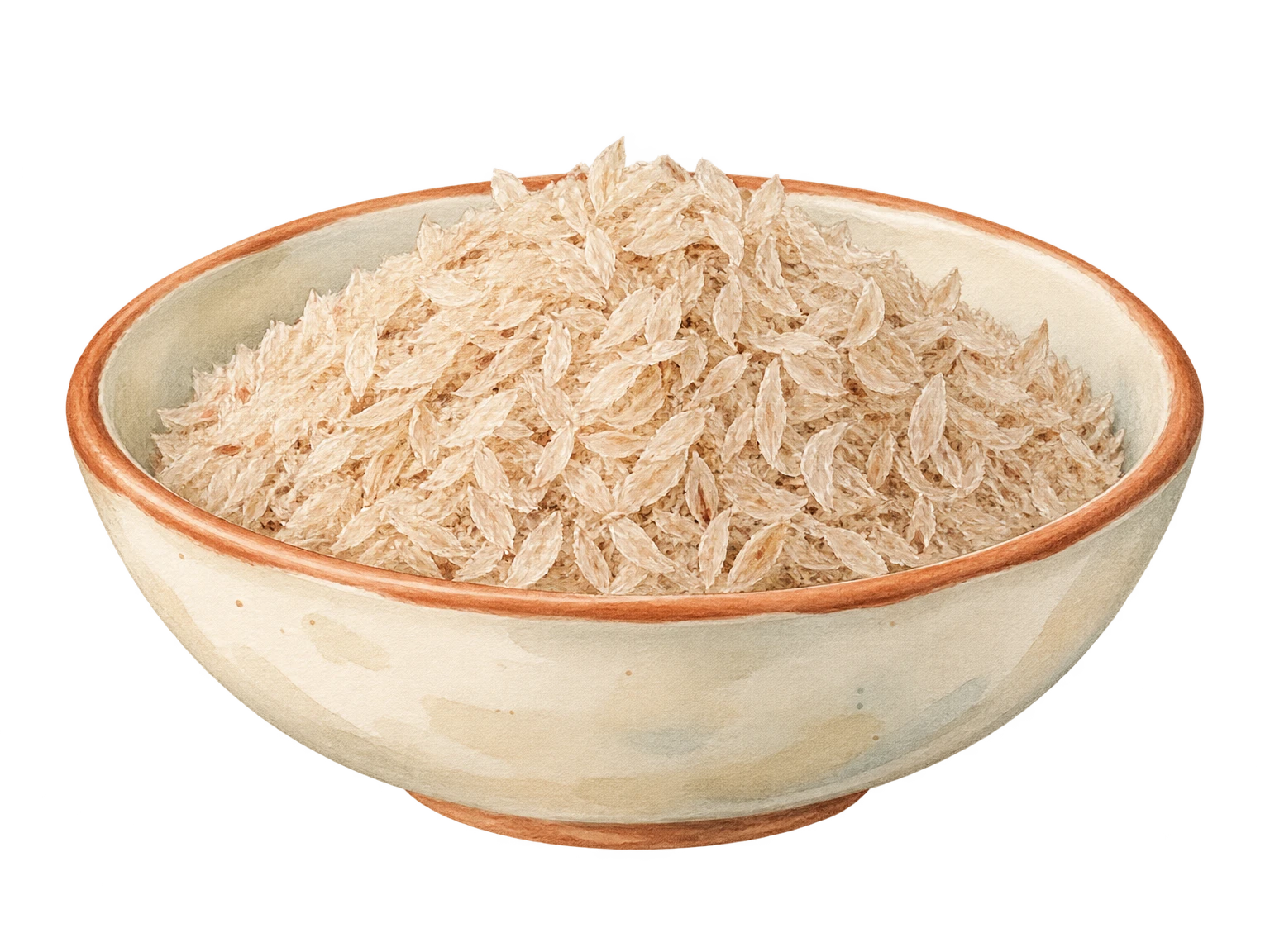
Psyllium husk
Psyllium husk may reduce fasting blood glucose and HbA1c in adults with type 2 diabetes. [5]

Sources
- 01European Commission · 2012Commission Regulation (EU) No 432/2012 establishing a list of permitted health claims made on foods, other than those referring to the reduction of disease risk and to children's development and healthOpen source
- 02EFSA Journal · 2011Scientific Opinion on the substantiation of health claims related to resistant starch and reduction of post-prandial glycaemic responses (ID 681), “digestive health benefits” (ID 682) and “favours a normal colon metabolism” (ID 783) pursuant to Article 13(1) of Regulation (EC) No 1924/2006DOI 10.2903/j.efsa.2011.2024
- 03EFSA Journal · 2025Beta-glucans from oats or barley and reduction of postprandial glycaemic responses: Modification of an authorised health claimDOI 10.2903/j.efsa.2025.9630
- 042026Comprehensive Effects of Magnesium Supplementation on Cardiometabolic Risk Factors: A Systematic Review and Dose–Response Meta-AnalysisOpen source
- 052020The effect of psyllium consumption on weight, body mass index, lipid profile, and glucose metabolism in diabetic patients: A systematic review and dose-response meta-analysis of randomized controlled trialsPubMed 31919936Open source