
Dairy & eggs
Eggs
Eggs consist of a white and a yolk; this entry covers hen's eggs. Known for their protein content, they are eaten boiled or fried and used as an ingredient in many dishes.
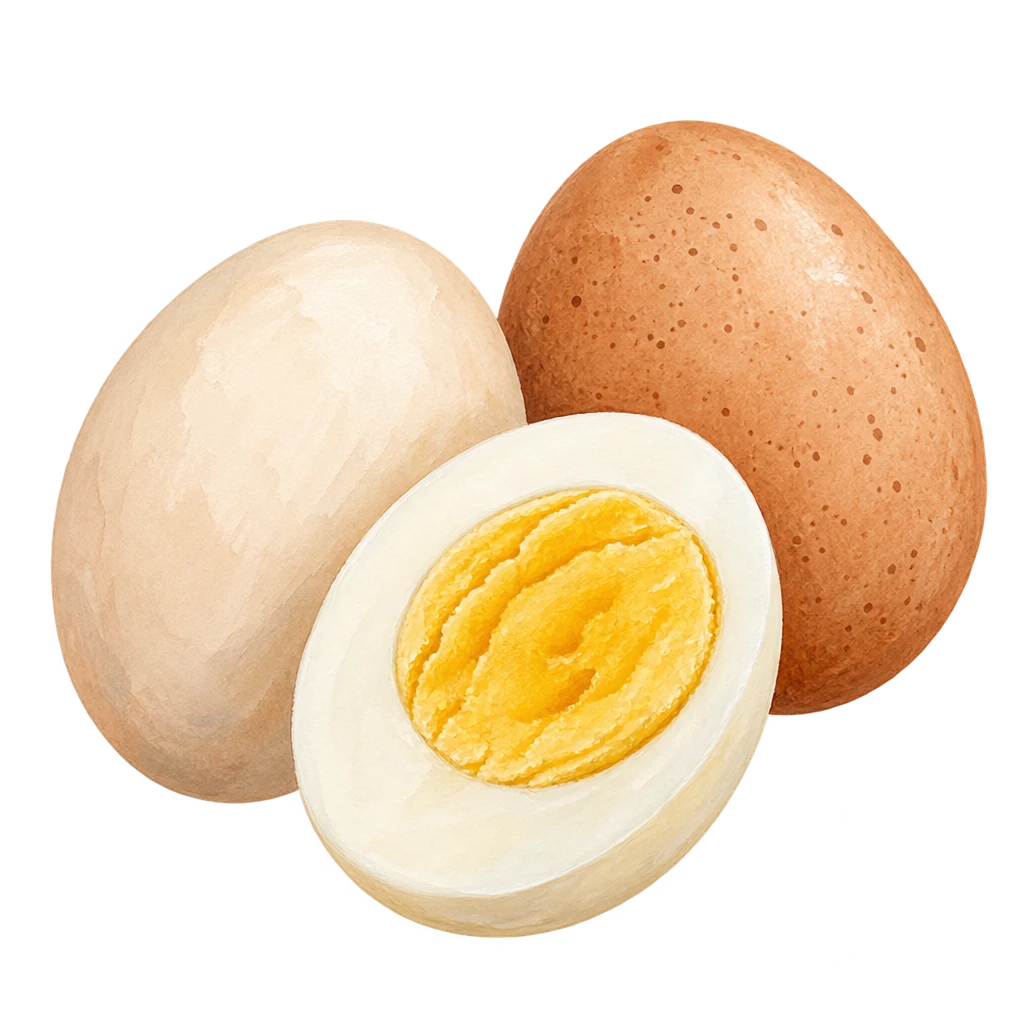
Eggs are versatile in the kitchen: you can enjoy them boiled, scrambled or in an omelette, or use them for baking and binding ingredients. The white and yolk have different compositions. Alongside protein, eggs contain fat and a range of vitamins and minerals, with most of the fat found in the yolk. The nutrition table lists nutrient amounts per 100 g of edible egg, excluding the shell, together with the source.
What are eggs?
This entry is about hen’s eggs. They consist of a white and a yolk, which differ in composition. Eggs contain protein, fat, and various vitamins and minerals. Most of the fat is in the yolk.
Using eggs in cooking
You can boil or fry eggs, or prepare them as scrambled eggs or an omelette. They are also used in baking and to bind foods.
Nutrients
- Dietary fibre0 gper 100 g[10]
- Calcium76.8 mgper 100 g[10]
- Iron1.75 mgper 100 g[10]
- Magnesium11 mgper 100 g[10]
- Phosphorus198 mgper 100 g[10]
- Potassium138 mgper 100 g[10]
- Zinc1.01 mgper 100 g[10]
- Copper0.055 mgper 100 g[10]
- Iodine35.3 µgper 100 g[10]
- Vitamin A160 µgper 100 g[10]
- Vitamin E1.05 mgper 100 g[10]
- Vitamin D2 µgper 100 g[10]
- Vitamin C0 mgper 100 g[10]
- Vitamin B60.17 mgper 100 g[10]
- Vitamin B120.89 µgper 100 g[10]
- Vitamin K0.3 µgper 100 g[10]
- Folate47 µgper 100 g[10]
Safety information
Contraindication
Avoid triggering forms of egg if you have an egg allergy
If you have a confirmed egg allergy, avoid the forms of egg that trigger reactions and follow your allergy-management plan. Egg yolk also contains allergenic proteins. Tolerance of extensively baked egg needs individual assessment. Breathing difficulty, throat swelling or faintness require immediate emergency help. [1]
Caution
Raw eggs can transmit Salmonella
Even clean, intact eggs can contain Salmonella. Keep eggs refrigerated, wash hands and utensils after handling raw egg, and avoid contaminating ready-to-eat foods. Cook eggs thoroughly; use pasteurised eggs or egg products for dishes that remain raw or undercooked. [2]
Caution
Extra care for groups vulnerable to foodborne illness
During pregnancy, and for young children, older adults and people with weakened immunity, fully cooked eggs are the safer choice. Use pasteurised products for uncooked dishes. UK pregnancy guidance permits certain assurance-marked hen eggs raw or partly cooked; this exception should not be applied to ordinary eggs in other countries. [2][3]
Interaction
Raw egg white can reduce biotin absorption
Raw egg white contains avidin, which binds biotin and prevents its absorption. Cooking denatures avidin. This is not an established hazard of normally cooked eggs, and the source does not provide a numerical safe intake for raw egg white. [4]
Caution · Adults
Possible increase in LDL cholesterol
Randomised trials found higher average LDL cholesterol with greater egg consumption than with control diets. The size of your individual response and the long-term consequences remain uncertain. If you have raised blood lipids, discuss egg intake in the context of your overall diet; the evidence does not support a general ban on eggs. [5][6]
Upper level
No established universal safe maximum
No EFSA upper limit expressed as eggs per day or week was identified. Food-based recommendations are not toxicity thresholds. The absence of such a limit does not mean unlimited egg consumption is safe; your overall diet and individual health circumstances still matter. [7][8]
Caution
Introduce eggs carefully during complementary feeding
When your baby is around six months old and ready for complementary foods, introduce egg separately from other new allergenic foods and initially in small amounts. Seek professional advice first if your baby has eczema or an existing food allergy. Prolonged preventive avoidance of egg is not a recommended allergy-prevention strategy. [9]
Frequently asked questions
What does this entry mean by eggs?
This entry covers hen’s eggs. They consist of a white and a yolk; the shell is excluded from the nutrition reference basis.
How can I use eggs?
You can boil or fry eggs, or use them as an ingredient in dishes.
What nutrients do eggs contain?
Eggs contain protein and various nutrients, including calcium, iron, phosphorus, and vitamins A, D and B12. The amounts are given per 100 g of edible portion, excluding the shell.
Are raw eggs safe?
Raw eggs can transmit Salmonella.
More entries
Yoghurt
Yoghurt is a fermented milk product with a mildly tangy flavour and creamy texture. Nutritionally, it is particularly known for its protein and calcium content.
Sources
- 01North West Allergy NetworkEgg AllergyOpen source
- 02US Food and Drug AdministrationWhat You Need to Know About Egg SafetyOpen source
- 03NHSFoods to avoid in pregnancyOpen source
- 04National Institutes of Health, Office of Dietary SupplementsBiotin - Health Professional Fact SheetOpen source
- 05Association between Egg Consumption and Cholesterol Concentration: A Systematic Review and Meta-analysis of Randomized Controlled TrialsPubMed 32635569Open source
- 062025Effect of egg consumption on health outcomes: An updated umbrella review of systematic reviews and meta-analysis of observational and intervention studiesPubMed 39934049Open source
- 07European Food Safety AuthorityDietary reference valuesOpen source
- 08Deutsche Gesellschaft für ErnährungEierverzehr und kardiometabolische ErkrankungenOpen source
- 09NHSFood allergies in babies and young childrenOpen source
- 10ANSES – French Agency for Food, Environmental and Occupational Health & Safety – Ciqual French food composition table · 2025Egg, raw (CIQUAL 22000)Open source