
Dairy & eggs
Yoghurt
Yoghurt is a fermented milk product with a mildly tangy flavour and creamy texture. Nutritionally, it is particularly known for its protein and calcium content.
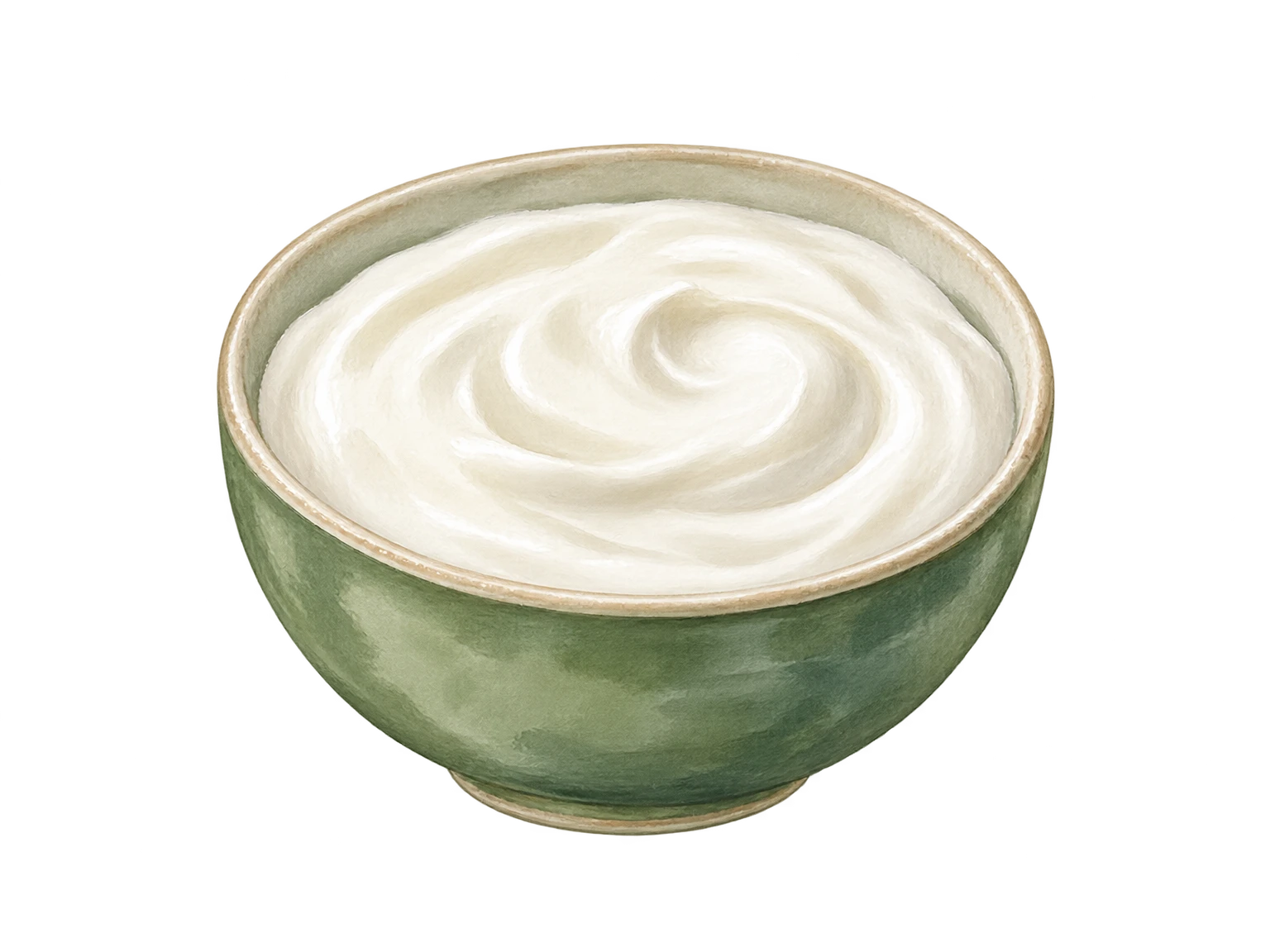
Yoghurt is made by fermenting milk with lactic acid bacteria. These convert some of the milk sugar into lactic acid, giving yoghurt its tangy taste and thickened texture. You can eat it plain, add fruit or oats, or use it in dips, dressings and cooking. Plain, sweetened and strained yoghurts differ in composition, as does yoghurt made from different types of milk. Nutrient amounts are listed per 100 g in the composition table, together with their source.
What is yoghurt?
Yoghurt is a fermented milk product. During fermentation, bacteria convert some of the milk sugar into lactic acid, giving yoghurt its mildly tangy flavour and thicker texture. The traditional yoghurt cultures are Streptococcus thermophilus and Lactobacillus delbrueckii subsp. bulgaricus.
You can enjoy yoghurt plain or with fruit and oats, or use it in dips, dressings and cooking. Plain, sweetened and strained yoghurts differ in composition, as do products made with different types of milk. Nutrient amounts are given per 100 g.
Nutrients
- Calcium137 mgper 100 g[14]
- Magnesium12.4 mgper 100 g[14]
- Phosphorus104 mgper 100 g[14]
- Potassium180 mgper 100 g[14]
- Zinc0.52 mgper 100 g[14]
- Iodine38 µgper 100 g[14]
- Selenium2.16 µgper 100 g[14]
- Vitamin A19 µgper 100 g[14]
- Vitamin B60.05 mgper 100 g[14]
- Vitamin B120.15 µgper 100 g[14]
- Vitamin K0.27 µgper 100 g[14]
- Folate7.05 µgper 100 g[14]
Safety information
Side effect
Tolerance varies in lactose intolerance
If you have difficulty digesting lactose, dairy yoghurt can cause bloating, abdominal pain or diarrhoea. Smaller portions or lactose-free products may help. Live yoghurt cultures improve lactose digestion but do not guarantee symptom-free consumption. Lactose intolerance is not milk allergy. [1][2]
Contraindication
Avoid with milk-protein allergy
If you have a milk-protein allergy, avoid dairy yoghurt unless your allergy team has explicitly approved it. Lactose-free dairy yoghurt still contains milk proteins. Breathing difficulty, sudden tongue or throat swelling, or collapse requires immediate emergency medical help. [3][1]
Contraindication
Specialist advice for classical galactosaemia
Ordinary dairy yoghurt is unsuitable for the lactose- and galactose-restricted diet required in classical galactosaemia. Do not rely on a 'lactose-free' label: ask your metabolic team which products are suitable. [4]
Caution
Choose pasteurised products when infection risk is higher
During pregnancy, avoid yoghurt made from unpasteurised milk because of foodborne infection risk, particularly listeriosis. Pasteurised products are also the safer choice for older people and people with weakened immunity. Follow refrigeration and use-by instructions. [5][6]
Caution
Choose and introduce yoghurt appropriately for babies
From around six months, pasteurised, plain, full-fat yoghurt can be part of complementary feeding. Choose products without added sugar and introduce milk-containing foods individually in small amounts so you can recognise allergic reactions. Known milk allergy requires specialist advice. [7]
Caution
Individualise intake in chronic kidney disease
With chronic kidney disease, your yoghurt intake may need adjustment to your phosphorus, protein and other mineral requirements. Yoghurt is not universally prohibited: kidney function, blood results and treatment determine the advice. Agree an appropriate amount with your clinical team. [8]
Interaction
Separate from oral ciprofloxacin
If you take oral ciprofloxacin, yoghurt consumed at the same time can reduce antibiotic absorption. The NHS advises at least two hours between the medicine and dairy products; dairy within a balanced meal is treated differently. Follow your medicine leaflet or ask a pharmacist. This does not apply to eye or ear drops or automatically to every antibiotic. [9]
Interaction
Follow levothyroxine administration instructions
If you take levothyroxine, take it with water according to your formulation's instructions and follow advice on separation from meals and calcium-rich foods. Food, milk and calcium supplements can impair absorption. The size of the interaction with ordinary yoghurt and the optimal yoghurt-specific interval are not adequately studied directly; ask a pharmacist. [10][11]
Upper level · Adults
The calcium upper limit covers total intake
EFSA's calcium upper limit for adults is 2,500 mg per day from all foods and supplements combined, including during pregnancy and breastfeeding. It is neither an intake target nor a maximum yoghurt portion. EFSA could not establish a calcium upper limit for children and adolescents because data were insufficient. [12]
Upper level
No established universal maximum amount of yoghurt
The reviewed sources did not identify an authority-established safe maximum in grams or pots of yoghurt per day. Nutrient upper limits are not food portion limits. The absence of a yoghurt-specific limit does not mean unlimited consumption is safe or appropriate. [13][12]
Frequently asked questions
What is yoghurt?
Yoghurt is a fermented milk product with a mildly tangy flavour and creamy texture.
What is yoghurt made from?
Yoghurt is made from milk and is a fermented milk product.
Which cultures are traditionally used to make yoghurt?
Traditional yoghurt cultures include Streptococcus thermophilus and Lactobacillus delbrueckii subsp. bulgaricus.
Can I eat yoghurt if I am lactose intolerant?
Yoghurt tolerance varies among people with lactose intolerance.
Is yoghurt suitable for someone with a milk protein allergy?
Yoghurt should be avoided with a milk protein allergy.
More entries
Eggs
Eggs consist of a white and a yolk; this entry covers hen's eggs. Known for their protein content, they are eaten boiled or fried and used as an ingredient in many dishes.

Sources
- 01NHSLactose intoleranceOpen source
- 02EFSA Journal · 2010Scientific Opinion on the substantiation of health claims related to live yoghurt cultures and improved lactose digestion (ID 1143, 2976) pursuant to Article 13(1) of Regulation (EC) No 1924/2006Open source
- 03Cambridge University Hospitals NHS Foundation TrustMilk allergyOpen source
- 04EFSA Journal · 2010Scientific Opinion on lactose thresholds in lactose intolerance and galactosaemiaOpen source
- 05NHSFoods to avoid in pregnancyOpen source
- 06NHSDairy and alternatives in your dietOpen source
- 07NHSYour baby's first solid foodsOpen source
- 08National Institute of Diabetes and Digestive and Kidney DiseasesHealthy Eating for Adults with Chronic Kidney DiseaseOpen source
- 09NHSCommon questions about ciprofloxacinOpen source
- 10NHSLevothyroxine: a medicine for an underactive thyroid (hypothyroidism)Open source
- 11Levothyroxine Interactions with Food and Dietary Supplements–A Systematic ReviewOpen source
- 12EFSA Journal · 2012Scientific Opinion on the Tolerable Upper Intake Level of calciumEFSA Panel on Dietetic Products, Nutrition and Allergies (NDA)DOI 10.2903/j.efsa.2012.2814
- 13European Food Safety AuthorityDietary reference valuesOpen source
- 14ANSES – French Agency for Food, Environmental and Occupational Health & Safety – Ciqual French food composition table · 2025Yogurt or fermented milk, plain (CIQUAL 19593)Open source