Minerals
Selenium
Selenium is an essential trace element. Your body needs small amounts to make selenium-containing proteins involved in thyroid hormone metabolism and protection against oxidative damage.
In nutrition, selenium is classified as a mineral and, more specifically, an essential trace element. Your body needs only small amounts and must obtain it through your diet. Selenium forms part of proteins called selenoproteins, which carry out several important functions, including roles in thyroid hormone metabolism and protection against oxidative damage. Chemically, selenium is a nonmetallic element with the symbol Se. In foods, it occurs mainly in organic compounds such as selenomethionine and selenocysteine. These compounds are forms containing selenium, rather than alternative names for the nutrient.
Selenium: a trace element with important roles
Selenium is an essential trace element. Your body needs only small amounts, but must obtain it through your diet. It incorporates selenium into proteins called selenoproteins. These proteins are involved in thyroid hormone metabolism and in protecting cells against oxidative damage, among other functions.
What does your body need selenium for?
- Selenium contributes to normal thyroid function.
- It contributes to the normal function of the immune system.
- It contributes to the protection of cells from oxidative stress.
- It contributes to normal spermatogenesis, or sperm production.
- It contributes to the maintenance of normal hair.
These functions are described by authorised EU health claims set out in Regulation (EU) No 432/2012. The claims may be used for foods that qualify as at least a source of selenium. A normal nutrient function does not mean that extra selenium offers extra benefits: these claims do not establish that supplements treat hair loss, improve fertility or prevent infections.
Why selenium levels in food vary
In foods, selenium occurs mainly in organic compounds such as selenomethionine and selenocysteine. The selenium content of plant foods depends partly on selenium levels in the soil and growing conditions. The same type of food can therefore contain different amounts depending on its origin.
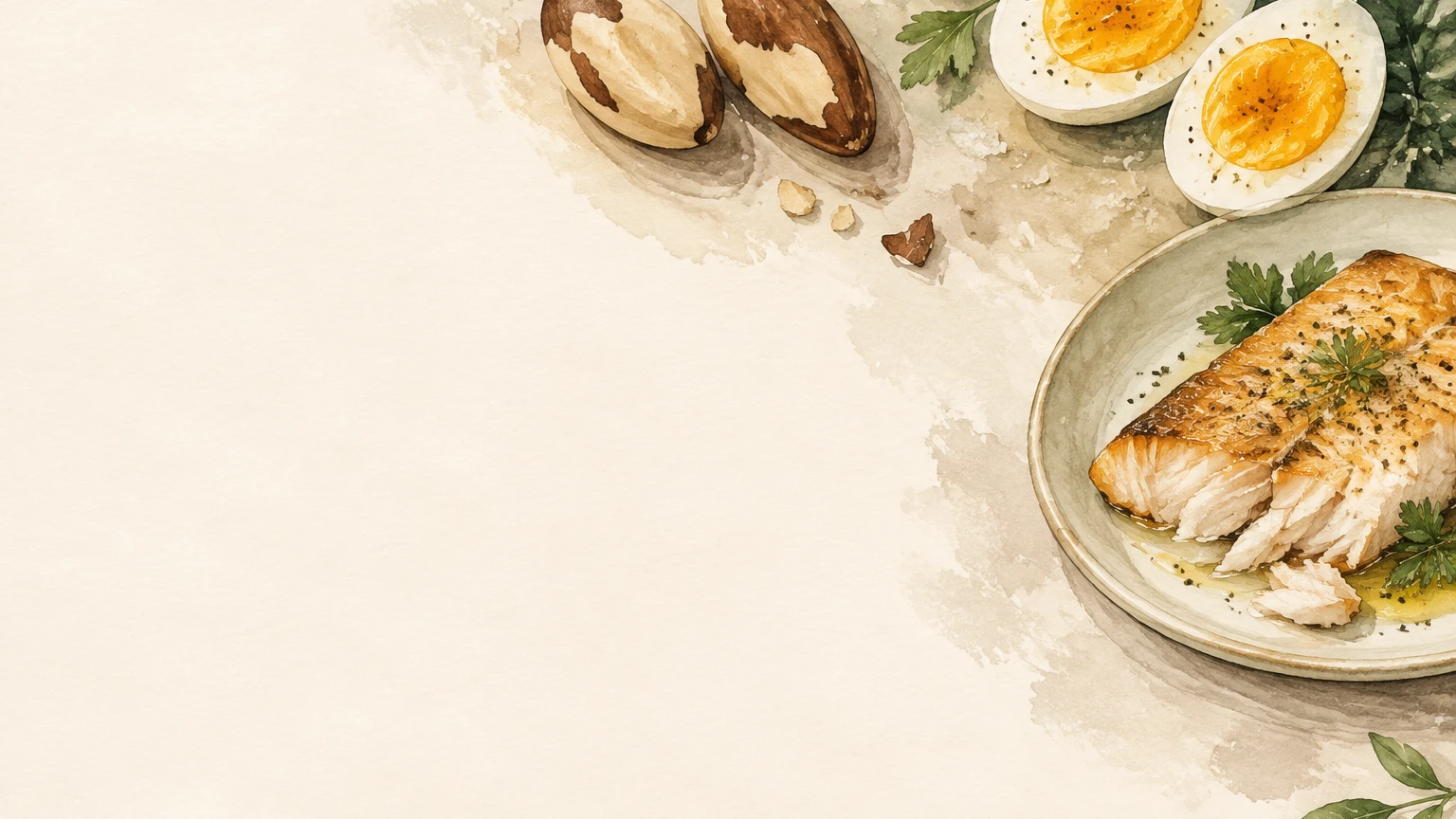
Brazil nuts are not a reliable way to measure a selenium dose. Their selenium content varies widely, even between individual nuts. A fixed number cannot therefore be reliably converted into a selenium intake. Regular consumption can lead to intake above the upper level, particularly when combined with selenium supplements.
Extra selenium does not automatically mean extra benefit
If your intake is already adequate, additional health benefits from more selenium have not been established. In the adult populations studied, selenium supplements showed no demonstrated benefit for preventing cardiovascular events. The studies predominantly involved well-nourished men; their applicability to people with severe selenium deficiency remains uncertain. A cancer-prevention benefit has not been established either. This is distinct from targeted treatment of a diagnosed deficiency.
How nutrition works
Thyroid function
Immune system
Protection from oxidative stress
Fertility and reproduction
Selenium contributes to normal spermatogenesis. [1]
Skin, hair and nails
Cardiovascular health
In the adult populations studied, selenium supplements have no demonstrated benefit for preventing cardiovascular events. [4]
Statements & evidence
Selenium is an essential trace mineral that you need to obtain through your diet. [5]
Your body needs selenium in small amounts. In foods, it occurs mainly as selenomethionine and selenocysteine.
The selenium content of plant foods can vary substantially with their origin and growing conditions. [5]
Important factors include the selenium concentration in soil and its chemical form. The same type of food can therefore contain different amounts of selenium depending on where it was grown.
EFSA sets an Adequate Intake for selenium of 70 µg per day for adults, including during pregnancy, and 85 µg per day during lactation. [2]
These dietary reference values concern total dietary intake, not recommended supplement doses. An Adequate Intake (AI) is used when the available evidence does not allow an Average Requirement to be established.
EFSA has set the Tolerable Upper Intake Level for selenium at 255 µg per day for adults, including pregnant and lactating women. [3]
This upper level, established in 2023, applies to habitual total intake from foods and supplements. It is not an intake target or a guarantee of individual tolerance. Children have lower, age-specific upper levels.
Chronically excessive selenium intake can cause selenium toxicity; possible signs include hair loss and nail abnormalities. [3]
This toxicity is also called selenosis. EFSA used hair loss as the critical health endpoint when deriving its upper intake level. These symptoms can also have other causes and cannot establish a diagnosis on their own.
Regularly eating Brazil nuts or taking high-dose selenium supplements can lead to intake above the Tolerable Upper Intake Level. [3]
Brazil nuts can contain very high amounts of selenium, with substantial variation even between individual nuts. EFSA identifies regular consumers and users of high-dose supplements as groups that may exceed the upper level. A fixed number of nuts therefore cannot be reliably converted into a selenium intake.
If your selenium intake is already adequate, additional health benefits from a higher intake have not been established. [2]
In its dietary reference review, EFSA found no evidence of additional benefits above the intake at which selenoprotein P reaches a plateau. This does not support a general benefit from extra supplements in adequately supplied people; it does not concern targeted treatment of a diagnosed deficiency.
Safety information
Upper level · Adults
Adult upper intake level: 255 µg daily
EFSA's upper intake level for adults is 255 µg selenium per day, including during pregnancy and breastfeeding. It applies to habitual total intake from food and supplements. Count all sources together: the limit is neither an intake target nor a recommended supplement dose. [3]
Upper level · Children and adolescents (1–17 years)
Children have lower upper intake levels
EFSA's upper levels for total daily selenium intake are: 1–3 years 70 µg, 4–6 years 95 µg, 7–10 years 130 µg, 11–14 years 180 µg and 15–17 years 230 µg. Give children selenium supplements only following healthcare advice and according to individual need. [3]
Upper level · Infants (7–11 months)
Upper intake level for infants aged 7–11 months
For infants aged 7–11 months, EFSA's upper intake level is 55 µg selenium daily from all dietary sources combined. This is not a recommended supplement dose. Give your baby selenium supplements only after paediatric advice. [3]
Side effect
Chronic excess can cause selenosis
People with chronically excessive selenium intake may develop hair loss, brittle or lost nails, garlic-like breath, a metallic taste, rash, nausea, diarrhoea, fatigue and nervous-system abnormalities. Both organic and inorganic forms can be toxic at excessive intakes. Seek medical assessment if you suspect symptoms from excessive intake. [5]
Side effect
Very large doses can cause acute poisoning
A very large dose, for example from an incorrectly formulated supplement, can cause severe poisoning with gastrointestinal and neurological symptoms, respiratory distress, and kidney or cardiac failure. Rarely, it can be fatal. Contact emergency medical services or a poison centre immediately if a substantial overdose is suspected. [5]
Caution
Account for Brazil nuts and overlapping supplements
If you regularly eat Brazil nuts or take high-dose selenium supplements, your total intake may exceed the upper level. Check multivitamins for selenium too. Brazil-nut selenium content varies widely, so a fixed number of nuts is not a reliable dose. [3][7]
Caution
BfR supplement guidance is not a total-intake limit
For people over 15, BfR recommends a maximum of 40 µg selenium per daily dose of a food-supplement product. This is product guidance, not a recommended daily intake and not EFSA's upper level for total intake. [7]
Caution · Adults
Possible diabetes risk with additional supplementation
Adult selenium-supplementation trials raise concern about an increased risk of type 2 diabetes. EFSA judged the relevant intervention evidence to have moderate certainty, but a clear dose–response relationship has not been established. This does not mean that ordinary dietary selenium intake causes diabetes. [3]
Caution · Adult men
Caution when selenium status is already high
In a trial subgroup of men with high baseline selenium status, supplementation was associated with an increased risk of high-grade prostate cancer. The generalisability of this finding is limited. Selenium supplements have no established cancer-prevention benefit; this finding does not show that ordinary dietary selenium causes prostate cancer. [8]
Interaction
Discuss supplements during cisplatin treatment
If you receive cisplatin, discuss selenium supplements with your oncology team. Cisplatin can lower selenium concentrations in blood and hair, but the clinical significance is uncertain. Evidence is insufficient to establish that selenium supplements reduce cisplatin toxicity. [5]
Interaction
Vitamin C spacing for certain selenite medicines
If you take Selenase oral solution, its product information specifies a four-hour interval from vitamin C because selenium availability may be reduced. This instruction concerns the specific sodium-selenite solution and should not automatically be applied to every selenium supplement or vitamin-C-containing food. [9]
Contraindication
Contraindications for certain selenite medicines
Selenase oral solution must not be used in people with existing selenosis or known hypersensitivity to the active substance or its excipients. These are medicine-specific contraindications, not a general prohibition on selenium-containing foods. [9]
Caution · Pregnant women
Do not self-supplement in TPO-antibody-positive pregnancy
If you are pregnant and have positive thyroid peroxidase antibodies, the American Thyroid Association recommends against selenium supplementation for this purpose. Discuss your nutritional needs with your healthcare team; benefit is not sufficiently established. [5]
Caution
Individualise supplementation during haemodialysis
People receiving haemodialysis may have low selenium status, but whether supplementation provides clinical benefits remains uncertain. If you receive dialysis, discuss selenium supplements with your renal team rather than taking high doses on your own. [5]
Frequently asked questions
What does your body need selenium for?
Selenium is an essential trace element that contributes to normal thyroid and immune-system function and to protecting cells from oxidative stress. If your intake is already adequate, additional health benefits from more selenium have not been established.
How much selenium do you need each day?
EFSA sets an Adequate Intake of 70 µg selenium per day for adults, including during pregnancy, and 85 µg per day during breastfeeding. These values concern total intake, not recommended supplement doses.
Can you get too much selenium?
Yes: chronically excessive intake can cause selenosis, with possible signs including hair loss and nail abnormalities. EFSA's adult upper intake level is 255 µg per day from food and supplements combined, including during pregnancy and breastfeeding. It is not an intake target, and children have lower upper levels.
How many Brazil nuts cover your daily selenium needs?
There is no reliable fixed number because the selenium content of Brazil nuts varies widely, even between individual nuts. Regular consumption can lead to intake above the upper level, particularly when combined with selenium supplements.
Do selenium supplements help with hair loss?
Selenium contributes to the maintenance of normal hair, but this does not mean selenium supplements treat hair loss. Persistently excessive selenium intake can itself cause hair loss.
More entries
Calcium
Calcium is an essential mineral. It provides structure to bones and teeth and contributes to normal muscle function, nerve transmission and blood clotting.
Iodine
Iodine is an essential trace mineral. Your body needs it to make thyroid hormones, which help regulate metabolism and support growth and development.
Iron
Iron is an essential trace element and a component of haemoglobin, which transports oxygen in the blood.
Zinc
Zinc is an essential trace element that you obtain through your diet. It has important roles in enzymes and other proteins.
Magnesium
Magnesium is an essential mineral. Your body needs it for energy metabolism, normal muscle and nerve function, and bone structure, among other roles.
Potassium
Potassium is an essential mineral and electrolyte. It supports normal nerve and muscle function and helps regulate the distribution of fluid in the body.


Sources
- 01European Commission · 2012Commission Regulation (EU) No 432/2012 establishing a list of permitted health claims made on foods, other than those referring to the reduction of disease risk and to children's development and healthOpen source
- 02EFSA Journal · 2014Scientific Opinion on Dietary Reference Values for seleniumDOI 10.2903/j.efsa.2014.3846
- 03EFSA Journal · 2023Scientific opinion on the tolerable upper intake level for seleniumDOI 10.2903/j.efsa.2023.7704
- 04CochraneSelenium supplements for the prevention of cardiovascular diseaseOpen source
- 05National Institutes of Health, Office of Dietary SupplementsSelenium - Health Professional Fact SheetOpen source
- 06European Parliament and Council of the European Union · 2011Regulation (EU) No 1169/2011 on the provision of food information to consumersOpen source
- 07German Federal Institute for Risk AssessmentSelenium: levels in plant-based foods vary from region to regionOpen source
- 08Cochrane · 2018Selenium for preventing cancerOpen source
- 09Selenase 500 micrograms, oral solution (50 micrograms/ml) - Summary of Product CharacteristicsOpen source
- 10Deutsche Gesellschaft für Ernährung · 2021DGE-FAQ SelenOpen source
- 11European Food Safety Authority · 2017Dietary Reference Values for nutrients: Summary reportOpen source
- 12National Center for Biotechnology InformationSelenium | Se (Element) - PubChemOpen source
- 13Thyroid · 2024Selenium Supplementation in Patients with Hashimoto Thyroiditis: A Systematic Review and Meta-Analysis of Randomized Clinical TrialsDOI 10.1089/thy.2023.0556
- 142025The Effect of Dietary Supplements on Male Infertility in Terms of Pregnancy, Live Birth, and Sperm Parameters: A Systematic Review and Meta-AnalysisOpen source