Meat & poultry
Beef
Beef is meat from domestic cattle and is classed as red meat. It is particularly known for its protein, iron, zinc and vitamin B12.
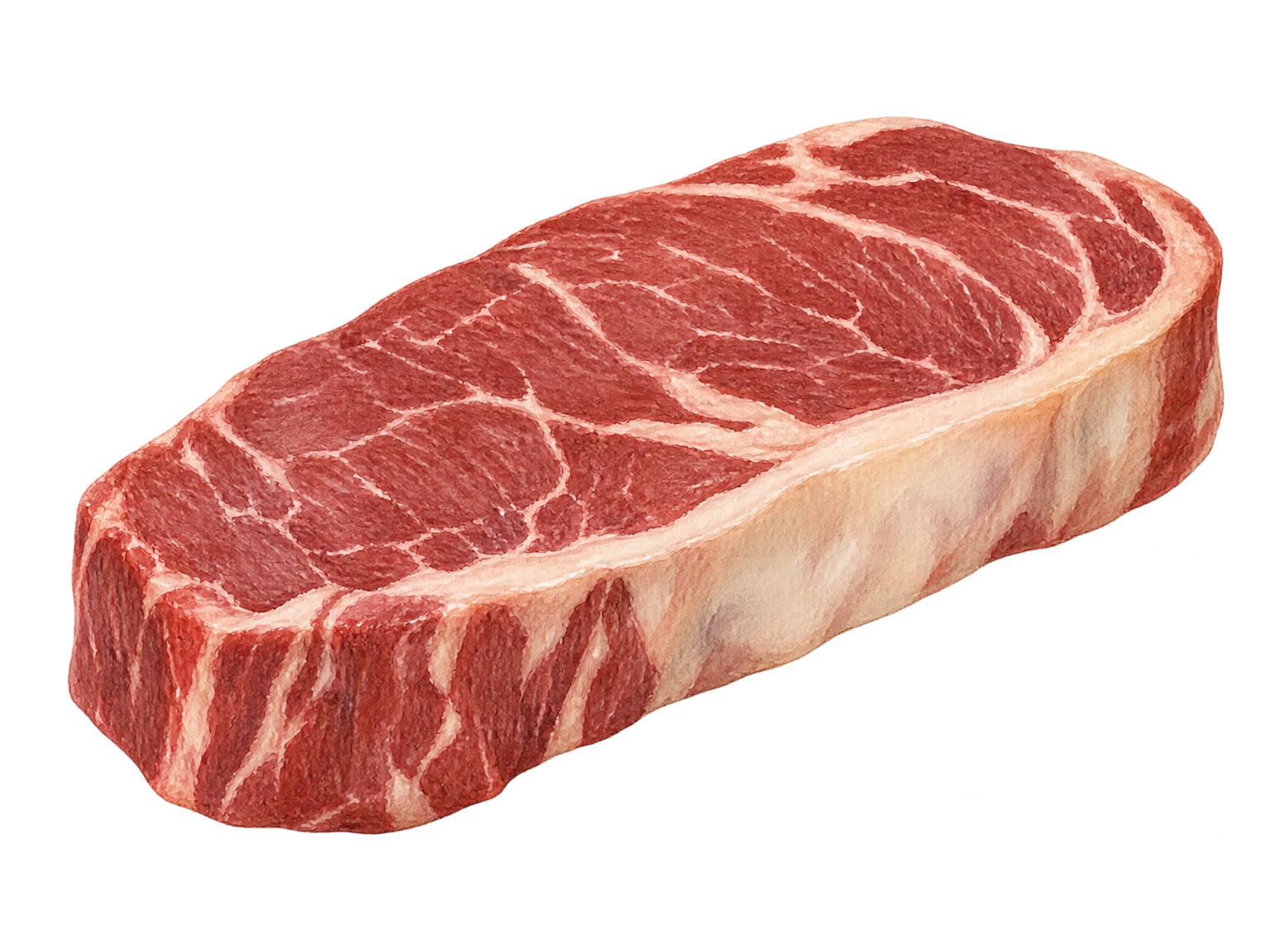
Beef is eaten as steaks, roasting joints, stewing pieces or mince. Different cuts suit quick frying, grilling or slow cooking. Flavour, tenderness and fat content vary between cuts and also depend on preparation. When comparing different options, check whether the information refers to raw or cooked meat. The composition table lists nutrient amounts per 100 g, together with the source.
Beef is meat from domestic cattle and is classed as red meat. It is prepared in many ways, including as steak, roast, stew or minced beef.
Cuts and cooking
Depending on the cut, beef can be quickly fried, grilled or slowly braised. Flavour, tenderness and fat content vary between cuts and also depend on how the meat is prepared. When comparing nutrition information, check whether it refers to raw or cooked meat.
Nutrients in beef
Beef provides protein and contains nutrients including iron, zinc and vitamin B12. The nutrition table shows nutrient amounts per 100 g.
Nutrients
- Protein20.7 gper 100 g[6]
- Omega-3 fatty acids0.079 gper 100 g[6]
- Dietary fibre0 gper 100 g[6]
- Calcium20 mgper 100 g[6]
- Iron1.74 mgper 100 g[6]
- Magnesium22 mgper 100 g[6]
- Phosphorus199 mgper 100 g[6]
- Potassium327 mgper 100 g[6]
- Zinc3.82 mgper 100 g[6]
- Copper0.091 mgper 100 g[6]
- Iodine2.41 µgper 100 g[6]
- Selenium5.24 µgper 100 g[6]
- Vitamin A0 µgper 100 g[6]
- Vitamin E0.35 mgper 100 g[6]
- Vitamin D0.4 µgper 100 g[6]
- Vitamin C0 mgper 100 g[6]
- Vitamin B1 (thiamin)0.082 mgper 100 g[6]
- Vitamin B2 (Riboflavin)0.13 mgper 100 g[6]
- Niacin (Vitamin B3)6.18 mgper 100 g[6]
- Vitamin B60.61 mgper 100 g[6]
- Vitamin B121.49 µgper 100 g[6]
- Vitamin K1.4 µgper 100 g[6]
- Folate11 µgper 100 g[6]
Safety information
Caution
Handle raw beef safely
Raw or undercooked beef can transmit foodborne pathogens. Keep it refrigerated and separate from ready-to-eat foods. Pregnant people, young children and people with weakened immune systems should eat beef only when thoroughly cooked. BfR recommends heating food to at least 70°C for two minutes throughout. [1]
Contraindication
Avoid beef with alpha-gal syndrome
In people with alpha-gal syndrome, beef can trigger severe allergic reactions, often two to six hours after eating. Follow your allergy specialist’s management plan. Breathing difficulty, throat swelling or faintness require immediate emergency medical help. [2]
Caution
Limit long-term red meat consumption
Beef is red meat. IARC classifies unprocessed red meat as probably carcinogenic, although human evidence, particularly for colorectal cancer, is limited. This concerns long-term eating patterns, not a predictable consequence of an individual portion. Processed meat is assessed separately. [3]
Caution · Adults
Count beef towards your total meat intake
DGE recommends that healthy adults eat no more than 300 g of meat and sausages combined per week. Beef counts towards this total, rather than being an additional allowance. This dietary recommendation is not a toxicological safety threshold or a guarantee of risk-free consumption. [4]
Caution
Individualise intake with chronic kidney disease
With chronic kidney disease, protein and phosphorus intake may need adjustment, including the amount of beef eaten. Discuss suitable portions with your treatment team. Dialysis can increase protein needs, so a blanket restriction is not appropriate. [5]
Frequently asked questions
Is beef classed as red meat?
Yes. Beef is classed as red meat.
What nutrients does beef contain?
Beef provides protein, iron, zinc and vitamin B12.
How much protein does beef contain?
The composition table lists 20.7 g of protein per 100 g.
Does beef contain dietary fibre?
The composition table lists 0 g of dietary fibre per 100 g.
More entries
Chicken breast
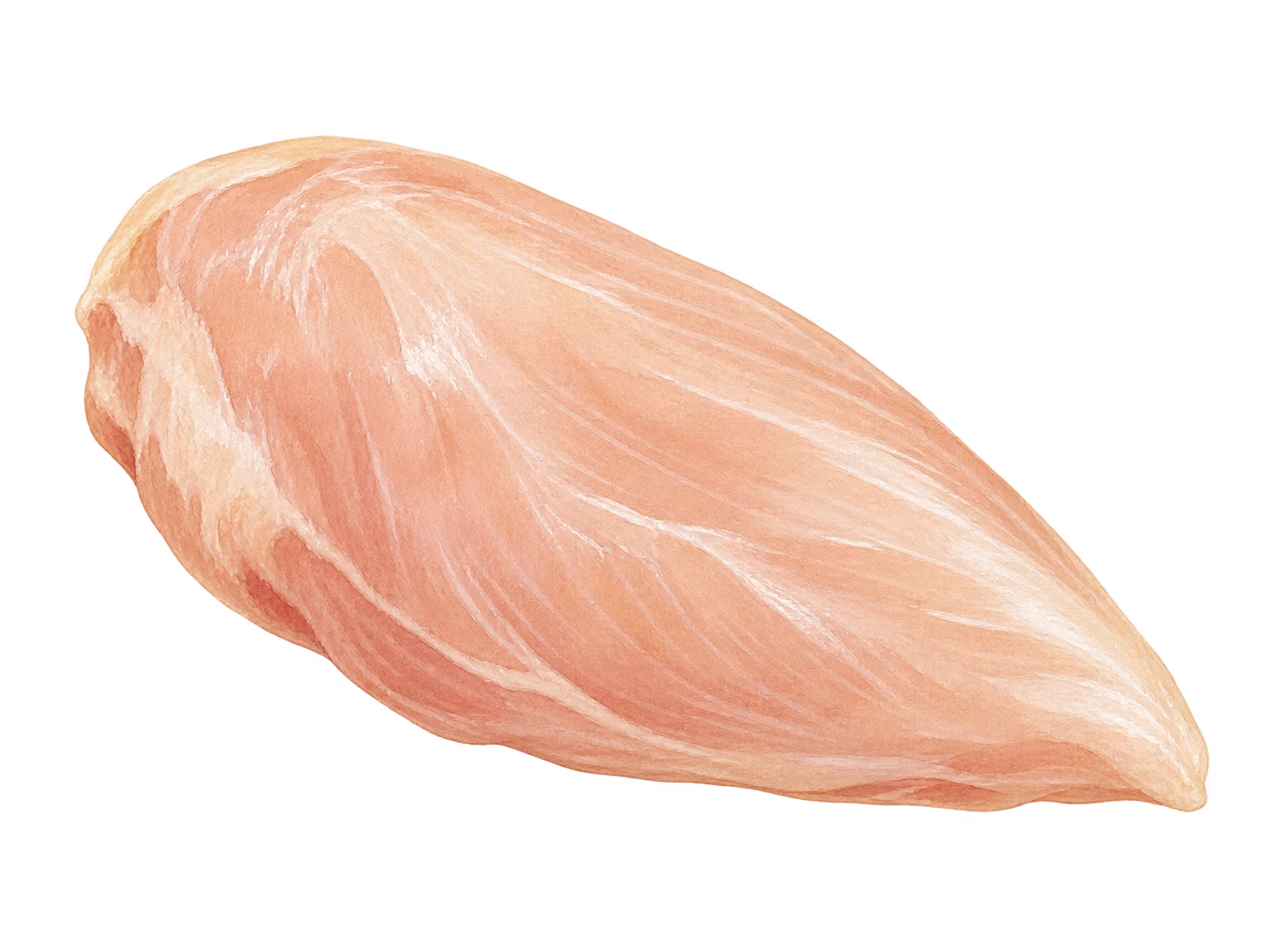
Chicken breast is the light-coloured breast meat of a chicken. Without the skin, it is a lean, protein-rich cut suitable for pan-frying, grilling or gentle cooking.
Sources
- 01Bundesinstitut für RisikobewertungLebensmittelinfektionen im Privathaushalt – Quellen erkennen, Risiken vermeidenOpen source
- 02Centers for Disease Control and PreventionSymptoms of Alpha-gal SyndromeOpen source
- 03World Health OrganizationCarcinogenicity of red and processed meatOpen source
- 04Deutsche Gesellschaft für ErnährungFisch, Fleisch, Wurst und EierOpen source
- 05National Institute of Diabetes and Digestive and Kidney DiseasesHealthy Eating for Adults with Chronic Kidney DiseaseOpen source
- 06ANSES – French Agency for Food, Environmental and Occupational Health & Safety – Ciqual French food composition table · 2025Beef, round, raw (CIQUAL 6102)Open source