Meat & poultry
Chicken breast
Chicken breast is the light-coloured breast meat of a chicken. Without the skin, it is a lean, protein-rich cut suitable for pan-frying, grilling or gentle cooking.
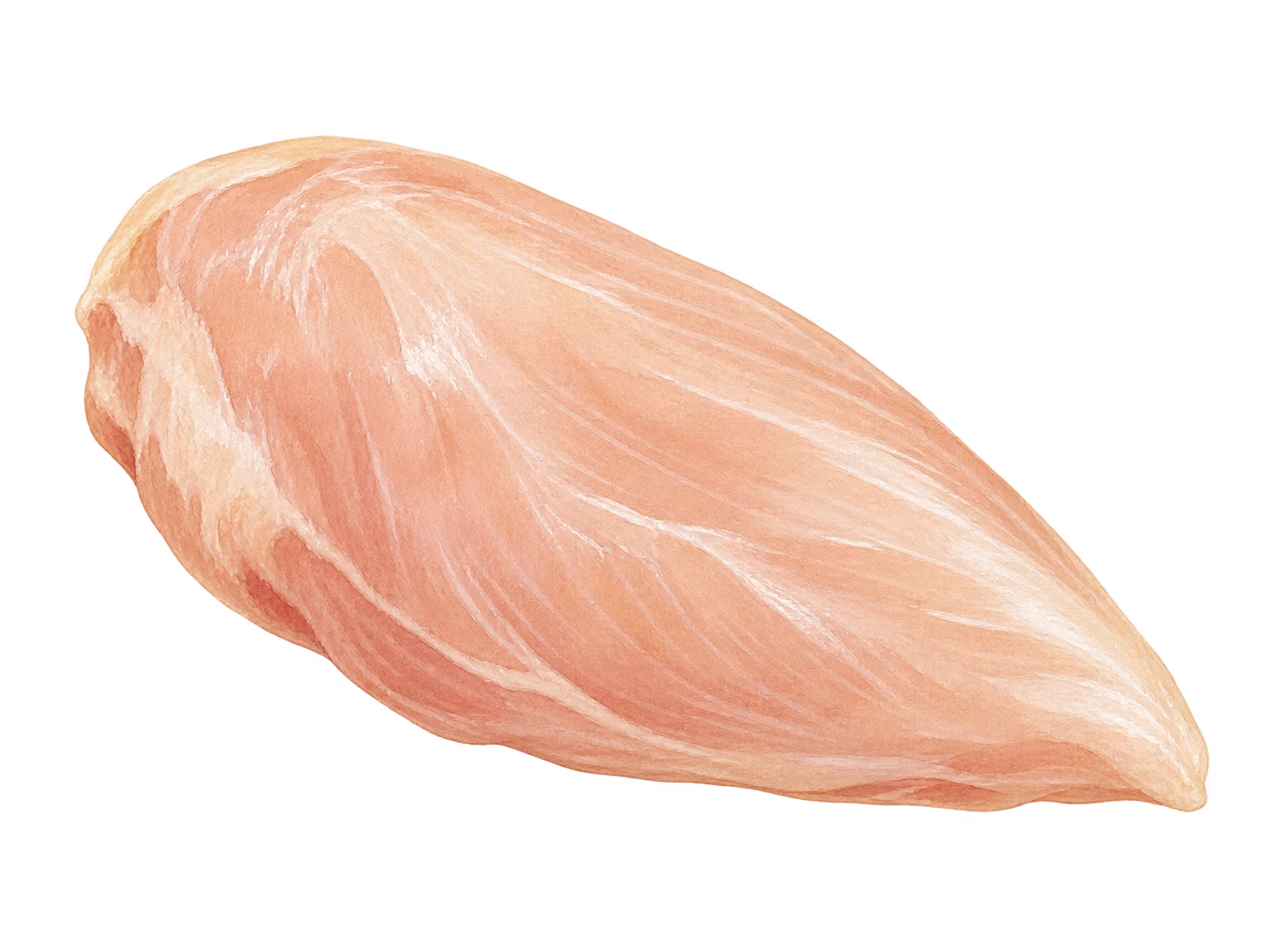
Chicken breast has a mild flavour and is versatile in the kitchen. You can cook it whole, slice it into strips for stir-fries, or add cooked pieces to salads and soups. A breast fillet is the breast with the breastbone and ribs removed. Its fat content depends partly on whether the skin is included, and preparation also affects its nutrient composition. Cook chicken breast thoroughly. The nutrient table lists amounts per 100 g, together with their source.
What is chicken breast?
Chicken breast is the breast meat of a chicken. A breast fillet is the breast with the breastbone and ribs removed. It may be sold with or without skin and bone.
How to use it and what affects its nutrition
Its mild flavour makes it versatile: you can cook it as a whole piece or cut it into strips for dishes such as stir-fries, salads and soups. Fat content depends in part on whether you eat it with or without the skin; preparation also affects nutrient values. The table gives nutrient amounts per 100 g.
Nutrients
- Protein23.4 gper 100 g[5]
- Omega-3 fatty acids0.02 gper 100 g[5]
- Dietary fibre0 gper 100 g[5]
- Calcium3.3 mgper 100 g[5]
- Iron0.33 mgper 100 g[5]
- Magnesium32 mgper 100 g[5]
- Phosphorus240 mgper 100 g[5]
- Potassium390 mgper 100 g[5]
- Zinc0.52 mgper 100 g[5]
- Copper0.03 mgper 100 g[5]
- Vitamin A10.5 µgper 100 g[5]
- Vitamin E0.36 mgper 100 g[5]
- Vitamin C4.89 mgper 100 g[5]
- Vitamin B1 (thiamin)0.12 mgper 100 g[5]
- Vitamin B2 (Riboflavin)0.052 mgper 100 g[5]
- Niacin (Vitamin B3)10.7 mgper 100 g[5]
- Vitamin B60.41 mgper 100 g[5]
- Vitamin B120.17 µgper 100 g[5]
- Vitamin K1.3 µgper 100 g[5]
- Folate14.6 µgper 100 g[5]
Safety information
Caution
Handle raw chicken hygienically and cook thoroughly
Raw chicken can carry Campylobacter and Salmonella. Do not wash it, and keep it separate from ready-to-eat foods. Clean hands, utensils and surfaces after handling it. Heat every part, including the centre, to at least 70°C for two minutes. Keep it refrigerated and follow the use-by date. [1]
Contraindication
Avoid chicken if you have a confirmed chicken-meat allergy
Poultry-meat allergy is rare but can cause skin reactions, digestive symptoms or breathing difficulties. If you are allergic to chicken meat, avoid it according to your allergy-management plan; cooking does not reliably make it safe. An egg or bird allergy does not automatically mean you must avoid chicken meat. [2]
Caution
Individualise portions in chronic kidney disease
If you have chronic kidney disease, chicken portions should fit your individual protein and phosphorus plan. Some people need less protein, while those receiving dialysis may need more. Chicken breast is therefore not automatically off limits; seek advice on suitable portions. [3]
Caution
Take extra care when preparing chicken for vulnerable people
Foodborne infections can be more serious during pregnancy and in young children, older adults and people with weakened immunity. When preparing chicken breast for these groups, take particular care with thorough cooking, refrigeration and separation of raw meat from ready-to-eat foods. [4][1]
Frequently asked questions
How much protein does chicken breast contain?
The listed amount is 23.4 g of protein per 100 g.
Is chicken breast always skinless and boneless?
No. Chicken breast may be sold with or without skin, and with or without bone.
Does chicken breast contain dietary fibre?
The listed amount is 0 g of dietary fibre per 100 g.
What should I bear in mind when preparing chicken breast?
Handle raw chicken hygienically and cook it through.
More entries
Beef
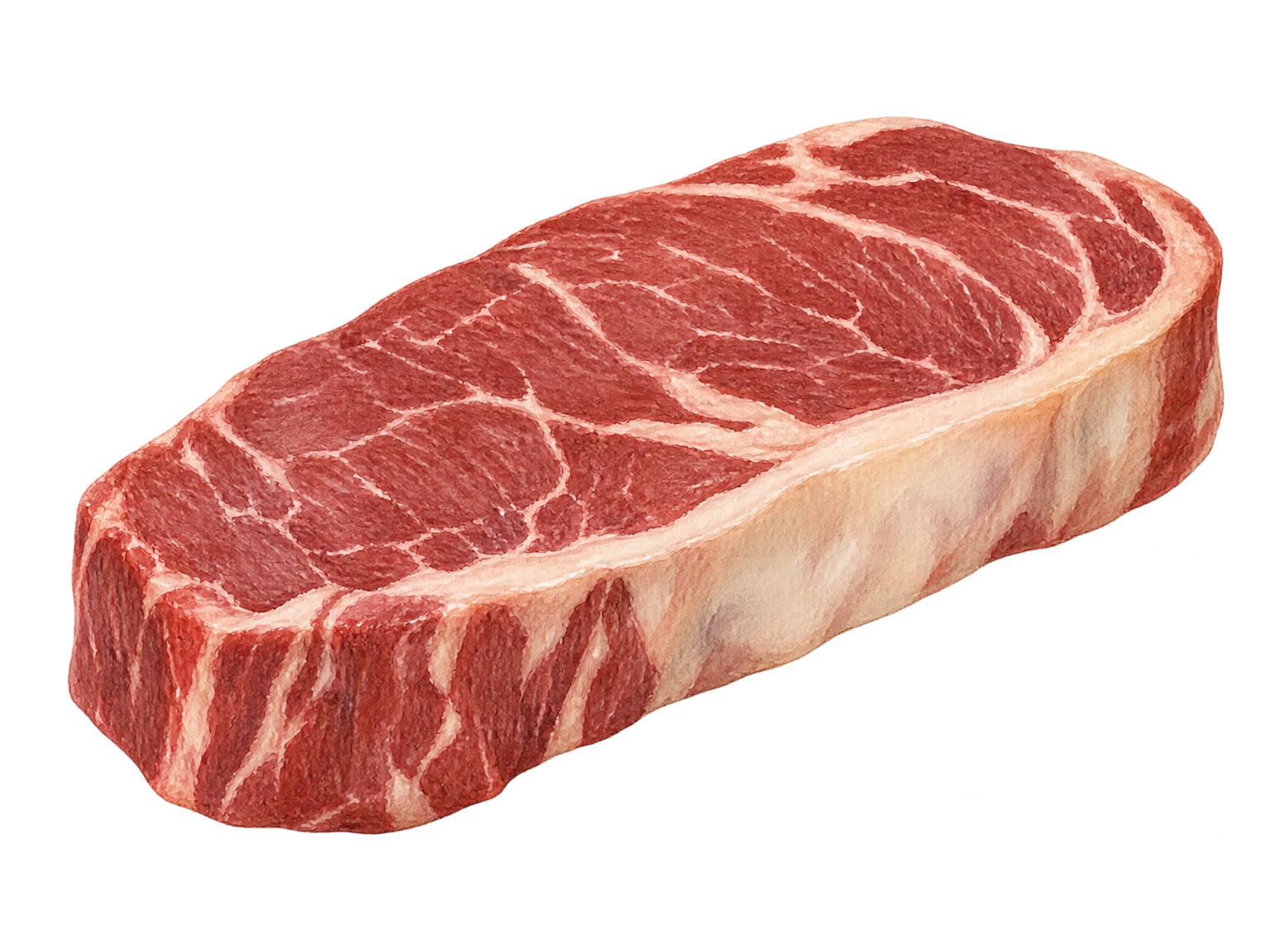
Beef is meat from domestic cattle and is classed as red meat. It is particularly known for its protein, iron, zinc and vitamin B12.
Sources
- 01German Federal Institute for Risk Assessment (BfR)Selected FAQs on poultry meatOpen source
- 022016Update on the bird-egg syndrome and genuine poultry meat allergyPubMed 27340614Open source
- 03National Institute of Diabetes and Digestive and Kidney DiseasesHealthy Eating for Adults with Chronic Kidney DiseaseOpen source
- 04German Federal Institute for Risk Assessment (BfR)Foodborne infectionsOpen source
- 05ANSES – French Agency for Food, Environmental and Occupational Health & Safety – Ciqual French food composition table · 2025Chicken, breast, without skin, raw (CIQUAL 36017)Open source