Vegetables
Spinach
Spinach is a green leafy vegetable. The food consists of the edible leaves of the plant Spinacia oleracea.
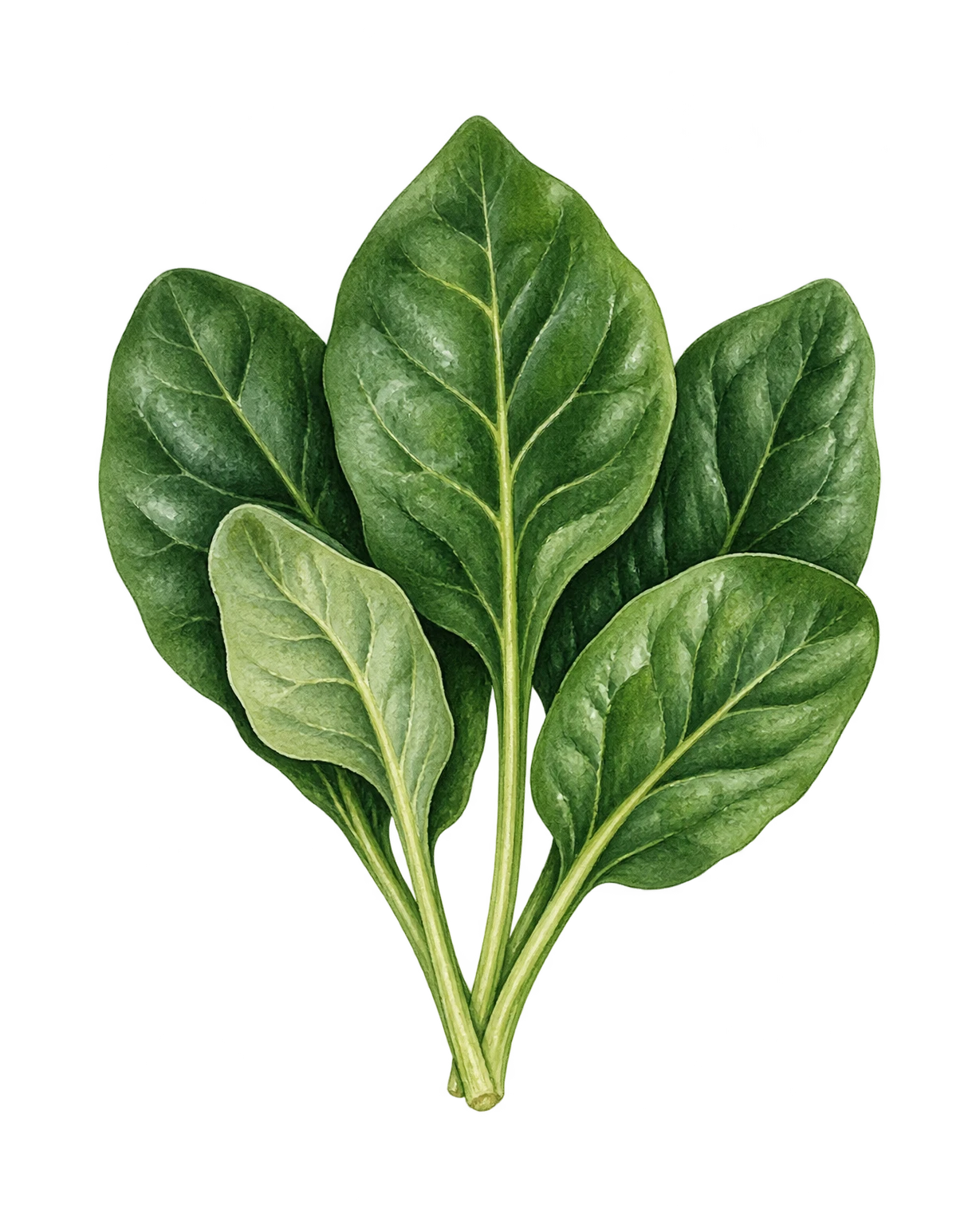
Spinach is a leafy vegetable that you can eat raw in salads or cooked. Here you find its composition per 100 g with a source, and notes on preparing it safely.
What is spinach?
Spinach is a green leafy vegetable. The leaves of the plant Spinacia oleracea are eaten; the plant belongs to the Amaranthaceae family. You can eat spinach raw or cooked, and use it in many dishes.
What nutrients does spinach contain?
Spinach contains dietary fibre, minerals, and vitamins A, C, E and K, as well as folate. Its composition can vary with the product and how it is prepared.
Wash spinach leaves that have not been pre-washed under running water, keep them chilled and avoid cross-contamination. Produce labelled ready-to-eat or pre-washed does not need to be washed again. Washing does not remove all germs; thorough cooking reduces the risk further.
Nutrients
- Dietary fibre2.6 gper 100 g[9]
- Calcium99 mgper 100 g[9]
- Iron2.71 mgper 100 g[9]
- Magnesium79 mgper 100 g[9]
- Phosphorus49 mgper 100 g[9]
- Potassium558 mgper 100 g[9]
- Zinc0.53 mgper 100 g[9]
- Copper0.13 mgper 100 g[9]
- Iodine3.68 µgper 100 g[9]
- Selenium0.66 µgper 100 g[9]
- Vitamin A469 µgper 100 g[9]
- Vitamin E2.03 mgper 100 g[9]
- Vitamin D0 µgper 100 g[9]
- Vitamin C28.1 mgper 100 g[9]
- Vitamin B60.2 mgper 100 g[9]
- Vitamin B120 µgper 100 g[9]
- Vitamin K483 µgper 100 g[9]
- Folate194 µgper 100 g[9]
Safety information
Caution
Nitrate in infants and young children
High spinach intake, particularly several spinach meals in one day for infants, may pose a risk: nitrate can be converted to nitrite, which impairs oxygen transport in the blood. Follow age-specific guidance; risk depends on the amount eaten, nitrate content and storage. [1]
Contraindication
Avoid spinach during bacterial gastrointestinal infections in young children
Do not give spinach to infants and young children with a bacterial gastrointestinal infection. These infections may increase nitrite formation, which can impair oxygen transport in the blood. [1]
Caution
Spanish intake guidance for young children
Spain’s AESAN recommends avoiding spinach and chard before the first birthday. If they are nevertheless offered at 6–12 months, it recommends no more than 35 g per day combined; at 1–3 years, no more than 45 g per day. These are national precautionary recommendations, not EU-wide upper limits. [2]
Caution
Cool cooked spinach promptly
Cool cooked spinach promptly and refrigerate it rather than leaving it warm or at room temperature for extended periods. Inappropriate storage can encourage nitrite formation, which is particularly relevant for infants and young children. [1]
Caution
Individual limits for calcium oxalate stones
If you have had calcium oxalate kidney stones, reducing or avoiding spinach because of its oxalate content may be appropriate. Seek advice tailored to your stone type and do not independently reduce dietary calcium. This caution does not apply to everyone or every type of stone. [3]
Contraindication
Avoid spinach with a confirmed allergy
If you have a confirmed spinach allergy, avoid spinach according to your allergy care advice. Oral allergy syndrome after eating spinach has been documented, but reliable estimates of how often reactions occur are unavailable. [4]
Caution
Handle raw spinach hygienically
Wash unwashed leaves under running water, keep spinach refrigerated and avoid cross-contamination. Produce labelled ready-to-eat or pre-washed does not need washing again. Washing does not remove all germs; thorough cooking further reduces risk. This is particularly important during pregnancy and for young children, older adults and immunocompromised people. [5]
Interaction
Keep intake consistent when taking warfarin
If you take warfarin, substantial changes in vitamin K intake from spinach can affect anticoagulation control. Keep your intake reasonably consistent rather than automatically avoiding spinach, and discuss major dietary changes with your treatment team. [6]
Caution
Consider potassium with kidney disease and certain medicines
If you have high blood potassium, impaired potassium excretion, or take ACE inhibitors, angiotensin receptor blockers or potassium-sparing diuretics, your potassium intake may need individual adjustment. Base spinach portions on blood results and clinical advice. Kidney disease alone does not mean you must avoid spinach. [7][8]
Frequently asked questions
What is spinach?
Spinach is a green leafy vegetable. Its edible part is the leaves of the plant *Spinacia oleracea*.
What nutrients does spinach contain?
Per 100 g, spinach contains 2.6 g of dietary fibre, 2.71 mg of iron and 79 mg of magnesium, among other nutrients.
Which vitamins does spinach contain?
Per 100 g, spinach contains 28.1 mg of vitamin C, 194 µg of folate and 483 µg of vitamin K.
More entries
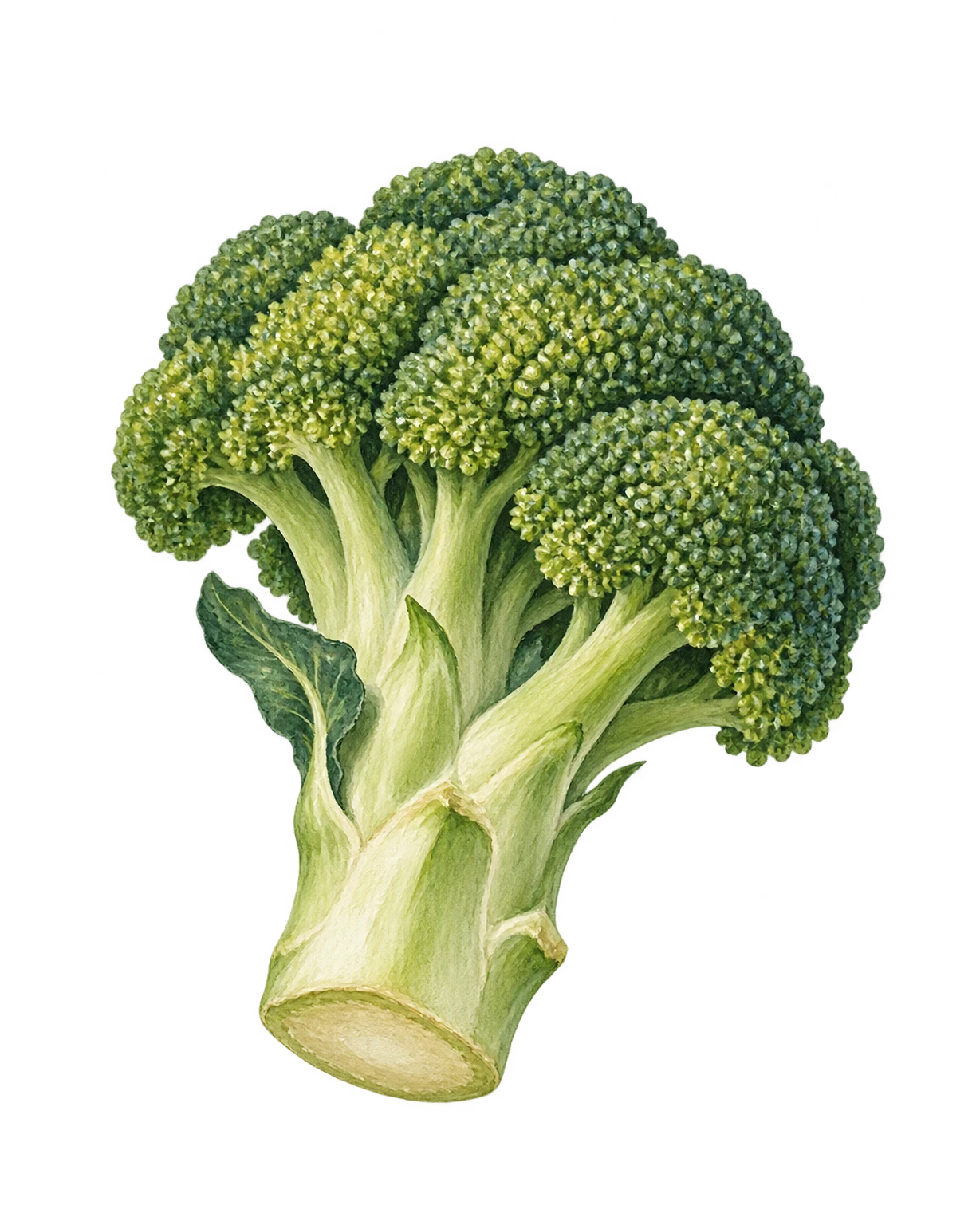
Broccoli
Broccoli is a usually green vegetable in the cabbage family, with tender florets and an edible stalk. It is known for its vitamin C, folate and fibre content.
Sources
- 01EFSA Journal · 2010Statement on possible public health risks for infants and young children from the presence of nitrates in leafy vegetablesDOI 10.2903/j.efsa.2010.1935
- 02Agencia Española de Seguridad Alimentaria y Nutrición · 2021Recomendaciones de consumo de hortalizas por la presencia de nitratosOpen source
- 03National Institute of Diabetes and Digestive and Kidney DiseasesEating, Diet, & Nutrition for Kidney StonesOpen source
- 04Oral allergy syndrome induced by spinachPubMed 9450148Open source
- 05US Food and Drug AdministrationSelecting and Serving Produce SafelyOpen source
- 06Cambridge University Hospitals NHS Foundation TrustDietary advice for patients taking warfarinOpen source
- 07National Institutes of Health, Office of Dietary SupplementsPotassium - Health Professional Fact SheetOpen source
- 08National Institute of Diabetes and Digestive and Kidney DiseasesHealthy Eating for Adults with Chronic Kidney DiseaseOpen source
- 09ANSES – French Agency for Food, Environmental and Occupational Health & Safety – Ciqual French food composition table · 2025Spinach, raw (CIQUAL 20059)Open source