
Dairy & eggs
Milk
Milk here means cow’s milk. You can drink it on its own or use it in cereal, coffee, cooking and baking. It is particularly known for its milk protein and calcium.
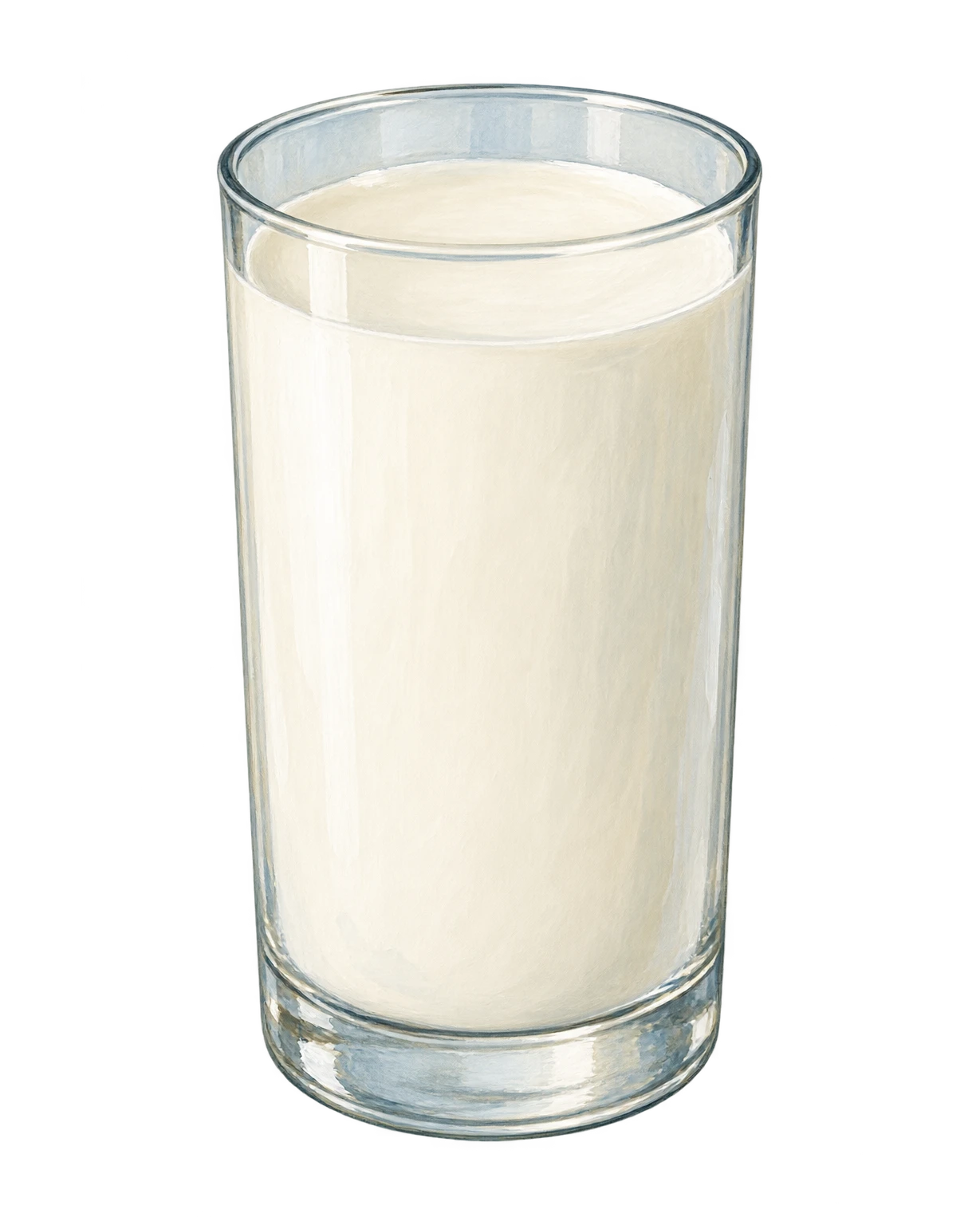
Cow’s milk is a liquid dairy product containing water, milk proteins, lactose and varying amounts of fat. Common options include whole, semi-skimmed and skimmed milk, sold pasteurised or ultra-heat-treated as UHT milk. Its mild flavour suits both sweet and savoury dishes, including porridge, pancakes and sauces. Nutrient amounts are listed per 100 g and vary with the fat content and processing.
What is milk?
Milk here means cow’s milk. It contains water, milk protein and lactose, and its fat content varies by type. It is available as whole, semi-skimmed or skimmed milk, and as fresh or ultra-heat-treated milk.
Nutrients and uses
Milk provides, among other nutrients, milk protein and calcium. Per 100 g, it contains 3.46 g of protein and 121 mg of calcium. You can drink it on its own or use it in cereal and coffee, and for cooking and baking. Its mild flavour works in sweet and savoury dishes such as porridge, pancakes and sauces.
Nutrients
- Protein3.46 gper 100 g[11]
- Omega-3 fatty acids0.007 gper 100 g[11]
- Dietary fibre0 gper 100 g[11]
- Calcium121 mgper 100 g[11]
- Iron0.041 mgper 100 g[11]
- Magnesium10.7 mgper 100 g[11]
- Phosphorus92.1 mgper 100 g[11]
- Potassium158 mgper 100 g[11]
- Zinc0.41 mgper 100 g[11]
- Copper0.003 mgper 100 g[11]
- Iodine23.9 µgper 100 g[11]
- Selenium2.45 µgper 100 g[11]
- Vitamin A9.88 µgper 100 g[11]
- Vitamin E0.049 mgper 100 g[11]
- Vitamin D0.12 µgper 100 g[11]
- Vitamin C0.99 mgper 100 g[11]
- Vitamin B1 (thiamin)0.022 mgper 100 g[11]
- Vitamin B2 (Riboflavin)0.23 mgper 100 g[11]
- Niacin (Vitamin B3)0.096 mgper 100 g[11]
- Vitamin B60.031 mgper 100 g[11]
- Vitamin B120.18 µgper 100 g[11]
- Vitamin K0.11 µgper 100 g[11]
- Folate0.85 µgper 100 g[11]
Safety information
Side effect
Symptoms with lactose intolerance
If you cannot digest lactose adequately, milk can cause bloating, wind, abdominal pain, nausea or diarrhoea. The amount tolerated varies between individuals. Lactose intolerance is not a milk-protein allergy. [1]
Contraindication
Avoid with milk-protein allergy
If you have diagnosed cow’s milk-protein allergy, avoid cow’s milk according to your allergy-management plan. Lactose-free cow’s milk still contains milk proteins and is unsuitable. Reactions can include rash, swelling, vomiting or breathing problems. Breathing difficulty or swelling of the tongue or throat requires immediate emergency help. [2][3]
Caution
Infection risk from raw milk
Raw, unheated milk can transmit pathogens such as Campylobacter, Salmonella and certain E. coli. Refrigeration and good hygiene do not eliminate this risk. Pasteurised or otherwise adequately heat-treated milk is the safer choice, especially for pregnant people, children, older adults and people with weakened immune systems. [4]
Caution
Not the main milk drink before 12 months
For babies under 12 months, ordinary cow’s milk is unsuitable as a replacement for breast milk or infant formula. Its nutrient balance does not meet infants’ needs; its protein and mineral content can burden their kidneys, and it may cause intestinal bleeding. This advice concerns cow’s milk as the main drink, not small amounts in complementary foods. [5]
Caution · Children (1–3 years)
Milk should not replace toddlers’ meals
If your toddler drinks too much milk, they may have less appetite for other foods, including iron-rich foods. Offer milk as part of a varied diet, not as a replacement for meals. [5]
Interaction
Check timing with certain medicines
Milk can reduce the absorption of certain medicines. Do not take oral ciprofloxacin together with milk. For ferrous sulfate, NHS advice is to wait two hours after the dose before consuming dairy products. Taking levothyroxine together with milk may also reduce its absorption. Follow your medicine’s specific instructions and check timing with a pharmacist. [6][7][8]
Contraindication
Unsuitable with classical galactosaemia
Ordinary cow’s milk is unsuitable for people with classical galactosaemia. Lactose-free cow’s milk is not a safe alternative because it contains galactose. Follow the dietary plan provided by your specialist care team. [9]
Caution
Individual advice with advanced kidney disease
With advanced kidney disease, you may need to adjust your milk intake because of phosphorus, potassium or a prescribed fluid restriction. Kidney disease does not automatically mean you must avoid milk. Agree a suitable amount with your care team. [10]
Frequently asked questions
What kind of milk does this page mean?
It means cow’s milk.
Which nutrients is milk particularly known for?
Milk is particularly known for its milk protein and calcium.
Is milk suitable for people with lactose intolerance?
Milk can cause symptoms in people with lactose intolerance.
How can I use milk?
You can drink milk on its own or use it in cereal, coffee, cooking and baking.
More entries
Eggs
Eggs consist of a white and a yolk; this entry covers hen's eggs. Known for their protein content, they are eaten boiled or fried and used as an ingredient in many dishes.
Yoghurt
Yoghurt is a fermented milk product with a mildly tangy flavour and creamy texture. Nutritionally, it is particularly known for its protein and calcium content.


Sources
- 01National Institute of Diabetes and Digestive and Kidney DiseasesSymptoms & Causes of Lactose IntoleranceOpen source
- 02NHSFood allergies in babies and young childrenOpen source
- 03University Hospitals of Leicester NHS TrustOther products for children on a dairy-free dietOpen source
- 04European Food Safety Authority · 2015Raw drinking milk: what are the risks?Open source
- 05Centers for Disease Control and PreventionCow’s Milk and Milk AlternativesOpen source
- 06NHSAbout ciprofloxacinOpen source
- 07NHSAbout ferrous sulfateOpen source
- 08Levothyroxine Interactions with Food and Dietary Supplements–A Systematic ReviewOpen source
- 09EFSA Journal · 2010Scientific Opinion on lactose thresholds in lactose intolerance and galactosaemiaDOI 10.2903/j.efsa.2010.1777
- 10National Institute of Diabetes and Digestive and Kidney DiseasesEating Right with Kidney FailureOpen source
- 11ANSES – French Agency for Food, Environmental and Occupational Health & Safety – Ciqual French food composition table · 2025Milk, semi-skimmed (average) (CIQUAL 19033)Open source