Nuts & seeds
Chia seeds
Chia seeds are the small edible seeds of Salvia hispanica. Known for their fibre and plant-based omega-3 fats, they are a versatile ingredient.
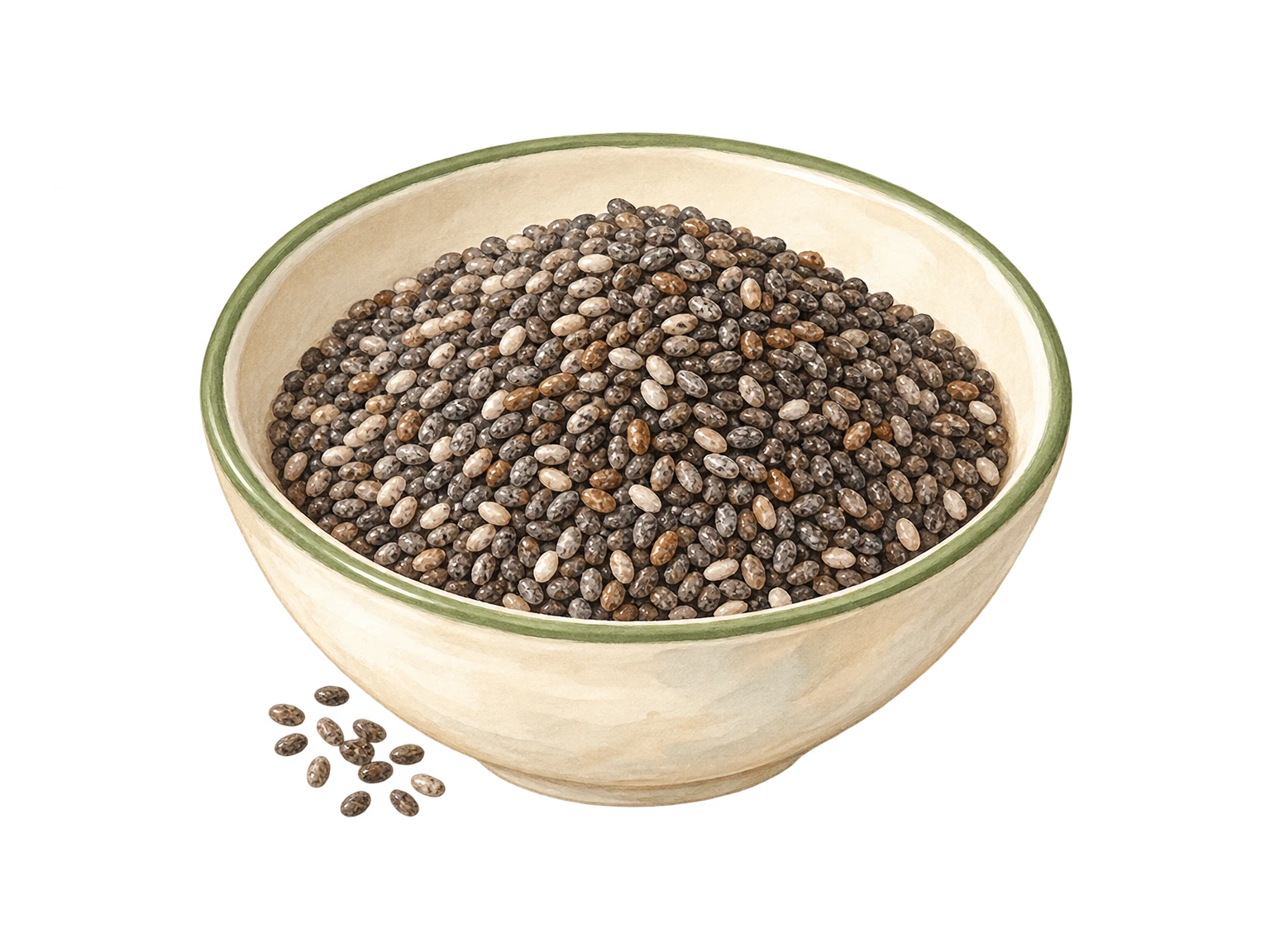
Chia seeds belong to the mint family and are usually mottled black, grey or white. They swell in liquid and develop a gel-like coating. You can stir them into yoghurt or porridge, soak them to make chia pudding, or use them in baking. Nutrient amounts in the composition table are listed per 100 g of chia seeds, alongside their source.
What are chia seeds?
Chia seeds are the edible seeds of Salvia hispanica, a member of the mint family. They are usually black, grey or mottled white.
How to use chia seeds
Chia seeds provide fibre and plant-based omega-3 fats. When mixed with liquid, they swell and form a gel-like coating. Stir them into yoghurt or porridge, soak them to make chia pudding, or use them in baking.
Nutrients
- Protein16.5 gper 100 g[4]
- Omega-3 fatty acids17.8 gper 100 g[4]
- Dietary fibre34.4 gper 100 g[4]
- Calcium631 mgper 100 g[4]
- Iron7.72 mgper 100 g[4]
- Magnesium335 mgper 100 g[4]
- Phosphorus860 mgper 100 g[4]
- Potassium407 mgper 100 g[4]
- Zinc4.58 mgper 100 g[4]
- Copper0.92 mgper 100 g[4]
- Vitamin E0.5 mgper 100 g[4]
- Vitamin C1.6 mgper 100 g[4]
- Vitamin B120 µgper 100 g[4]
- Folate49 µgper 100 g[4]
Safety information
Contraindication
Avoid chia if you have a chia allergy
Avoid chia seeds if you have a confirmed chia allergy. Allergic reactions, including anaphylaxis, have been reported; the prevalence of chia allergy is unknown. [1]
Caution
Seek individual advice if allergic to peanuts or sesame
If you are allergic to peanuts or sesame, seek medical advice about whether chia seeds are suitable for you. Laboratory findings suggest possible cross-reactivity, but do not show that everyone with these allergies will react to chia. [2]
Caution
Do not swallow spoonfuls of dry chia seeds
Allow chia seeds to expand in sufficient liquid before eating, rather than swallowing spoonfuls dry. Seek individual medical advice if you have swallowing difficulties, a narrowed oesophagus or previous food impaction. If you cannot swallow liquids or saliva afterwards, seek immediate medical help. [3]
Frequently asked questions
What are chia seeds?
Chia seeds are the edible seeds of Salvia hispanica.
What nutrients do chia seeds contain?
Chia seeds contain fibre, plant-based omega-3 fats and protein. Per 100 g, they contain 34.4 g of fibre and 17.8 g of omega-3.
Can you swallow spoonfuls of dry chia seeds?
No. Chia seeds should not be swallowed by the spoonful while dry.
What should I consider about chia seeds and allergies?
Avoid chia seeds if you have a chia allergy. If you have a peanut or sesame allergy, check individually whether they are suitable for you.
More entries
Almonds
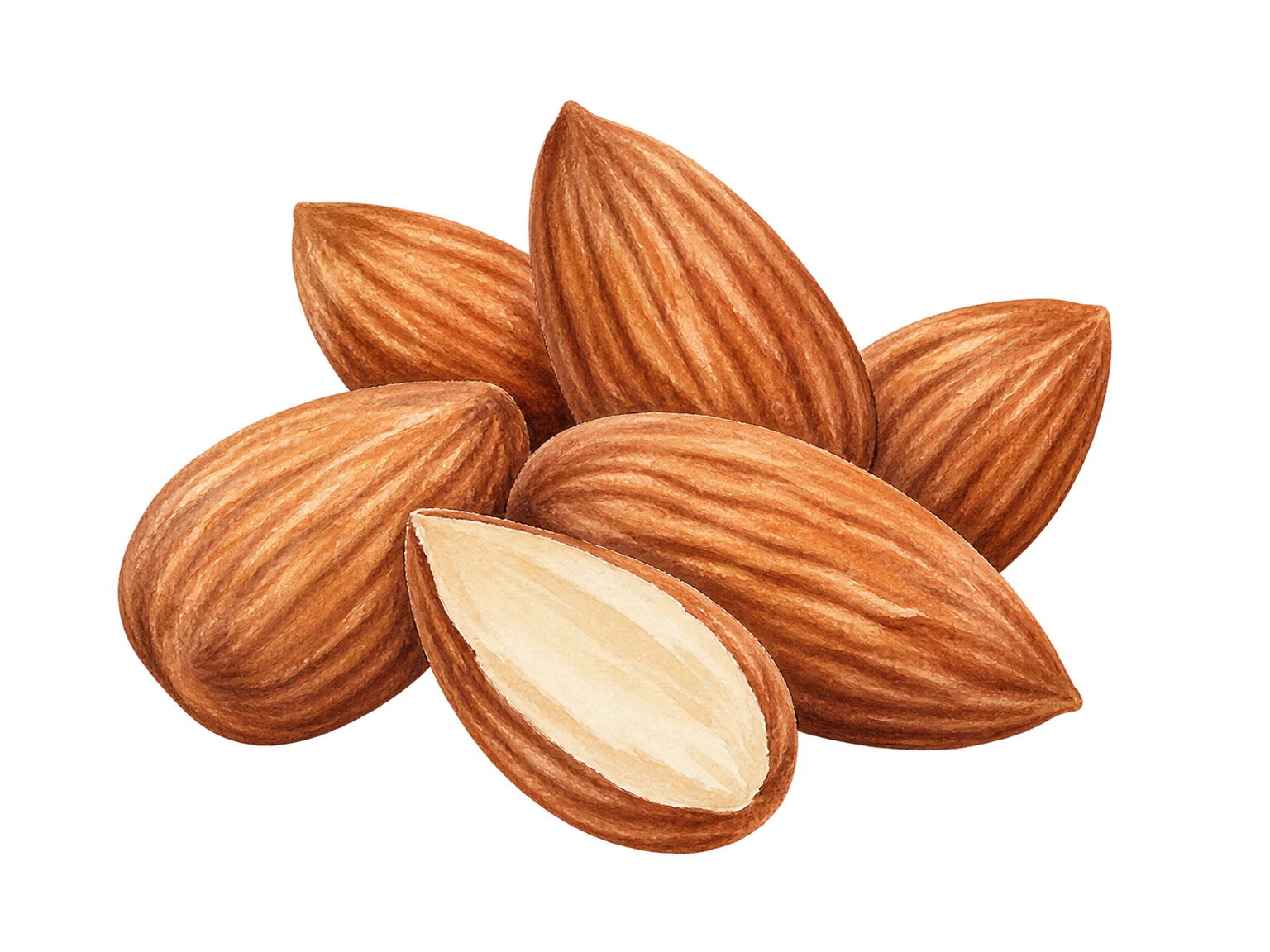
Almonds are the edible seed kernels of the almond tree. They are eaten plain, roasted or as an ingredient, and are nutritionally known for their unsaturated fats, protein, fibre and vitamin E.
Pumpkin seeds
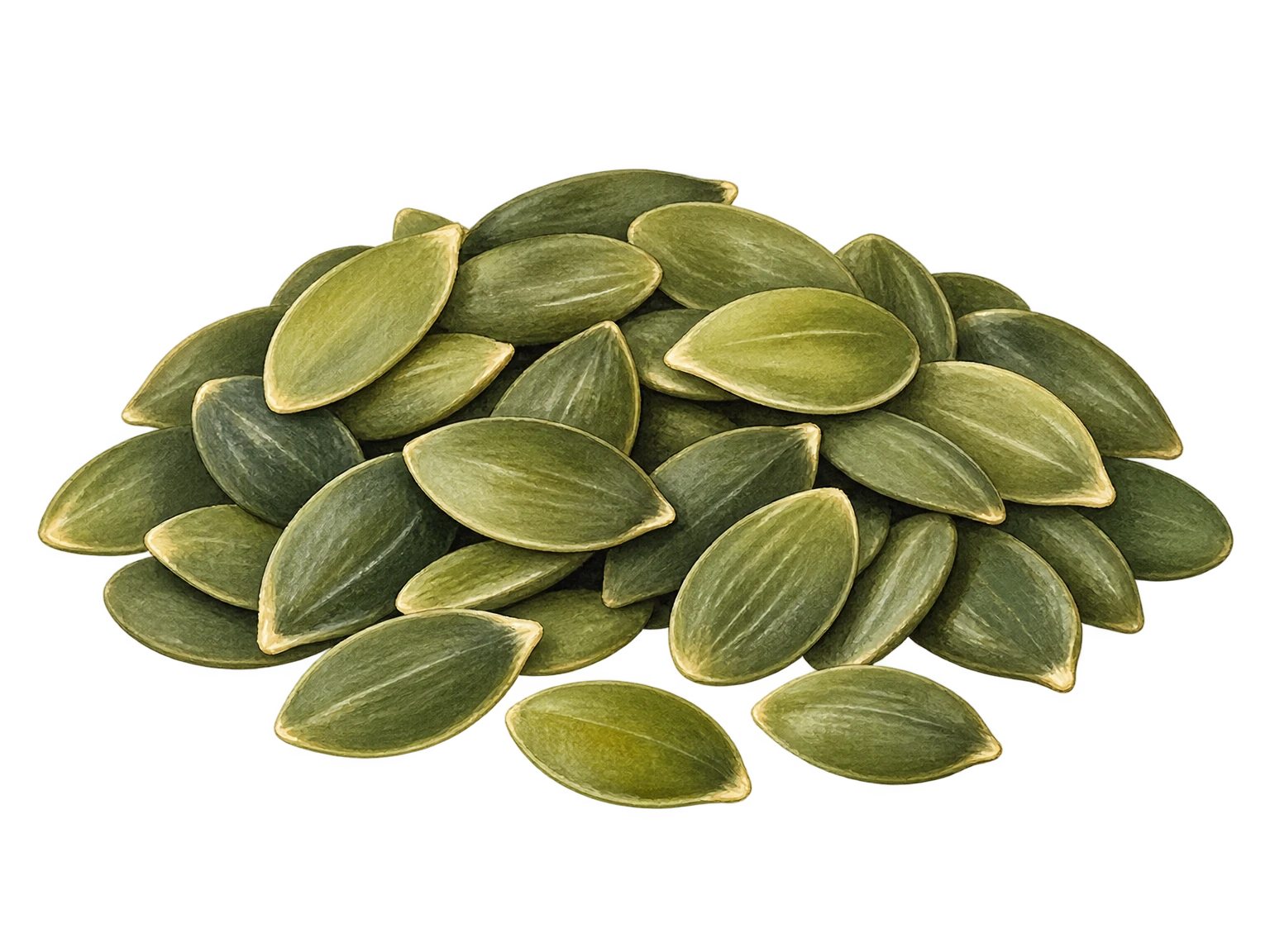
Pumpkin seeds are the edible seeds of pumpkins. Known for their nutty flavour and oil content, they are eaten as a snack or used as an ingredient in many dishes.
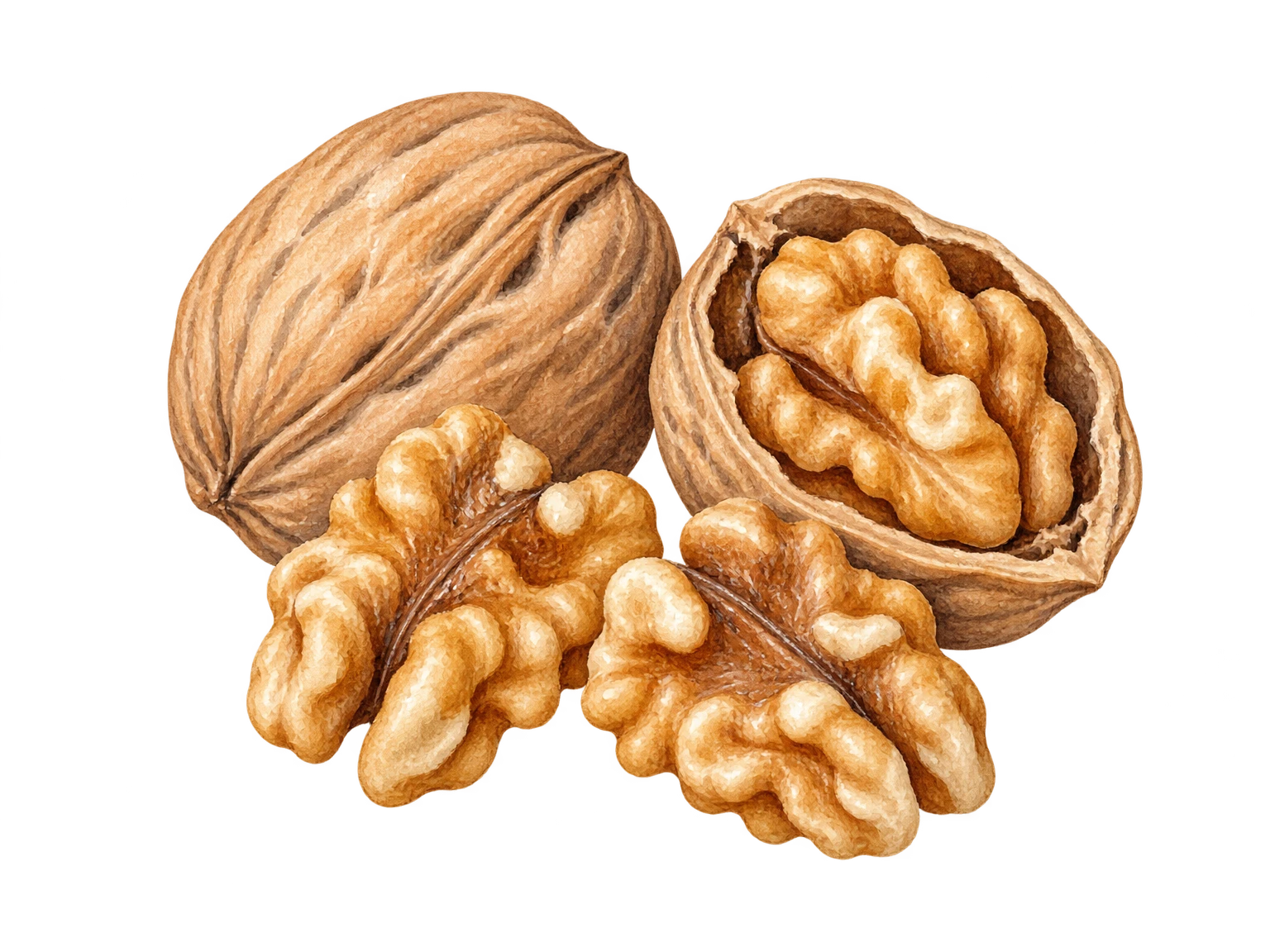
Walnuts
Walnuts are the edible kernels of the walnut tree. Their flavour is nutty and slightly bitter, and they are known for their unsaturated fats.
Sources
- 01EFSA Journal · 2019Safety of chia seeds (Salvia hispanica L.) as a novel food for extended uses pursuant to Regulation (EU) 2015/2283DOI 10.2903/j.efsa.2019.5657
- 02European Food Safety Authority · 2009EFSA Opinion on the safety of chia seeds (Salvia hispanica L.)Open source
- 03American College of GastroenterologyWatch It Grow: Esophageal Impaction With Chia SeedsOpen source
- 04ANSES – French Agency for Food, Environmental and Occupational Health & Safety – Ciqual French food composition table · 2025Chia, seed, dried (CIQUAL 15047)Open source