Nuts & seeds
Almonds
Almonds are the edible seed kernels of the almond tree. They are eaten plain, roasted or as an ingredient, and are nutritionally known for their unsaturated fats, protein, fibre and vitamin E.
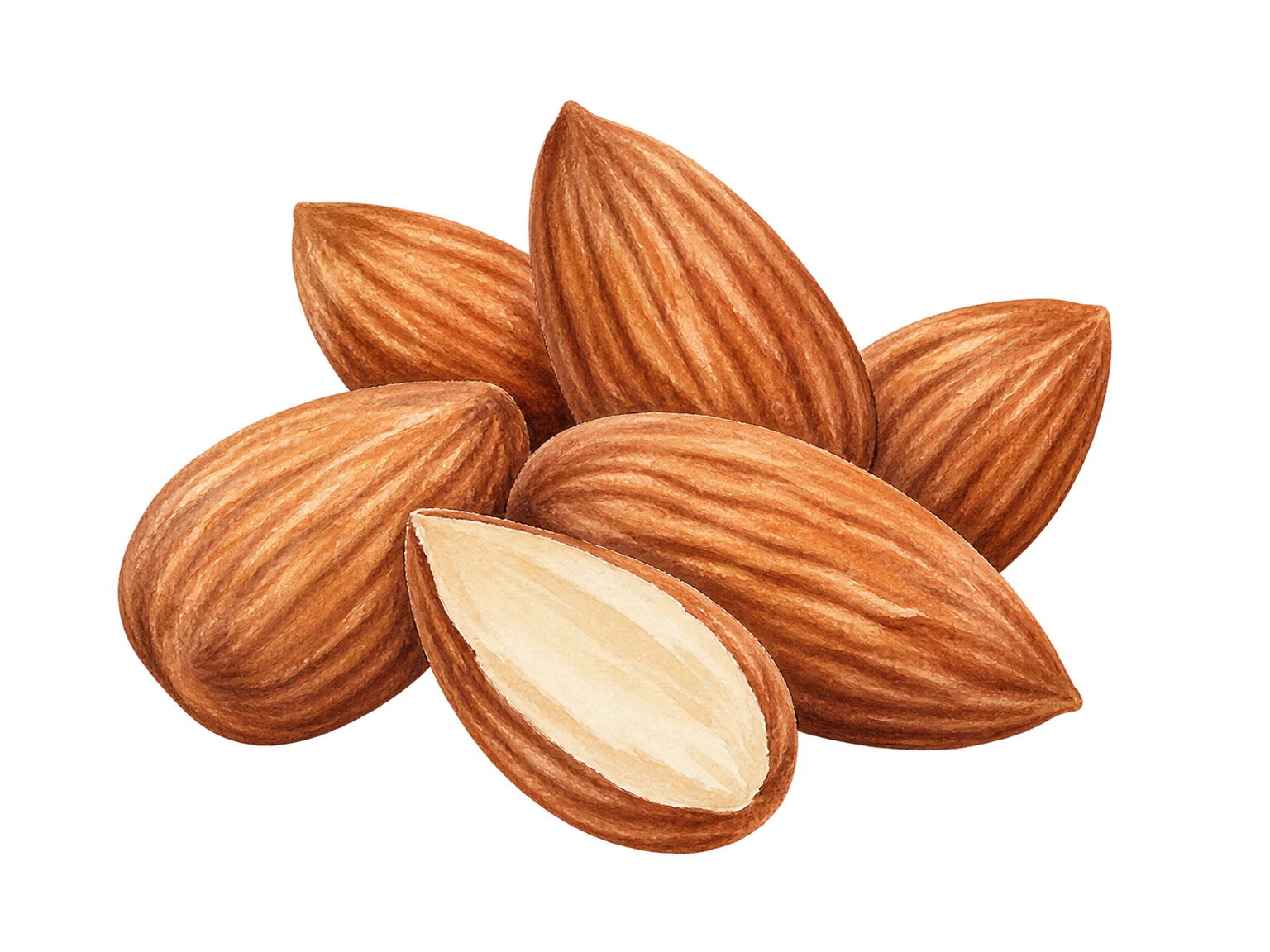
Almonds have a mild, nutty flavour and a thin brown seed coat that is removed by blanching. Botanically, they are the seeds of a stone fruit, although they are grouped with nuts in cooking. You can use sweet almonds in muesli, baking, almond butter and savoury dishes. Nutrient amounts are listed per 100 g in the composition table, alongside their source. Almonds can cause allergic reactions. Bitter almonds are not interchangeable with sweet almonds: they contain amygdalin, which can release toxic hydrogen cyanide, and are unsuitable for eating raw.
What are almonds?
Almonds are the edible seed kernels of the almond tree (Prunus dulcis). Botanically, they are seeds of a stone fruit, though they are treated as nuts in cooking. Sweet almonds have a mild, nutty flavour. Their thin brown skin can be removed by blanching.
How to use almonds
You can eat almonds plain or roasted, or use them in dishes such as muesli, baked goods, almond butter and savoury meals. They contain unsaturated fats, protein, fibre and vitamin E. The nutrient amounts per 100 g are shown in the nutrition table.
If you have another nut allergy, kidney disease or a history of calcium oxalate kidney stones, ask a healthcare professional whether almonds are suitable for you and in what amount.
Nutrients
- Dietary fibre12.5 gper 100 g[10]
- Calcium260 mgper 100 g[10]
- Iron3.4 mgper 100 g[10]
- Magnesium270 mgper 100 g[10]
- Phosphorus510 mgper 100 g[10]
- Potassium800 mgper 100 g[10]
- Zinc3.5 mgper 100 g[10]
- Copper0.96 mgper 100 g[10]
- Vitamin A0.61 µgper 100 g[10]
- Vitamin E22.3 mgper 100 g[10]
- Vitamin B60.07 mgper 100 g[10]
- Vitamin B120 µgper 100 g[10]
- Folate120 µgper 100 g[10]
Safety information
Contraindication
Avoid almonds if you have an almond allergy
If you have a confirmed almond allergy, avoid almonds and foods containing almond protein. Reactions can include anaphylaxis. Breathing difficulty, throat swelling or collapse requires emergency care; follow your prescribed adrenaline action plan. [1]
Caution
Assess other nut allergies individually
An allergy to another nut does not automatically mean you must avoid almonds. If almond allergy is suspected or you have other nut allergies, discuss introduction with your allergy team rather than testing tolerance at home on your own. [2]
Upper level
The cyanide reference dose is not an almond serving limit
EFSA sets an acute reference dose for cyanide of 20 µg per kg body weight, regardless of the food source. This is neither a recommended almond serving nor a long-term daily allowance. It cannot establish a guaranteed safe number of bitter almonds. [3]
Caution
No whole almonds for children under five
Do not give whole almonds to children under five because they can choke on them. Use finely ground or crushed almonds mixed into food in an age-appropriate form. Do not give almond butter on its own as a spoonful. [5]
Caution
Seek advice before introduction when allergy risk is higher
If your baby has eczema, an existing food allergy or a family history of allergy, seek professional advice before introducing almonds. Introduce allergenic foods individually and in an age-appropriate form so that reactions can be recognised. [6]
Caution · Pregnant women
No routine avoidance during pregnancy
You do not need to avoid ordinary edible sweet almonds solely because you are pregnant. Avoid them if you have an almond allergy or have been medically advised to do so. This does not apply to raw bitter almonds or concentrated extracts. [7]
Caution
Individual advice for calcium oxalate kidney stones
If you have had calcium oxalate kidney stones, limiting almonds and other nut products may be appropriate as part of an oxalate-focused dietary plan. Discuss this with your care team; the restriction does not automatically apply to everyone with kidney stones. [8]
Caution
Fit almonds into an individual kidney-failure diet plan
With advanced kidney disease or kidney failure, your almond intake may need to be adjusted to your individual phosphorus and potassium plan. Seek advice from a qualified dietitian. Almonds are not universally prohibited for everyone affected. [9]
Frequently asked questions
What are almonds?
Almonds are the edible seed kernels of the almond tree. They belong to the nuts and seeds food group.
What nutrients do almonds contain?
Almonds contain fibre, protein, unsaturated fats and vitamin E. They also contain minerals such as calcium, magnesium and phosphorus.
Are almonds a source of vitamin E?
Yes. Almonds contain 22.3 mg of vitamin E per 100 g.
Can you eat raw bitter almonds?
You should not eat raw bitter almonds. The safety information for almonds specifically advises avoiding them.
More entries
Pumpkin seeds
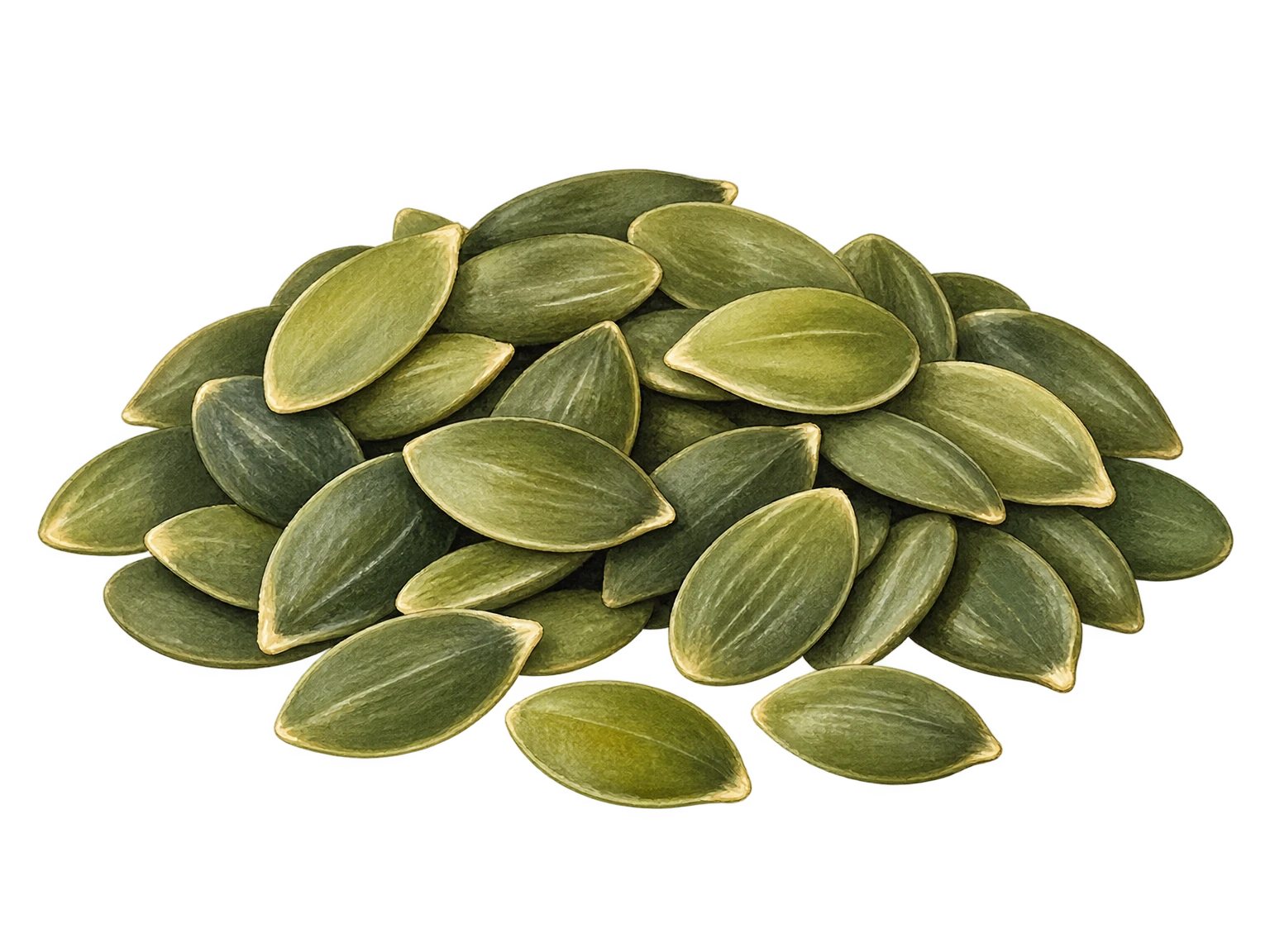
Pumpkin seeds are the edible seeds of pumpkins. Known for their nutty flavour and oil content, they are eaten as a snack or used as an ingredient in many dishes.
Sources
- 01US Food and Drug AdministrationFood Allergies: What You Need to KnowOpen source
- 02Guy's and St Thomas' NHS Foundation TrustHome introduction of nuts, for adults - OverviewOpen source
- 03EFSA Journal · 2019Evaluation of the health risks related to the presence of cyanogenic glycosides in foods other than raw apricot kernelsDOI 10.2903/j.efsa.2019.5662
- 04Niedersächsisches Landesamt für Verbraucherschutz und LebensmittelsicherheitVorsicht beim Verzehr von bitteren Mandeln und bitteren Aprikosenkernen – Gefahr durch BlausäureOpen source
- 05NHSFoods to avoid giving babies and young childrenOpen source
- 06NHSFood allergies in babies and young childrenOpen source
- 07NHSFoods to avoid in pregnancyOpen source
- 08National Institute of Diabetes and Digestive and Kidney DiseasesEating, Diet, & Nutrition for Kidney StonesOpen source
- 09National Institute of Diabetes and Digestive and Kidney DiseasesEating Right with Kidney FailureOpen source
- 10ANSES – French Agency for Food, Environmental and Occupational Health & Safety – Ciqual French food composition table · 2025Almond, with peel, no added salt (CIQUAL 15000)Open source