Nuts & seeds
Pumpkin seeds
Pumpkin seeds are the edible seeds of pumpkins. Known for their nutty flavour and oil content, they are eaten as a snack or used as an ingredient in many dishes.
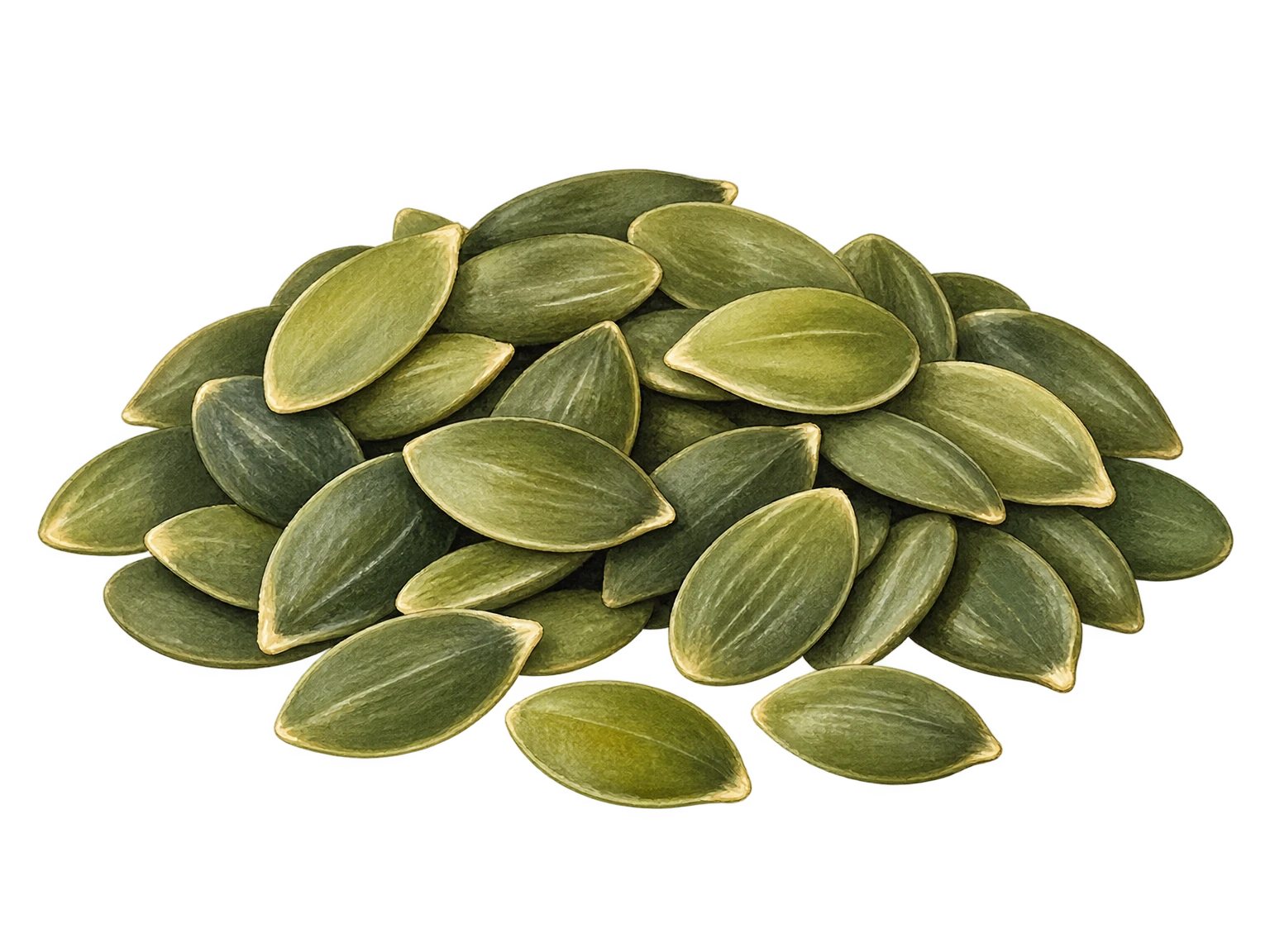
You can eat pumpkin seeds dried or roasted, scatter them over salads and soups, or add them to bread and muesli. The green kernels commonly sold in shops are shelled or come from pumpkin varieties with naturally hull-less seeds. Pumpkin seeds are also used to make pumpkin seed oil. Nutrient amounts are listed per 100 g in the composition table, together with their source; they can vary with the variety, shell content and preparation.
What are pumpkin seeds?
Pumpkin seeds are the edible seeds of pumpkins. They have a nutty flavour and are eaten as a snack or used in many dishes. Pumpkin seed oil is also made from them.
How to use them
You can eat pumpkin seeds dried or roasted, sprinkle them over salads and soups, or add them to bread and muesli. They are sold with their shells, shelled, salted or unsalted. The commonly sold green seeds are shelled or come from pumpkin varieties whose seeds naturally have no hard shell.
Nutrient amounts per 100 g can vary with the variety, shell content and preparation.
Nutrients
- Dietary fibre6 gper 100 g[3]
- Calcium46 mgper 100 g[3]
- Iron8.82 mgper 100 g[3]
- Magnesium592 mgper 100 g[3]
- Phosphorus1,230 mgper 100 g[3]
- Potassium809 mgper 100 g[3]
- Zinc7.81 mgper 100 g[3]
- Copper1.34 mgper 100 g[3]
- Vitamin A0.75 µgper 100 g[3]
- Vitamin E2.18 mgper 100 g[3]
- Vitamin D0 µgper 100 g[3]
- Vitamin C1.9 mgper 100 g[3]
- Vitamin B60.14 mgper 100 g[3]
- Vitamin B120 µgper 100 g[3]
- Vitamin K7.3 µgper 100 g[3]
- Folate58 µgper 100 g[3]
Safety information
Contraindication
Avoid if you have a known pumpkin-seed allergy
If you have a known pumpkin-seed allergy, avoid pumpkin seeds and products made from them. Allergic reactions, including anaphylaxis, have been documented; their frequency is unknown. Seek emergency medical help for breathing difficulties or swelling of the mouth or throat. [1]
Caution
Case reports of bowel impaction from seed accumulation
Individual case reports describe compact masses of pumpkin seeds in the bowel that can cause constipation, pain or obstruction. The frequency and relevance to ordinary portions of shelled kernels are unclear. Seek medical advice for severe abdominal pain or persistent constipation. [2]
Frequently asked questions
What are pumpkin seeds?
Pumpkin seeds are the edible seeds of pumpkins. They have a nutty flavour.
How can I use pumpkin seeds?
You can eat pumpkin seeds as a snack or use them as an ingredient in many dishes.
What forms do pumpkin seeds come in?
They are available dried or roasted, with or without shells, and salted or unsalted.
Can I eat pumpkin seeds if I have a pumpkin seed allergy?
Avoid pumpkin seeds if you have a known pumpkin seed allergy.
More entries
Almonds
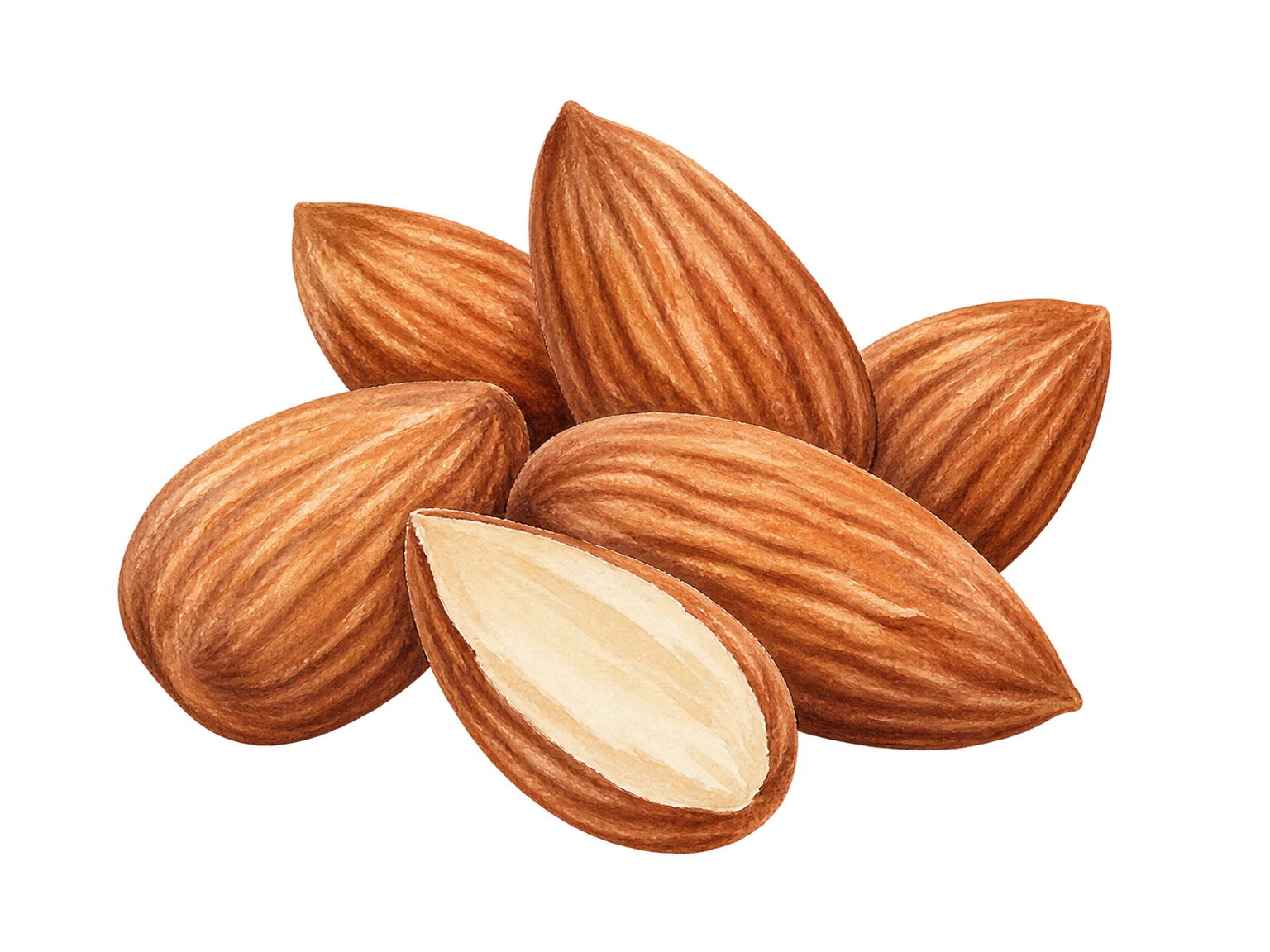
Almonds are the edible seed kernels of the almond tree. They are eaten plain, roasted or as an ingredient, and are nutritionally known for their unsaturated fats, protein, fibre and vitamin E.
Sources
- 01European Medicines AgencyAssessment report on Cucurbita pepo L., semenOpen source
- 02Gastrointestinal Seed Bezoars: A Systematic Review of Case Reports and Case SeriesOpen source
- 03ANSES – French Agency for Food, Environmental and Occupational Health & Safety – Ciqual French food composition table · 2025Pumpkin and squash, seed, dried (CIQUAL 15064)Open source