Grains
Brown rice
Brown rice is rice with its inedible outer husk removed but its bran layers and germ retained. It has a mildly nutty flavour and a firmer texture than white rice.
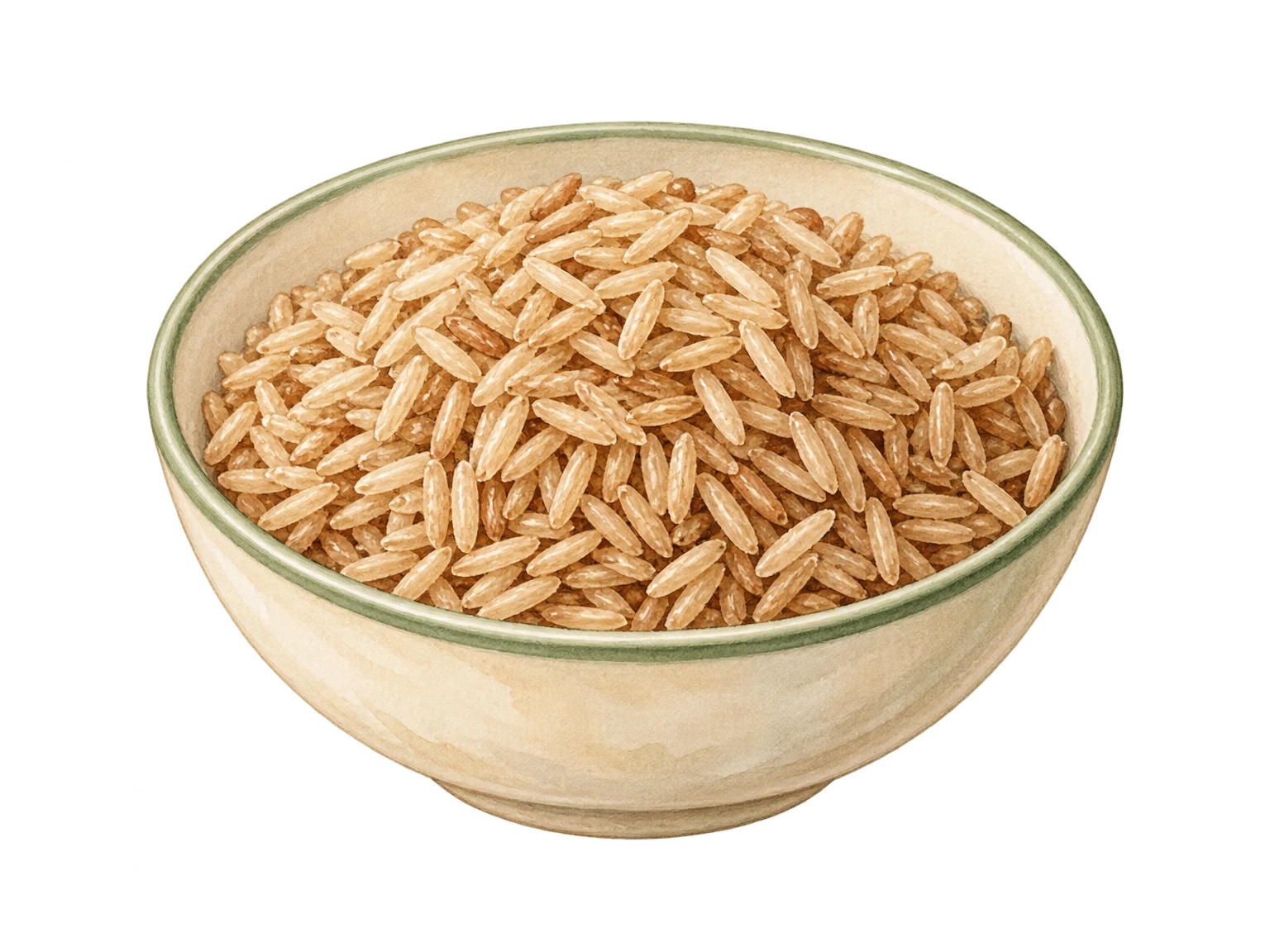
Brown rice describes how the grain is processed rather than a separate rice variety: unlike white rice, it retains its bran layers and germ. Nutritionally, it is known mainly for its starchy carbohydrates and fibre. You can serve it as a side dish or use it in rice bowls, salads and vegetable dishes; it usually takes longer to cook than white rice. The nutrient table lists amounts per 100 g alongside their source.
What is brown rice?
Brown rice is not a separate rice variety: after the inedible outer husk is removed, the grain is not milled further, so its bran layers and germ remain. It has a mildly nutty flavour and a firmer texture than white rice.
How to use it
Brown rice provides mainly starchy carbohydrates and dietary fibre. Use it as a side dish or in rice bowls, salads and vegetable stir-fries. It usually takes longer to cook than white rice. The nutrient overview gives amounts per 100 g.
Nutrients
- Protein7.02 gper 100 g[7]
- Omega-3 fatty acids0.026 gper 100 g[7]
- Dietary fibre5 gper 100 g[7]
- Calcium11.1 mgper 100 g[7]
- Magnesium118 mgper 100 g[7]
- Phosphorus163 mgper 100 g[7]
- Potassium219 mgper 100 g[7]
- Zinc2 mgper 100 g[7]
- Copper0.27 mgper 100 g[7]
- Vitamin A2.08 µgper 100 g[7]
- Vitamin E0.2 mgper 100 g[7]
- Vitamin D0 µgper 100 g[7]
- Vitamin C0 mgper 100 g[7]
- Vitamin B1 (thiamin)0.26 mgper 100 g[7]
- Vitamin B2 (Riboflavin)0.05 mgper 100 g[7]
- Vitamin B60.09 mgper 100 g[7]
- Vitamin B120 µgper 100 g[7]
- Vitamin K1.9 µgper 100 g[7]
- Folate48 µgper 100 g[7]
Safety information
Caution
Alternate rice with other grains
Brown rice generally contains more inorganic arsenic than white rice. High long-term exposure is a health concern, but an ordinary serving does not imply acute poisoning. Alternate rice with other grains. Washing and cooking in plenty of low-arsenic water, then draining it, can reduce exposure. [1][2]
Caution
Cool cooked rice promptly
If you want to keep cooked rice, cool it promptly and refrigerate it. Do not leave it at room temperature for prolonged periods: Bacillus cereus can grow and produce toxins that cause vomiting or diarrhoea. Reheating does not reliably make improperly stored rice safe. [3]
Caution
Offer young children a variety of grains
For infants already eating complementary foods and for young children, rice should not be the only cereal source. Alternate it with other grains prepared appropriately for their age to limit arsenic exposure. Rice does not need to be excluded altogether. [2]
Contraindication
Avoid rice if it triggers FPIES
If rice has been diagnosed as a trigger of FPIES in you or your child, avoid brown rice too and discuss any reintroduction with the treating team. This allergic reaction mainly affects infants and children and can cause delayed, severe vomiting. Repeated vomiting with marked lethargy or signs of collapse needs urgent medical attention. [4]
Caution
If you have been prescribed a low-fibre diet
If you have been prescribed a low-fibre diet, for example because of bowel narrowing, brown rice may be unsuitable. Follow your dietary plan; white rice is often a suitable alternative. This restriction does not apply to everyone with digestive symptoms. [5]
Caution
Follow your dietary plan for kidney disease
If you have chronic kidney disease and need to limit potassium or phosphorus, discuss the choice and portion size of brown rice with your care team. Whether a restriction is needed depends on your blood results and treatment; there is no universal ban. [6]
Frequently asked questions
What is the difference between brown rice and white rice?
Brown rice has its inedible outer husk removed, while the bran layers and germ are retained. It has a mildly nutty flavour and a firmer texture than white rice.
Is brown rice a whole grain?
Yes. After the inedible outer husk is removed, brown rice retains its bran layers and germ.
What nutrients does brown rice contain?
Brown rice contains, among other nutrients, protein, fibre and minerals. Per 100 g, it provides 7.02 g protein, 5 g fibre and 118 mg magnesium.
What does brown rice taste like?
Brown rice has a mildly nutty flavour and a firmer texture than white rice.
More entries
Rolled oats
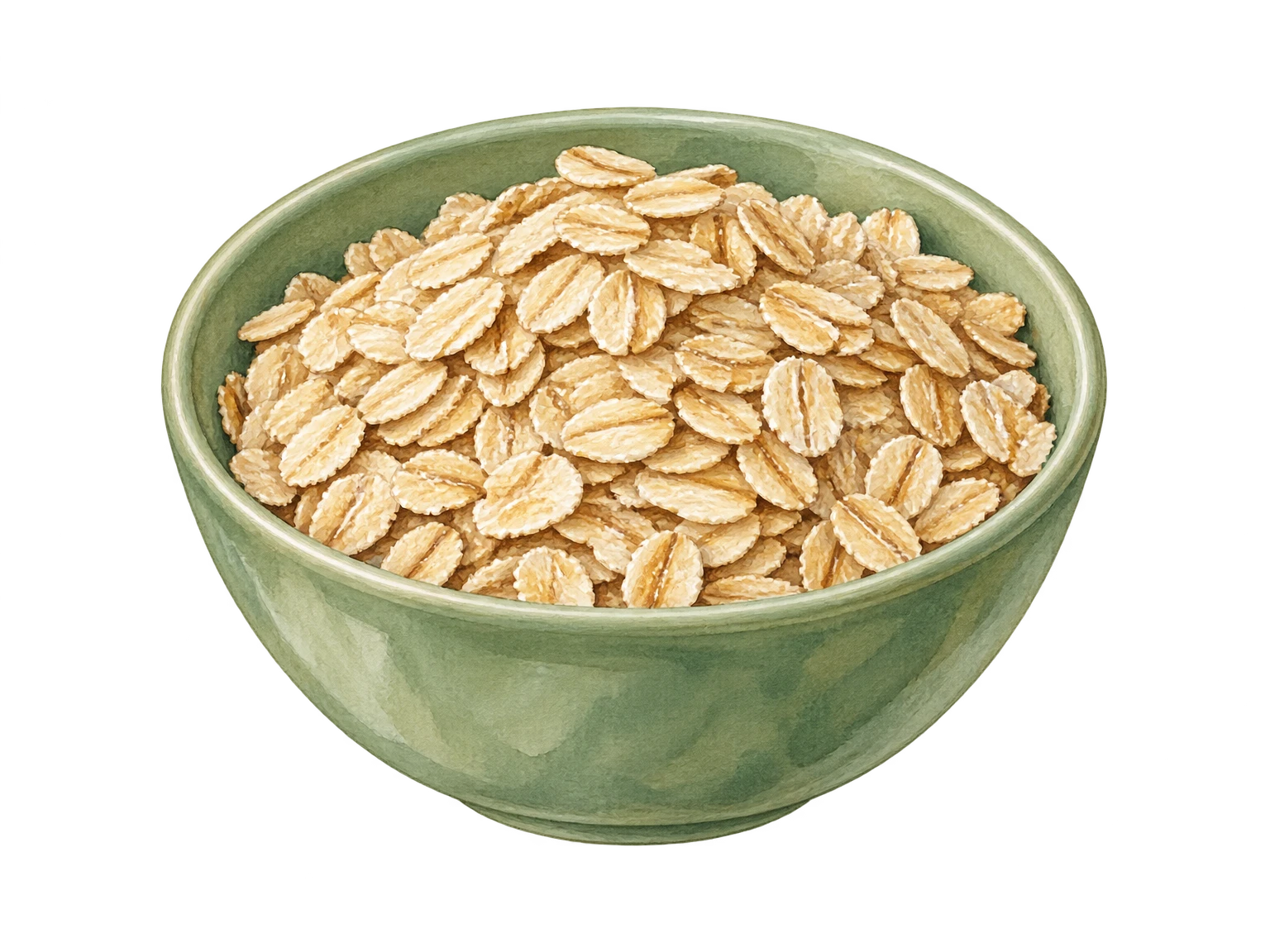
Rolled oats are oat grains flattened into flakes and are a wholegrain product. You can use them for porridge, muesli or baking. They are known for their fibre, including beta-glucans.
Quinoa
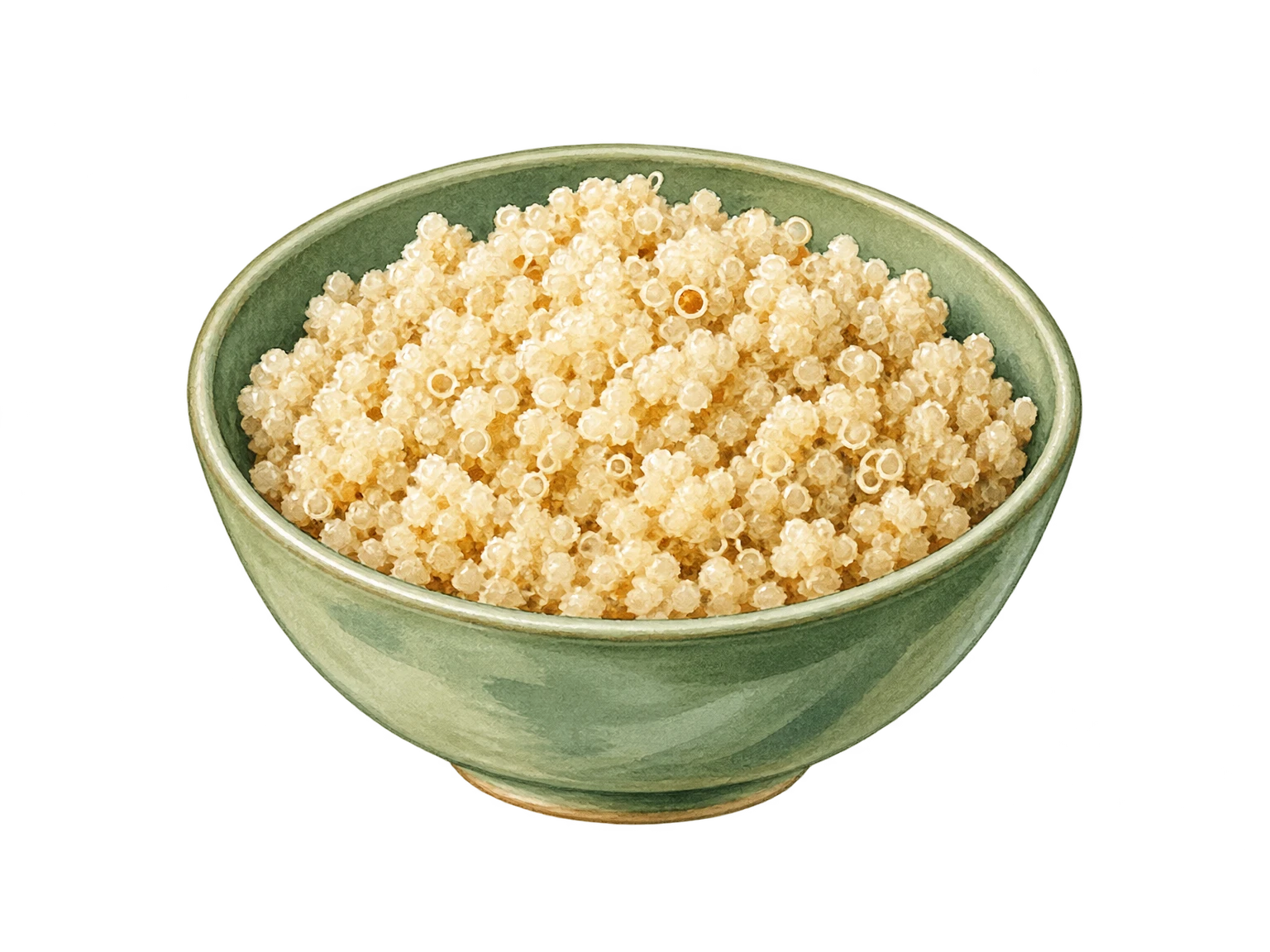
Quinoa is a pseudocereal from the Andes with small, edible seeds. It is cooked much like rice and is known for its plant protein and fibre.
Sources
- 01European Food Safety Authority · 2024Update of the risk assessment of inorganic arsenic in foodOpen source
- 02Bundesinstitut für RisikobewertungFrequently asked questions on arsenic in rice and rice productsOpen source
- 03UK Health Security Agency · 2024Guidelines for assessing the microbiological safety of ready-to-eat foods placed on the marketOpen source
- 04North West Allergy NetworkFPIESOpen source
- 05Dorset County Hospital NHS Foundation TrustLow Fibre / Low Residue Diet AdviceOpen source
- 06National Institute of Diabetes and Digestive and Kidney DiseasesHealthy Eating for Adults with Chronic Kidney DiseaseOpen source
- 07ANSES – French Agency for Food, Environmental and Occupational Health & Safety – Ciqual French food composition table · 2025Rice, wholegrain, raw (CIQUAL 9102)Open source