Grains
Quinoa
Quinoa is a pseudocereal from the Andes with small, edible seeds. It is cooked much like rice and is known for its plant protein and fibre.
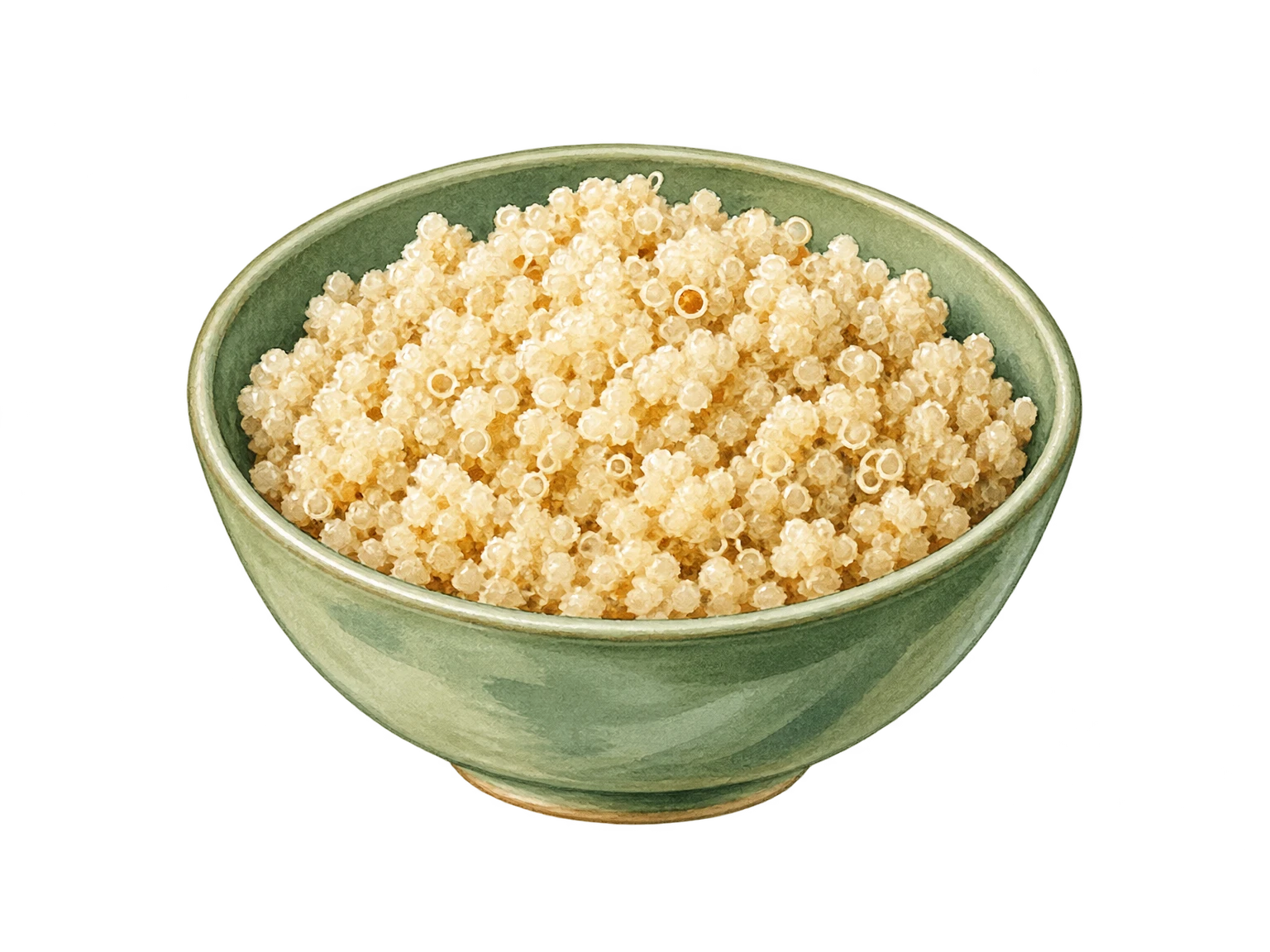
Quinoa consists of the edible seeds of Chenopodium quinoa. Although it is not botanically a cereal, it is used much like cereal grains in cooking. The cooked seeds have a mild, slightly nutty flavour and work well as a side dish or in salads, soups and breakfast dishes. Quinoa can also be milled into flour. Its nutritional profile includes plant protein and fibre. Nutrient amounts are listed per 100 g in the composition table, alongside their source. Check whether the figures refer to uncooked or cooked quinoa.
What is quinoa?
Quinoa consists of the edible seeds of the plant Chenopodium quinoa. It originates from the Andean region of South America. Botanically, quinoa is a pseudocereal rather than a cereal grain, although it is used in similar ways in cooking.
How to use quinoa
When cooked, quinoa has a mild, slightly nutty flavour. You can prepare it much like rice and use it as a side dish or in salads, soups and breakfast dishes. The seeds are also made into flour.
Nutrients
Quinoa contains plant protein and fibre. You can find the nutrient amounts in the composition table per 100 g. Check whether the figures refer to uncooked or cooked quinoa.
Nutrients
- Protein13.2 gper 100 g[5]
- Omega-3 fatty acids0.13 gper 100 g[5]
- Dietary fibre7 gper 100 g[5]
- Calcium47 mgper 100 g[5]
- Iron4.57 mgper 100 g[5]
- Magnesium197 mgper 100 g[5]
- Phosphorus457 mgper 100 g[5]
- Potassium563 mgper 100 g[5]
- Zinc3.1 mgper 100 g[5]
- Copper0.59 mgper 100 g[5]
- Vitamin A0.67 µgper 100 g[5]
- Vitamin E2.44 mgper 100 g[5]
- Vitamin D0 µgper 100 g[5]
- Vitamin B60.49 mgper 100 g[5]
- Vitamin B120 µgper 100 g[5]
- Vitamin K0 µgper 100 g[5]
- Folate184 µgper 100 g[5]
Safety information
Contraindication
Avoid quinoa if you are allergic to it
If you have a confirmed quinoa allergy, avoid quinoa. Severe allergic reactions have been reported in individual cases, but their frequency is unknown. [1]
Caution
Follow preparation instructions
Quinoa’s outer seed layer contains bitter-tasting saponins. Washing and peeling reduce their content. Follow the preparation instructions on the packet, particularly any rinsing instructions. There is no established evidence that commercially sold, properly prepared quinoa commonly causes intestinal damage. [2]
Caution
Uncertain suitability for infants and young children
German expert bodies could not reliably assess quinoa’s suitability for infants and young children because information on product quality was insufficient. These assessments date from 2016 and 2020 and do not establish a universal prohibition. If you want to give quinoa to your young child, seek advice on age-appropriate feeding. [3][2]
Caution
Check for gluten cross-contact if you have coeliac disease
Quinoa is naturally gluten-free. If you have coeliac disease, choose products labelled gluten-free and avoid contact with gluten-containing foods and their residues during preparation. [4]
Frequently asked questions
What is quinoa?
Quinoa is a pseudocereal from the Andean region of South America. Its small seeds are eaten.
How do you cook quinoa?
Quinoa can be cooked much like rice. Follow the preparation instructions.
What nutrients does quinoa contain?
Quinoa contains plant protein and fibre. The amounts per 100 g are listed in the nutrition table.
What should I consider when eating quinoa with coeliac disease?
If you have coeliac disease, check for possible gluten cross-contact.
Can I eat quinoa if I have a quinoa allergy?
If you have a quinoa allergy, avoid quinoa.
More entries
Rolled oats
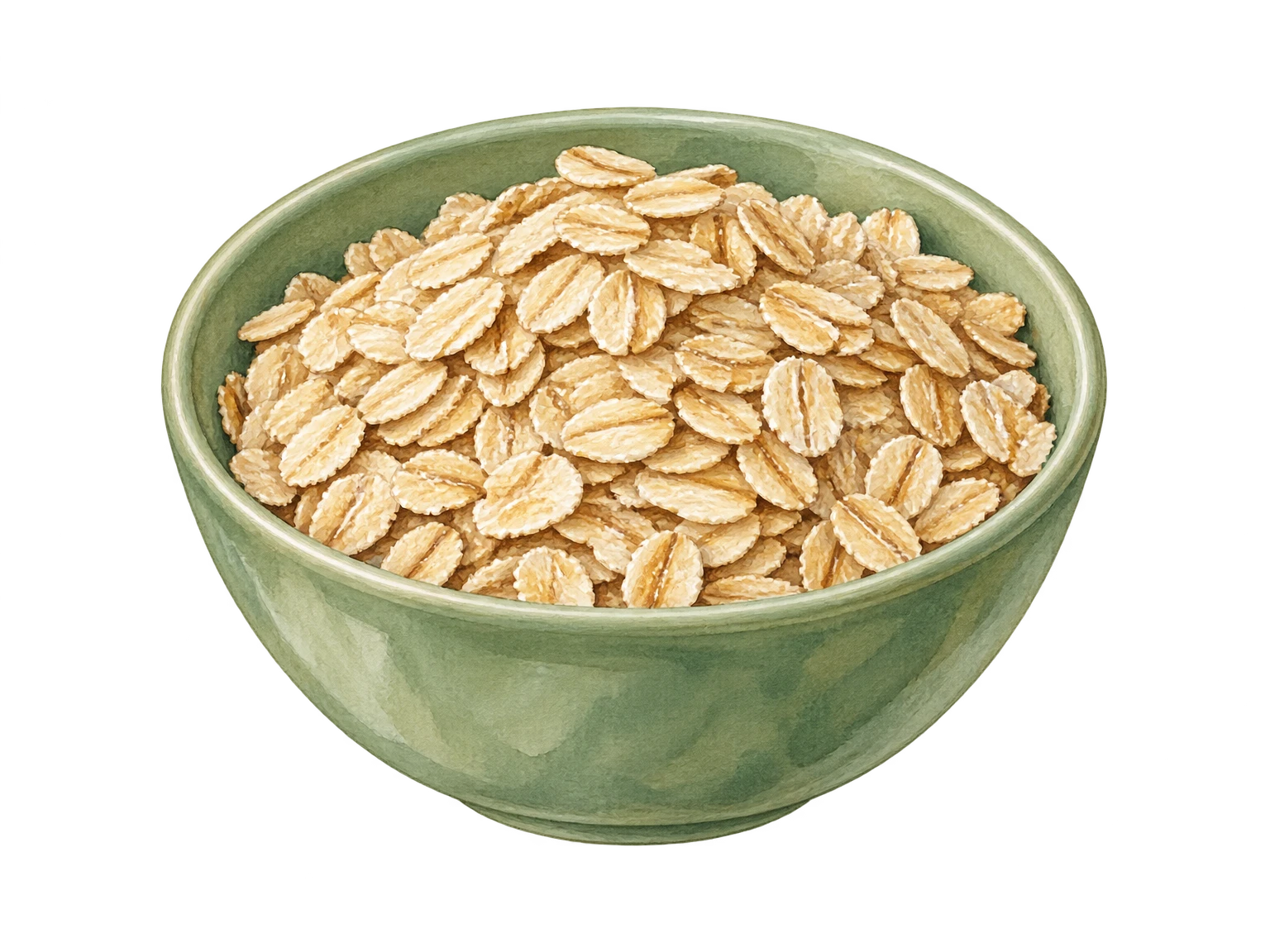
Rolled oats are oat grains flattened into flakes and are a wholegrain product. You can use them for porridge, muesli or baking. They are known for their fibre, including beta-glucans.
Sources
- 01Anaphylaxis to quinoaPubMed 23244665Open source
- 02German Federal Institute for Risk Assessment (BfR) · 2020Superfoods – super good? Communication No 052/2020 of 18 November 2020Open source
- 03Deutsche Gesellschaft für Ernährung (DGE) · 2016Pseudogetreide in der Säuglings- und KleinkindernährungOpen source
- 04National Institute of Diabetes and Digestive and Kidney DiseasesEating, Diet, & Nutrition for Celiac DiseaseOpen source
- 05ANSES – French Agency for Food, Environmental and Occupational Health & Safety – Ciqual French food composition table · 2025Quinoa, raw (CIQUAL 9340)Open source