Oils & fats
Olive oil
Olive oil is obtained from the fruit of the olive tree. Known for its high proportion of monounsaturated fatty acids, it is used in salads, cooking and as a finishing oil.
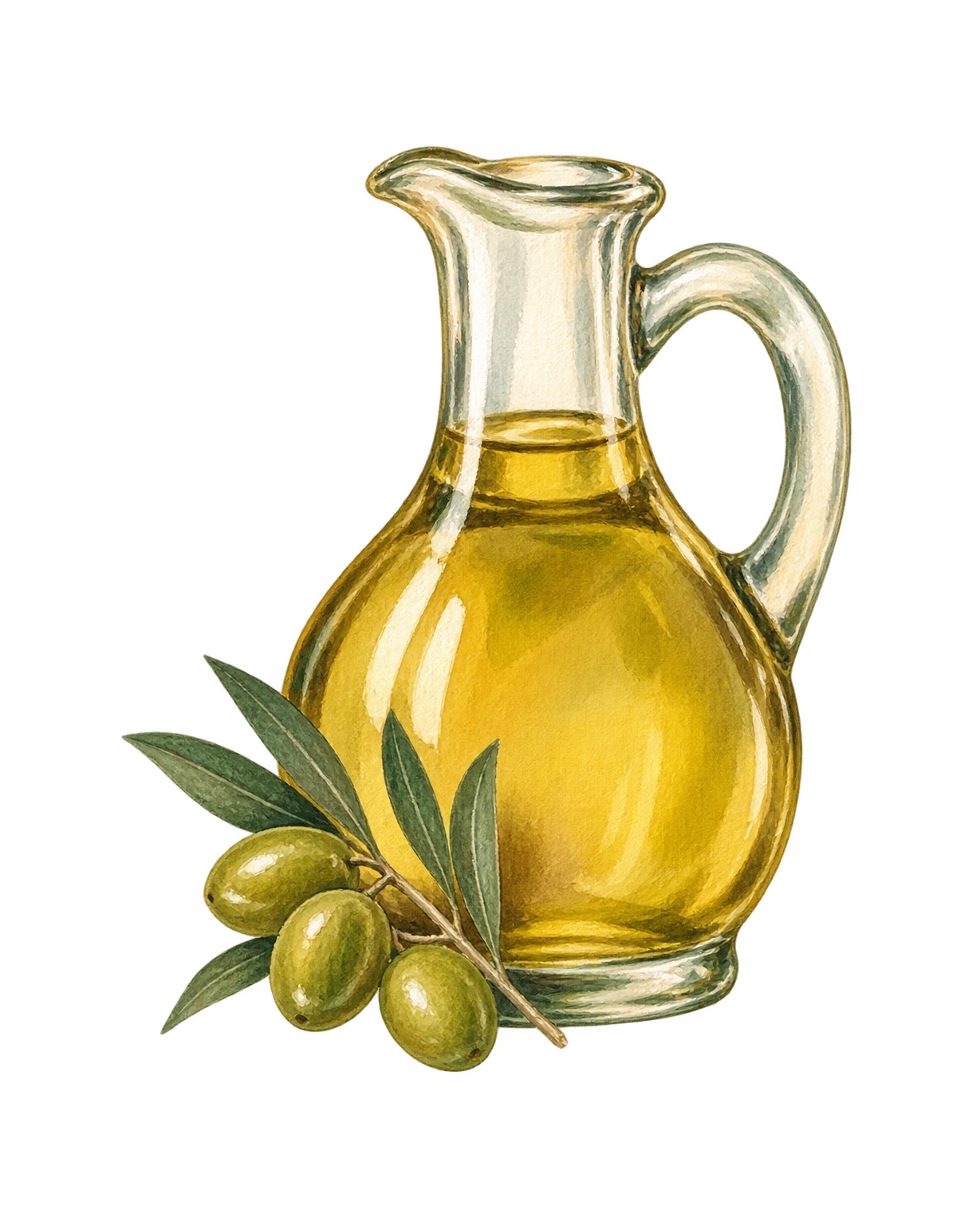
Depending on the variety and processing, olive oil can taste mild, fruity, bitter or slightly peppery. You can use it in dressings, to cook vegetables or to add flavour to bread and finished dishes. Virgin and extra virgin olive oils are obtained solely by mechanical or other physical methods; another grade consists of a blend of refined and virgin olive oils. Its main fatty acid is oleic acid. The nutrition table lists nutrient amounts per 100 g, together with their source.
What is olive oil?
Olive oil is made from the fruit of the olive tree (Olea europaea L.). Depending on the variety and how it is made, it can taste mild, fruity, bitter or slightly peppery. Its main fatty acid is oleic acid, a monounsaturated fatty acid.
Uses and processing
You can use olive oil in salad dressings, to cook vegetables, or to add flavour to bread and finished dishes. Virgin and extra virgin olive oils are obtained exclusively by mechanical or other physical methods. Other olive oil is made from a blend of refined and virgin oils.
The nutrition table shows nutrient amounts per 100 g.
Nutrients
- Protein0.25 gper 100 g[5]
- Omega-3 fatty acids0.65 gper 100 g[5]
- Dietary fibre0 gper 100 g[5]
- Vitamin A17.5 µgper 100 g[5]
- Vitamin E22.3 mgper 100 g[5]
- Vitamin C0 mgper 100 g[5]
- Vitamin B1 (thiamin)0 mgper 100 g[5]
- Vitamin B2 (Riboflavin)0 mgper 100 g[5]
- Niacin (Vitamin B3)0 mgper 100 g[5]
- Vitamin B60 mgper 100 g[5]
- Vitamin B120 µgper 100 g[5]
- Vitamin K58.1 µgper 100 g[5]
- Folate0 µgper 100 g[5]
Safety information
Interaction
Discuss major dietary changes if you take warfarin
If you take warfarin, keep your intake of vitamin-K-containing foods reasonably consistent, including olive oil. Discuss major changes with your anticoagulation team; you do not generally need to avoid olive oil. [1]
Caution
Watch for individual symptoms if you have gallstones
Olive oil is not universally prohibited if you have gallstones. If fatty meals trigger your symptoms, smaller portions of fat may help. Seek medical or dietetic advice for persistent symptoms or greasy, oily stools. [2]
Side effect · Adults
Mild digestive symptoms have been reported
Mild digestive symptoms were reported during olive oil consumption in an adult study. It is uncertain whether the oil caused them, and their frequency with ordinary food portions is not known. [3]
Caution
Portion size matters for olive oil too
Olive oil is energy-dense. Use small amounts that fit your energy needs. This is a portion-management consideration, not a warning about toxicity. [4]
Frequently asked questions
What is olive oil made from?
Olive oil is obtained from the fruit of the olive tree.
Which fatty acids are most prominent in olive oil?
Olive oil is known for its high proportion of monounsaturated fatty acids. Its main fatty acid is oleic acid.
How can I use olive oil?
Olive oil can be used in salads, for cooking and as a finishing oil.
Should I consider anything about olive oil if I take warfarin?
Discuss major changes to your diet with your healthcare professional.
Sources
- 01NHSWarfarin Anticoagulant TherapyOpen source
- 02Cambridge University Hospitals NHS Foundation TrustDietary advice for patients with gallstones or inflammation of the gallbladderOpen source
- 03Grasas y Aceites · 2018Effects of olive oil on blood pressure: A systematic review and meta-analysisDOI 10.3989/gya.0105181
- 04NHSFacts about fatOpen source
- 05ANSES – French Agency for Food, Environmental and Occupational Health & Safety – Ciqual French food composition table · 2025Olive oil, extra virgin (CIQUAL 17270)Open source